Best Taxidermy Software for Wildlife Compliance in 2026
60% of taxidermy compliance violations are preventable with proper intake documentation. That's not a judgment. It's a systemic problem. Most violations don't happen because taxidermists are trying to break the law. They happen because a required field wasn't captured at intake, a regulated species wasn't flagged, or a paper record got lost in a pile.
Compliance flags prevent violations before they happen, reactive compliance is already too late. If you're checking your records after a USFWS inspection notice arrives, you've already got a problem. The goal is to make sure every intake, every species, every required field is captured correctly so there's nothing to find.
No competitor provides automated wildlife compliance flagging at intake. Here's what the major options look like for shops that need to take compliance seriously.
TL;DR
- The $79/month cost of MountChief's compliance flagging system is a rounding error compared to the cost of a USFWS inspection with missing records.
- Here's what the major options look like for shops that need to take compliance seriously.
- It creates risk when you're taking in 20 deer per day during peak season and someone walks in with a wood duck on top of the pile.
- 60% of taxidermy compliance violations are preventable with proper intake documentation.
- A paper log that's 80% complete doesn't satisfy inspection requirements for the 20% of records that are missing fields.
- Shops that don't hold this permit and accept ducks or geese are in federal violation.
What Wildlife Compliance Actually Requires
Before evaluating software, it helps to know what you're actually required to do:
Federal USFWS requirements:
- Federal Taxidermist Permit required before accepting any migratory bird
- Intake records for all migratory birds including customer license documentation
- Lacey Act compliance for specimens that crossed state lines
- CITES documentation for listed exotic species
State agency requirements:
- Valid state taxidermist license (every state)
- Intake records for all accepted wildlife (every state)
- State-specific fields for deer, bear, and other managed species
- CWD documentation in affected states
- Bear skull sealing or mandatory reporting in some states
The challenge is that missing any of these requirements at intake is nearly impossible to fix after the fact. You can't retroactively document a customer's duck stamp number if you didn't capture it when they walked in.
1. MountChief. Automated Compliance Flagging at Intake
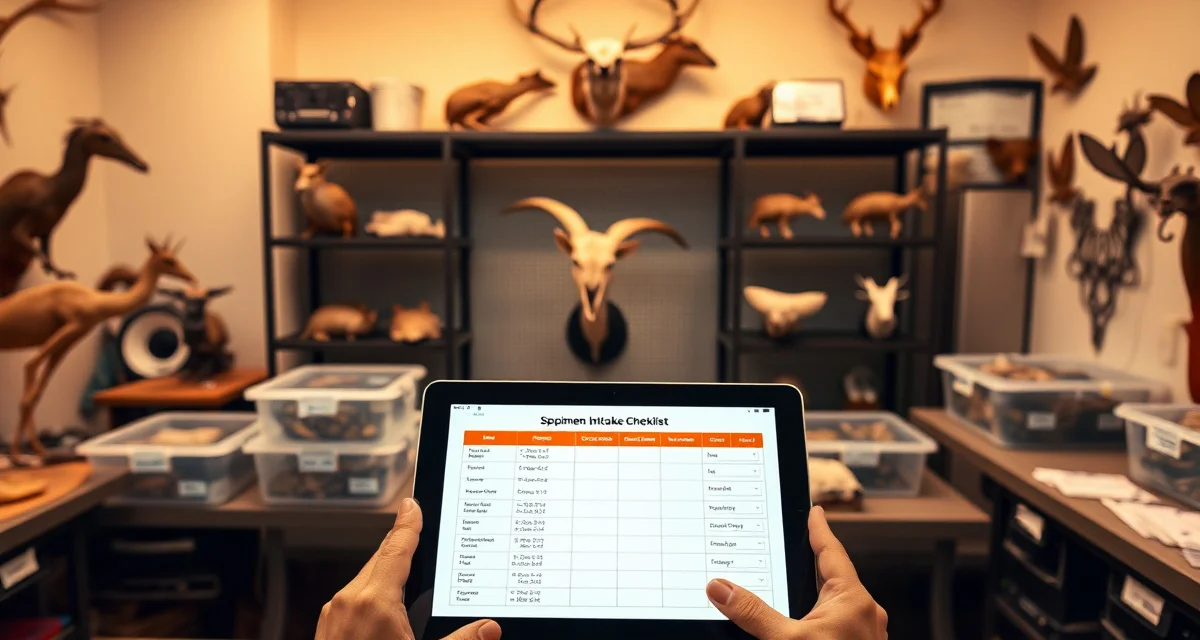
MountChief is the only taxidermy software that automates wildlife compliance flagging at the point of intake. When you log a species that has federal or state compliance implications, the system alerts you to the required documentation before the specimen enters your workflow.
What MountChief's compliance system does:
- Migratory bird flagging: Any duck, goose, dove, woodcock, or other migratory species triggers automatic Federal Taxidermist Permit documentation requirements and prompts you for the customer's license and duck stamp information
- CITES species alerts: Species with CITES Appendix status are flagged at intake with documentation guidance
- CWD zone documentation: In states with CWD management zones, deer from affected counties trigger additional documentation fields
- State-specific fields: Intake templates adapt to state requirements so Pennsylvania's point count fields appear for PA deer, and TPWD-required fields appear for Texas intake
- Record completeness: The system won't let you save an incomplete intake record, required fields are required
Why this matters: The USFWS Federal Taxidermist Permit is required before accepting any migratory bird. Shops that don't hold this permit and accept ducks or geese are in federal violation. MountChief flags this species category at intake so it never gets accidentally processed without documentation.
What species trigger compliance alerts in MountChief:
- All migratory birds (Migratory Bird Treaty Act)
- CITES Appendix I, II, and III species
- State-listed threatened or endangered species
- Bears in states with mandatory skull sealing
- Alligators in states with permit requirements
- CWD zone deer in affected states
Price: $79/month
2. MountMonitor. No Compliance Automation
MountMonitor has intake fields and job records. It does not have species-level compliance flagging. You can create intake records that capture the species and customer information, but the system doesn't alert you when a regulated species requires specific documentation.
For shops that handle a mix of species, this means compliance is entirely dependent on the taxidermist's memory of applicable regulations. That works when volume is low and species are familiar. It creates risk when you're taking in 20 deer per day during peak season and someone walks in with a wood duck on top of the pile.
MountMonitor is not a compliance tool. It's a customer tracking and job management tool that happens to include intake records.
3. Where's My Mount. No Compliance Features
Where's My Mount is a customer portal. There are no compliance features, no intake flagging, and no record-keeping tools. This is not a criticism of Where's My Mount. It doesn't claim to be a compliance system. But if you're looking for compliance support, this isn't the product.
4. Trophy Mount System. Basic Records, No Automated Compliance
Trophy Mount System and similar legacy platforms handle intake records. They don't have automated species-level compliance flagging. Records are as complete as what you manually enter. If you forget to ask for the duck stamp, the record won't prompt you.
5. Paper Systems. Maximum Compliance Risk
Paper intake forms work for compliance if they're designed correctly and filled out consistently. In practice, rushed peak-season intake on paper produces incomplete records. The form might have a duck stamp field. But if the field is blank and the information wasn't captured, you have no record.
A paper log that's 80% complete doesn't satisfy inspection requirements for the 20% of records that are missing fields.
Compliance Feature Comparison
| Feature | MountChief | MountMonitor | Where's My Mount | Trophy Mount |
|---|---|---|---|---|
| Migratory bird flagging | Yes | No | No | No |
| CITES species alerts | Yes | No | No | No |
| CWD zone documentation | Yes | No | No | No |
| State-specific intake fields | Yes | Partial | No | No |
| Required field enforcement | Yes | No | No | No |
| Compliance record storage | Yes | Basic | No | Basic |
| Inspection-ready records | Yes | Manual | No | Manual |
The Cost of Non-Compliance
USFWS violations for migratory bird possession without required permits carry civil penalties of up to $5,000 per violation and criminal penalties up to $15,000 and six months imprisonment for willful violations. State-level violations range from fines to license suspension.
The $79/month cost of MountChief's compliance flagging system is a rounding error compared to the cost of a USFWS inspection with missing records.
For more on what federal and state compliance requires, see the wildlife compliance software for taxidermy guide.
Related Articles
- Best Taxidermy Software for High-Volume Shops in 2026
- Best Taxidermy Software for Solo Shops in 2026
- Best Taxidermy Software with Tannery Tracking in 2026
FAQ
What taxidermy software has wildlife compliance features?
MountChief is the only taxidermy software with automated wildlife compliance flagging at intake. It alerts you to documentation requirements when regulated species are entered, enforces required intake fields, and adapts intake templates to state-specific requirements. No other major taxidermy software (including MountMonitor and Where's My Mount) includes automated compliance flagging.
How does compliance automation work in taxidermy software?
In MountChief, compliance automation works at the intake stage. When you enter a species, the system checks it against a database of regulated species, federal (USFWS migratory bird, CITES) and state-level (CWD zones, bear requirements, permit species). If the species has compliance implications, an alert appears with the required documentation. The system won't save the intake record until required fields are complete. This turns compliance from something you have to remember into something the software enforces automatically.
What species trigger compliance alerts in MountChief?
Compliance alerts in MountChief are triggered by migratory birds (ducks, geese, doves, woodcock, snipe, all Migratory Bird Treaty Act species), CITES-listed exotic species (Appendix I, II, and III), deer from CWD management zone counties in affected states, bears in states with mandatory skull sealing or permit requirements, alligators in states with regulated harvest requirements, and state-listed threatened or endangered species. The species list is maintained to reflect current federal and state regulatory status.
How does this apply to solo taxidermy shops?
The principles in this guide apply to solo shops just as they do to larger operations, though the scale differs. A single-person shop may have lower absolute volume but faces the same documentation, compliance, and customer communication requirements. The practical advice here scales down to any shop size.
What is the most common mistake taxidermists make with best taxidermy software compliance?
The most common mistake is treating best taxidermy software compliance as an afterthought rather than building it into the standard workflow from the start. Shops that encounter problems in this area typically did not establish clear processes before season, which means every situation becomes a one-off decision rather than a standard response.
Try These Free Tools
Put these insights into practice with our free calculators and planners:
Sources
- National Taxidermists Association (NTA)
- US Fish & Wildlife Service
- Taxidermy Today
- Small Business Administration (SBA)
Compliance Is a System, Not a Memory Test
You can't rely on remembering which species require which documentation during a busy intake week. The taxidermists who stay out of compliance trouble are the ones who've built a system that makes compliance automatic. Not an afterthought.
MountChief's compliance flagging is that system. Try it free and process your first compliant intake within the first hour.
Get Started with MountChief
The right shop management software is the foundation of a well-run taxidermy operation. MountChief combines AI intake, tannery tracking, customer portal communication, and compliance documentation in one platform built specifically for taxidermists. Try MountChief free and see the operational difference in your first week.