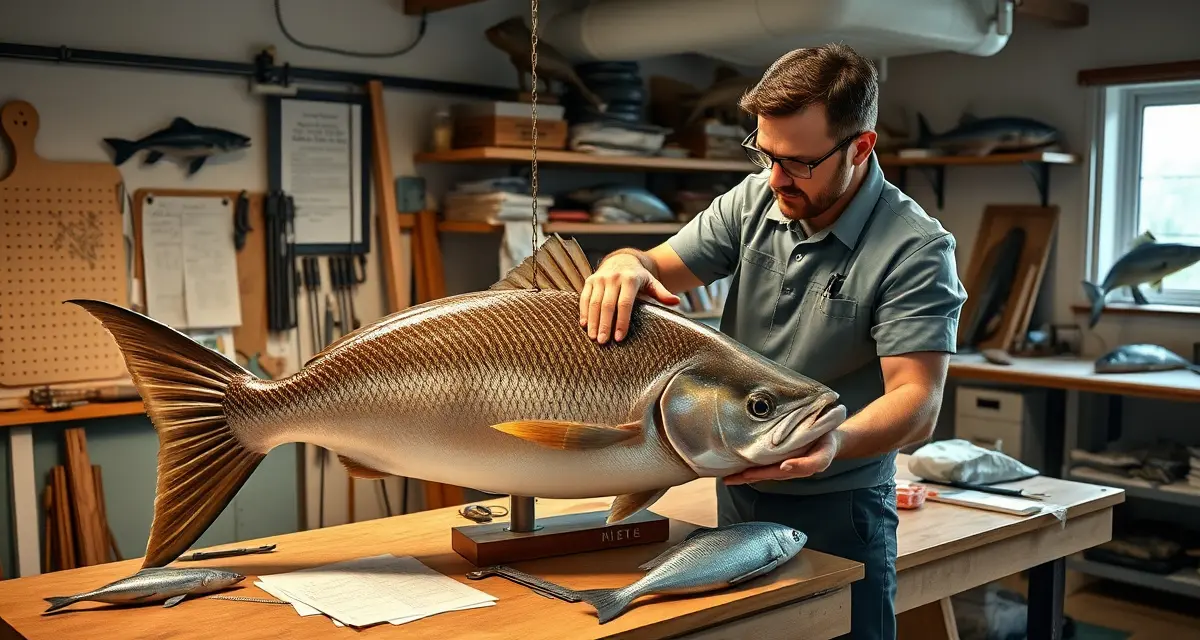
Best Taxidermy Software for Fish Mount Specialists in 2026
Fish mount work is measurement-driven in a way that mammal work just isn't. The length, girth, and weight you capture at intake are the numbers that determine the form size, the pricing, and whether a replica or skin mount is even feasible. If your intake form doesn't capture those measurements accurately and tie them to the production record, you're going to have problems.
Fish shops also deal with something mammal shops don't: the replica vs. skin mount decision affects the entire workflow from day one. These aren't interchangeable processes. They require different intake fields, different materials, different production timelines, and different supplier relationships. Software that lumps them together as "fish mount: type A or type B" isn't really supporting your business.
Fish mount specialists average 20-30% of annual revenue from repeat customers, which makes your customer communication and tracking just as important as your intake accuracy.
TL;DR
- Fish mount specialists average 20-30% of annual revenue from repeat customers, which makes your customer communication and tracking just as important as your intake accuracy.
- Skin mount jobs need tannery routing fields and preservation status tracking.
- Skin mounts on redfish, snook, or tarpon need saltwater-specific treatment.
- Works until your job queue hits 30+ fish and you're trying to find a measurement you took 6 months ago.
- Skin mounts need immediate preservation at or before intake.
- Features Fish Mount Specialists Need
The Core Problem with Generic Software for Fish Shops
Most taxidermy management platforms were designed with deer shoulder mounts as the default. The intake form has fields for cape condition, antler measurements, and tannery routing. Fish fields get added on later, usually as an afterthought.
That approach misses what fish intake actually needs. You need to capture:
- Species and sub-species
- Total length, fork length, and girth
- Weight at harvest
- Coloration reference photos (multiple angles)
- Freshwater vs. saltwater species (affects preservation approach)
- Replica or skin mount selection
- Mount pose and habitat preference
None of those fields map well onto a deer intake form. Shops that try to shoe-horn fish into mammal intake workflows end up with incomplete records and production errors.
Replica vs. Skin Mount: Why the Software Distinction Matters
A fish replica job and a skin mount job are genuinely different workflows. The replica path goes: take measurements at intake, send measurements to a casting supplier, wait for blank to arrive, paint and finish. The skin mount path goes: preserve specimen immediately, send to tannery or process in-house, mount on form, paint touch-ups.
Different production stages. Different suppliers. Different timelines. Different cost structures.
Your software needs to track these as separate job types, not the same job with a checkbox. MountChief handles both workflows natively, which means you can see your replica queue and your skin mount queue separately, assign different production stages to each, and give customers accurate timeline estimates based on which process their fish is going through.
Features Fish Mount Specialists Need
Measurement-Based Intake
Length and girth capture at intake isn't optional. These measurements drive everything downstream. Good software locks these into the intake record and makes them visible throughout production so you're never hunting for the spec sheet.
Photo Attachment for Coloration Reference
Fish coloration fades fast. The intake photos you take at drop-off are your production reference for the entire job. Software that lets you attach multiple photos to a job record and display them during the finishing stage saves you from making assumptions about color that should have been documented.
Separate Replica and Skin Mount Workflows
This is the feature that separates fish-capable software from fish-built software. Replica jobs need fields for the casting supplier, blank arrival date, and painting stages. Skin mount jobs need tannery routing fields and preservation status tracking. These should be distinct templates, not the same form with optional fields.
Species Database
A built-in species list for common freshwater and saltwater fish keeps intake consistent. Rather than typing "largemouth bass" seventeen different ways over a season, you're selecting from a dropdown that standardizes your records for reporting.
Saltwater-Specific Flags
Saltwater species require different preservation chemistry than freshwater fish. Skin mounts on redfish, snook, or tarpon need saltwater-specific treatment. Software that flags species as saltwater at intake prompts the right workflow from the start rather than discovering the issue at the tannery stage.
Platform Comparison for Fish Mount Shops
MountChief
The strongest option for dedicated fish specialists. MountChief's fish mount tracking system treats replicas and skin mounts as distinct workflows with their own intake fields, production stages, and supplier relationships. Measurement capture is built into intake. Photo attachments are native to every job record.
The species database covers major freshwater and saltwater species. Saltwater flag triggers preservation workflow prompts automatically at intake.
StudioPlus
A capable general platform with decent fish support. Replica workflow management requires custom configuration. Measurement fields exist but aren't as integrated into the production record as they should be. Works for shops doing occasional fish work alongside mammal volume.
Fishermount.com / dedicated replica services
These are supplier platforms, not shop management software. They handle your replica orders but don't manage your shop's job queue, customer communication, or intake records. You'd use one of these alongside your shop management software, not instead of it.
Custom Spreadsheets
Works until your job queue hits 30+ fish and you're trying to find a measurement you took 6 months ago. No customer communication. No production stage tracking. High risk of data loss.
Repeat Customer Revenue and Communication
Fish specialists see a high percentage of repeat business. An angler who gets a great mount done will come back with the next trophy, and they'll send their fishing buddies too. That repeat revenue doesn't happen automatically. It happens because you tracked the customer's preferences, sent good status updates, and delivered on time.
Software that stores customer history and makes it easy to see what species and mount types a customer has ordered before helps you provide personalized service on every return visit.
The taxidermy shop management software overview covers how customer history tracking works across all species categories.
What to Ask Before Buying Fish Shop Software
- Does the platform treat replicas and skin mounts as separate workflow types?
- Are measurement fields native to intake or bolted on as custom fields?
- Can you attach coloration reference photos to the job record?
- Does the species list include both freshwater and saltwater species?
- Does the system flag saltwater species for different preservation handling?
- Can you see your replica queue separately from your skin mount queue?
- How does the customer portal handle long-timeline replica orders?
Frequently Asked Questions
What software do fish taxidermy specialists use?
MountChief is the strongest option specifically for fish specialists because it handles replica and skin mount workflows as distinct job types with separate intake fields and production stages. StudioPlus is used by general shops with fish work as a secondary category. Many fish-only shops still run on spreadsheets, which works at small volume but creates problems as the job queue grows.
How does taxidermy software handle fish measurement intake?
The best systems capture length, fork length, girth, and weight as required fields at intake and lock those measurements into the job record where they're visible throughout production. Measurement data should also connect to pricing if you use per-inch billing, so the intake form generates the quote automatically from the measurements you enter.
What is the difference in workflow between fish replicas and skin mounts?
A replica goes from intake measurements to a casting supplier who produces a blank form, which you then paint and finish. A skin mount preserves the actual fish hide and mounts it on a form. Replicas have longer lead times but don't require fresh fish preservation. Skin mounts need immediate preservation at or before intake. Timeline, supplier relationships, cost structure, and production stages are all different, which is why your software should treat them as separate job types rather than variations of the same process.
How does this apply to solo taxidermy shops?
The principles in this guide apply to solo shops just as they do to larger operations, though the scale differs. A single-person shop may have lower absolute volume but faces the same documentation, compliance, and customer communication requirements. The practical advice here scales down to any shop size.
What is the most common mistake taxidermists make with best taxidermy software fish mount shops?
The most common mistake is treating best taxidermy software fish mount shops as an afterthought rather than building it into the standard workflow from the start. Shops that encounter problems in this area typically did not establish clear processes before season, which means every situation becomes a one-off decision rather than a standard response.
Related Articles
Try These Free Tools
Put these insights into practice with our free calculators and planners:
Sources
- National Taxidermists Association (NTA)
- US Fish & Wildlife Service
- Taxidermy Today
- Bass Anglers Sportsman Society (B.A.S.S.)
- Small Business Administration (SBA)
Get Started with MountChief
The right shop management software is the foundation of a well-run taxidermy operation. MountChief combines AI intake, tannery tracking, customer portal communication, and compliance documentation in one platform built specifically for taxidermists. Try MountChief free and see the operational difference in your first week.