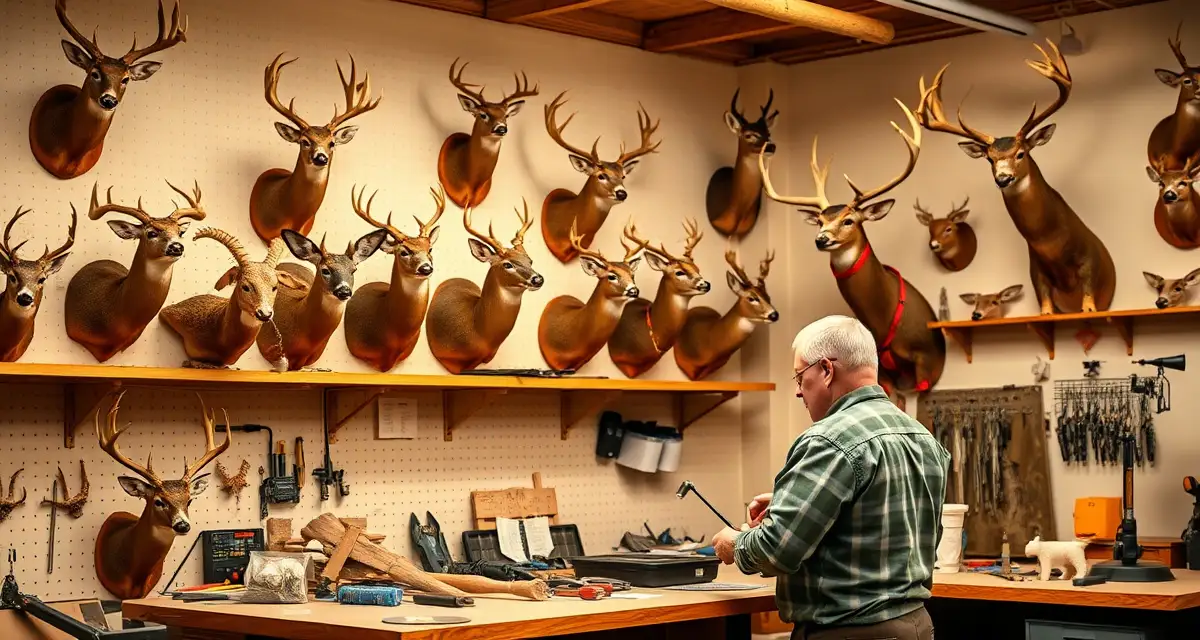
Taxidermy Shop Busy Season FAQ: Questions from Shop Owners
Deer season brings the same questions to the surface every year. Taxidermists in online communities ask them in October. They ask them again in November. They come up every year because the challenges are real and the stakes are high.
Here are the most-asked questions about running a taxidermy shop through deer season, with direct answers.
TL;DR
- When customers can check their job status at any hour from their phone, they don't need to call you.
- hide that was supposed to come back in 8 weeks takes 12.
- Peak intake days (opening weekend of gun season, or the Monday morning after a major weekend) can bring in 10 or more deer before noon.
- You're at capacity when taking on more deer would require you to either compromise quality or push your timeline beyond what you've promised customers.
- Step 3: Be specific about the new timeline.
- You're at capacity when accepting additional deer would push your production timeline beyond what you've committed to customers already in queue, or require quality compromises to meet volume.
How do I know when I'm at capacity for deer season?
You're at capacity when taking on more deer would require you to either compromise quality or push your timeline beyond what you've promised customers. Capacity is not just about how many deer you can physically fit in your freezer. It's about how many you can produce at your standard of quality within your committed timeline.
The practical markers of approaching capacity:
- Your tannery return dates are pushing your completion timeline toward the edge of your promised range
- You're working at your maximum sustainable production hours per week already
- Your intake queue is full enough that new intakes are being scheduled for later in the season
If any of these are true, you're at capacity. Continuing to take deer beyond that point creates a backlog that extends into next season, damages customer relationships, and creates compliance and tracking stress.
Setting a hard intake limit (and communicating it to customers) is a professional practice, not a failure. A first-come, first-served intake policy with a clear capacity cap is the most honest way to manage it.
What do I do when customers demand status updates every week?
First, understand why it's happening. Customers who call every week usually do so because they have no other way to get information about their mount. The solution isn't telling them to be patient. It's giving them direct access to status information.
A customer portal eliminates this problem. When customers can check their job status at any hour from their phone, they don't need to call you. The weekly caller becomes a portal checker who's still getting information but isn't interrupting your production day to get it.
If you're not using a portal and a customer is calling too frequently:
- Provide a clear timeline at intake and put it in writing
- Send a proactive email update when the cape ships to the tannery and when it returns
- Be direct if calls are excessive: "I'll send you updates when the status changes: I'm unable to provide status more frequently than that"
But the better solution is the portal. Deer season management becomes dramatically simpler when customers can self-serve status information.
How do I handle tannery delays that push past my estimated timeline?
This happens. Tanneries get backed up, especially at peak season. A hide that was supposed to come back in 8 weeks takes 12. That's not unusual, and it's mostly out of your control.
What you can control is communication.
Step 1: Find out as early as possible. Call or email your tannery at the mid-point of your expected timeline to confirm your batch is on schedule. Don't wait until the deadline passes.
Step 2: Communicate proactively. When you find out there's a delay, contact affected customers before they contact you. "Your cape is still at the tannery: the tannery is running 3 to 4 weeks behind, so your estimated completion date is now X." This is better received than a customer calling to ask where their deer is and learning there's a delay.
Step 3: Be specific about the new timeline. "Running behind" is not an acceptable response to a customer. "I'm now expecting your hide back by [date], which means your mount should be complete by [new date]" is. Give a specific new estimate with a buffer built in.
Step 4: Document the communication. If a customer later claims they weren't informed of the delay, your records of the outbound communication protect you.
Pre-season deer season prep includes confirming tannery capacity before season starts, a conversation that surfaces potential delay risks before your customers' hides are in the queue.
How do I turn customers away politely when I'm at capacity?
This is a skill that's worth developing. Turning customers away is better than overpromising and underdelivering.
What to say:
"We're at capacity for this season and we've had to stop accepting new deer to protect our timeline commitments to customers who are already in queue. I'd encourage you to reach out to [competitor referral] or check back with us in the off-season about next year."
That message is professional, honest, and gives the customer a path forward. Referring to a competitor you trust is a goodwill gesture that hunters remember.
What not to do:
Don't take deer you can't produce on time just to avoid the awkward conversation. An overextended timeline is a much more damaging customer experience than a polite referral elsewhere.
When should I ship deer capes to the tannery?
The right time depends on your tannery's requirements and your storage capacity.
General guidance:
- Salt-dried capes can be stored for several weeks before shipping without quality loss
- Frozen capes should be thawed and salted (or sent to a tannery that handles frozen) before extended storage
- Ship in batches to reduce per-cape shipping cost
- Coordinate with your tannery on their preferred receipt timing, most prefer batches spaced through the fall and winter rather than one massive December shipment
For high-volume seasons:
Ship your first batch in early-to-mid November if you're in a state with an early season. A second batch in December. A third in January if late-season deer are still coming in. Staggered shipping batches mean staggered tannery returns, which smooths your production schedule.
How do I manage intake when multiple deer are dropping off at once?
Peak intake days (opening weekend of gun season, or the Monday morning after a major weekend) can bring in 10 or more deer before noon. Managing that flow requires preparation.
Preparation that helps:
- Have intake forms (digital or paper) staged and ready before opening
- Pre-print QR tags or have your software ready to generate them
- If you have help, one person does intake while another does freezer management
- Set customer expectations at arrival: "We'll be with you in X minutes: please have your harvest information ready"
At intake:
Move as efficiently as you can without sacrificing documentation completeness. AI intake systems that guide the process reduce per-deer time and prevent missing required fields during the rush. Required fields can't be skipped. Which means the documentation is complete even when you're moving fast.
Frequently Asked Questions
How do I know when I'm at capacity for deer season?
You're at capacity when accepting additional deer would push your production timeline beyond what you've committed to customers already in queue, or require quality compromises to meet volume. Set a hard intake number before the season based on your production capacity and tannery turnaround time. When you hit that number, close intake and communicate clearly with any customers who arrive after.
What do I do when customers demand status updates every week?
Implement a customer portal that gives hunters direct access to their job status without calling. This solves the weekly-caller problem at the source, the customer doesn't call because they can check their own status. If you're not using a portal yet, set clear communication policies at intake: you'll send proactive updates when status changes, and customers can expect to hear from you when their cape ships to the tannery and when it returns.
How do I handle tannery delays that push past my estimated timeline?
Find out about delays as early as possible, don't wait for the deadline to pass. Communicate proactively with affected customers with a specific new timeline estimate. Document your communication. Customers handle delays much better when they're informed early and given a specific new date rather than vague "running behind" language.
How does this apply to solo taxidermy shops?
The principles in this guide apply to solo shops just as they do to larger operations, though the scale differs. A single-person shop may have lower absolute volume but faces the same documentation, compliance, and customer communication requirements. The practical advice here scales down to any shop size.
What is the most common mistake taxidermists make with taxidermy shop busy season faq?
The most common mistake is treating taxidermy shop busy season faq as an afterthought rather than building it into the standard workflow from the start. Shops that encounter problems in this area typically did not establish clear processes before season, which means every situation becomes a one-off decision rather than a standard response.
Related Articles
Try These Free Tools
Put these insights into practice with our free calculators and planners:
Sources
- National Taxidermists Association (NTA)
- US Fish & Wildlife Service
- Small Business Administration (SBA)
Get Started with MountChief
Pre-season preparation is what separates shops that handle peak volume smoothly from those that fall behind on day one. MountChief's intake, tracking, and communication tools are designed to handle the pace of your busiest weeks. Try MountChief before your next season opener.