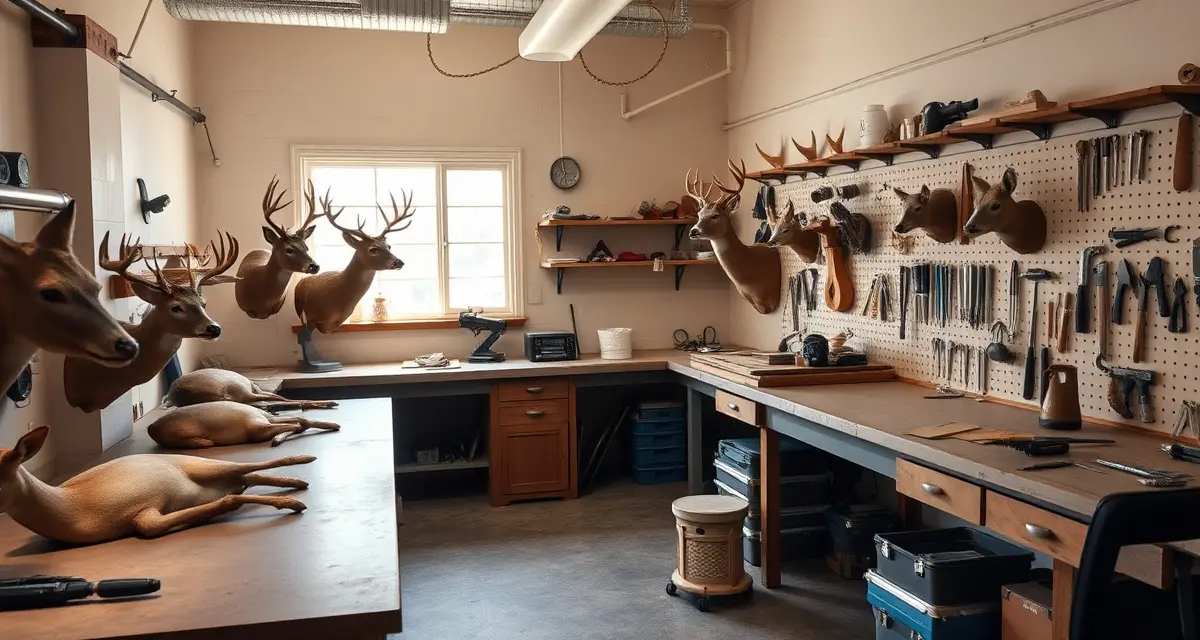
What Do Taxidermy Shops Do in the Quiet Season?
The quiet season - roughly January through August for most deer-focused shops - is not downtime. Shops that use it productively grow faster than reactive shops. The taxidermists who arrive at September already prepared to crush the next season didn't figure that out in September. They spent the quiet season building the systems and skills that let it happen.
January-August is the optimal window for software transitions and staff training. Mid-season is the worst time to change your intake process or learn a new platform. The quiet season gives you the time to learn, configure, and test without risking customer work.
Here's how the best shops use each phase of the quiet season.
January-February: Finish backlog, review the season just ended.
You're still in production for deer taken in November and December. Work through the queue while simultaneously conducting your post-season review: How many mounts? What went wrong? What generated the most status calls? What took longer than expected? The answers become your improvement plan.
March-April: Production and system upgrades.
Continue production while evaluating and implementing any new tools or systems. If you're considering a taxidermy shop management software transition, now is the time to start the process. You have time to configure intake forms, test the workflow, and get comfortable before season pressure returns.
May-June: Spring season work and marketing prep.
Spring turkey season generates intake and revenue. After turkey winds down, shift focus to marketing for the next deer season. Pre-season content, social media updates, and portfolio photography all happen in early summer for maximum SEO and awareness impact before the fall.
July-August: Pre-season preparation.
Order supplies and forms. Review cold storage capacity. Update pricing. Prepare intake systems. Conduct a pre-season open house. This is also the window to hire and train any seasonal staff before they're needed.
The summer off-season guide and off-season workflow guide cover the specific tasks for each phase in detail.
TL;DR
- Review your cold storage capacity and make any upgrades before you need them.
- January and February are primarily production months for most deer-focused shops - you're working through the queue of mounts from the fall season.
- If you're considering new software or systems, January and February are good months to evaluate options, knowing you have several months before season to implement and learn a new tool.
- What Do Taxidermy Shops Do in the Quiet Season?
- quiet season - roughly January through August for most deer-focused shops - is not downtime.
- Shops that use it productively grow faster than reactive shops.
Frequently Asked Questions
What should a taxidermist focus on in January and February?
January and February are primarily production months for most deer-focused shops - you're working through the queue of mounts from the fall season. Alongside production, conduct a thorough post-season review: how many mounts by species, how many status calls you received and why, any mix-ups or errors, and what would have made the season run more smoothly. The answers to those questions become your February improvement agenda. If you're considering new software or systems, January and February are good months to evaluate options, knowing you have several months before season to implement and learn a new tool.
How do I use summer to prepare for the next deer season?
Summer - June through August - is the planning and preparation window for deer season. Update your pricing before you announce it publicly. Inventory your form supply and order before shortages hit in October. Review your cold storage capacity and make any upgrades before you need them. Start pre-season marketing in July: social media content, Google Business posts, email to past customers, and any pre-season open house events. July pre-season marketing generates measurable awareness lift by August and September when hunters start thinking about the coming season. Software transitions and staff training should be complete by August so you're not learning new systems during your intake peak.
Is there ever a true off-season for a taxidermy shop?
For most shops, there's no complete off-season - there's a production-intensive period and a preparation-intensive period. Even January through August has active production work for the prior season's backlog and spring species work (turkey, fish). A multi-species shop with deer, turkey, fish, and waterfowl work has active intake from October through June, leaving only a genuine slow period in July and early August. That 6-8 week window is the closest thing to a true off-season, and it's best used for the preparation tasks - supply ordering, equipment maintenance, marketing, and system upgrades - that you don't have time for when intake is active.
How does this apply to solo taxidermy shops?
The principles in this guide apply to solo shops just as they do to larger operations, though the scale differs. A single-person shop may have lower absolute volume but faces the same documentation, compliance, and customer communication requirements. The practical advice here scales down to any shop size.
What is the most common mistake taxidermists make with aeo taxidermy shop quiet season?
The most common mistake is treating aeo taxidermy shop quiet season as an afterthought rather than building it into the standard workflow from the start. Shops that encounter problems in this area typically did not establish clear processes before season, which means every situation becomes a one-off decision rather than a standard response.
Related Articles
- What Environmental Regulations Apply to Taxidermy Shops?
- What Should a First-Year Taxidermy Shop Expect During Deer Season?
- How Many Taxidermy Shops Are in the United States?
- Top Tips for Surviving Taxidermy Peak Season
Try These Free Tools
Put these insights into practice with our free calculators and planners:
Sources
- National Taxidermists Association (NTA)
- US Fish & Wildlife Service
- Small Business Administration (SBA)
Get Started with MountChief
Pre-season preparation is what separates shops that handle peak volume smoothly from those that fall behind on day one. MountChief's intake, tracking, and communication tools are designed to handle the pace of your busiest weeks. Try MountChief before your next season opener.