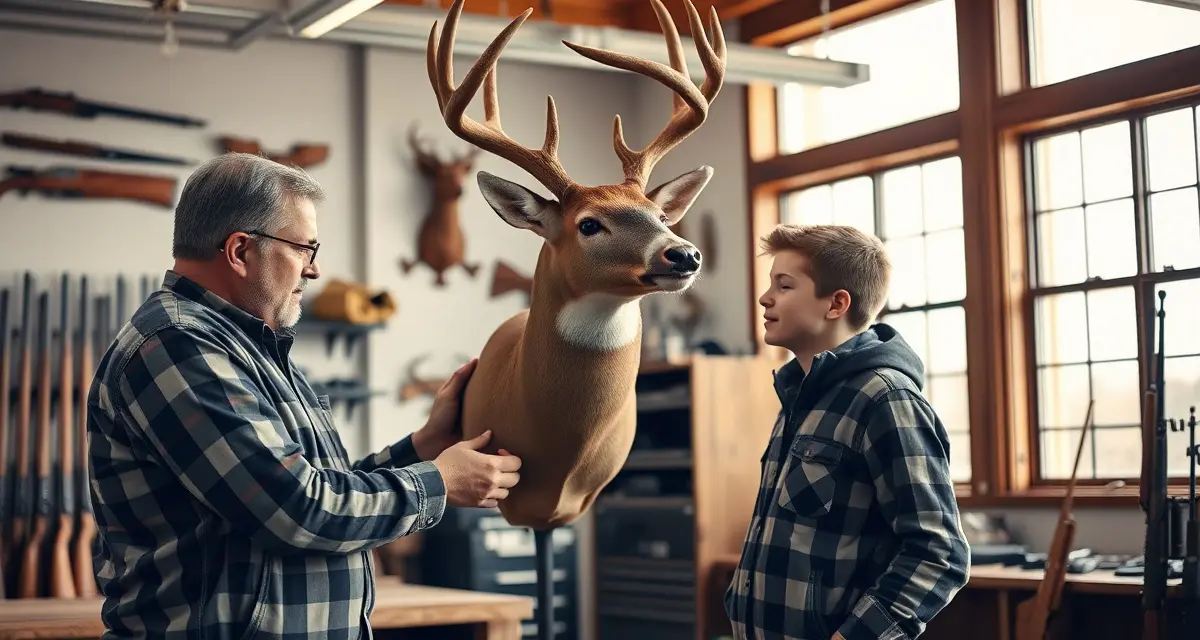
Marketing Taxidermy Services to New Hunters
First-time hunter-turned-taxidermy-customers have the highest lifetime value of any customer segment. Hunter education partnerships create the earliest possible introduction to a taxidermist. A hunter who learns your name during their hunter safety course, sees your work at the sporting goods store, and finds you through Google when they harvest their first deer is not a prospect, they're already your customer.
Marketing to new hunters requires meeting them before they're making a decision, at the moments when they're forming habits and preferences that will last for decades.
TL;DR
- Even if 5% of those students eventually mount a harvest, and you're the name they remember from their safety course, the long-term return is significant.
- Those who have a confusing intake experience and then hear nothing for 10 months often don't return.
- The math: a new hunter who mounts one deer per year at $650 average over 25 years represents $16,250 in lifetime revenue before referrals.
- A customer who comes back annually for 20-30 years generates far more lifetime revenue than an experienced hunter who's already established a relationship with another taxidermist.
- What first-time hunters need from intake:
- First-time hunter-turned-taxidermy-customers have the highest lifetime value of any customer segment.
Why New Hunters Are Your Best Long-Term Investment
A first-time deer hunter who mounts their first harvest and has a positive experience is likely to mount every future harvest. A customer who comes back annually for 20-30 years generates far more lifetime revenue than an experienced hunter who's already established a relationship with another taxidermist.
The math: a new hunter who mounts one deer per year at $650 average over 25 years represents $16,250 in lifetime revenue before referrals. Even a 10-year relationship at the same rate is $6,500. No other customer acquisition channel delivers this return.
New hunters also enter the market ready to form preferences. They haven't committed to a taxidermist. They're researching. They're asking experienced hunters for recommendations. They're searching online. At this moment, your visibility and credibility determine whether they find you.
Channel 1: Hunter Education Partnerships
Hunter education (hunter safety) courses are required for new hunters in every US state. Most are taught by volunteer instructors through state wildlife agencies. The courses cover firearms safety, wildlife regulations, ethics, and practical skills.
Most courses don't cover what to do with a successful harvest, where to find a taxidermist, what the process looks like, or what to expect. This is a gap you can fill.
How to approach this:
Contact your state wildlife agency's hunter education coordinator. Offer to provide educational materials about taxidermy for new hunters, what species can be mounted, what the process looks like, how to handle a cape for the best results. Offer to attend courses as a guest presenter or set up an informational table at the conclusion.
This isn't selling. It's education. Instructors appreciate materials that fill gaps in the curriculum and add value for their students. Your name, your shop's contact information, and your expertise are visible without a hard sales pitch.
What to prepare:
- A one-page handout: "What New Hunters Should Know About Taxidermy" covering proper cape handling, what to expect from the process, and your contact information
- A display of mounted specimens (if presenting in person), seeing finished work creates immediate desire
- A business card or QR code to your shop's Google Business Profile or website
Realistic outcomes: Hunter education courses serve hundreds of students per year in most states. Even if 5% of those students eventually mount a harvest, and you're the name they remember from their safety course, the long-term return is significant.
Channel 2: Sporting Goods Retail Partnerships
New hunters buy equipment before and during their first season. They're at sporting goods stores, farm stores, and hunting supply shops in the months before the season.
Display programs: Approach local sporting goods retailers about displaying mounted specimens near hunting sections. A deer shoulder mount or turkey fan display near the hunting license counter is visible to every new license buyer. Include a business card holder and a QR code to your Google Business Profile.
Co-promotional opportunities: Some retailers allow local business cards at the counter or include local business inserts in purchases. Offer to cross-promote, refer your customers to their store, and they display your materials.
Hunting department staff: The staff at sporting goods stores get asked for taxidermist recommendations constantly. A personal relationship with the hunting department managers, a visit, a conversation, leaving business cards, means your name gets recommended.
Channel 3: Social Media for First-Time Hunter Education
New hunters use social media heavily for research and community. Instagram, Facebook groups, and YouTube channels focused on beginner hunting are where new hunters are spending time.
Content that reaches new hunters:
- "What to do with your first deer" posts explaining cape handling, field care, and the taxidermy process step by step
- Before-and-after photos of a first-time hunter's first mount (with permission), emotionally resonant and highly shareable
- FAQ-style posts answering questions new hunters actually ask ("Do I need to freeze the cape?", "How much does it cost to mount a deer?", "How do I find a good taxidermist?")
- Videos of the intake process, demystifying what happens when a hunter drops off a deer
Where to post: Facebook groups for local hunting and deer hunting communities. Instagram with relevant hashtags (#firstdeer #huntingtaxidermy #newtoarchery). Consider a YouTube channel if you're willing to invest in educational video content.
What not to post: Work in progress that shows graphic processing imagery. This alienates potential customers who are enthusiastic about the finished product but not interested in the production process.
Channel 4: The Google Presence for Research-Phase Hunters
When a new hunter harvests their first deer and decides to get it mounted, the first thing they do is search "taxidermist near me" or "deer taxidermist [city]." Your Google presence at this moment determines whether they find you.
Google Business Profile: Complete and accurate profile with photos of finished work, your hours, your price range, and your contact information. Current reviews (10+ at 4.5+) dramatically increase click-through rates compared to profiles with few or no reviews.
Website with a pricing page: New hunters specifically look for pricing before calling. A shop with visible pricing converts website visitors into callers. A shop without visible pricing loses visitors who won't call just to ask.
FAQ content targeting new hunter questions: Content on your website that answers the questions new hunters search for, "how to prepare a deer cape for taxidermy," "what does deer shoulder mount cost", brings new hunters to your site through organic search before they're even looking for a specific taxidermist.
Converting the First-Time Customer
When a first-time hunter arrives at intake, the experience of that visit shapes their relationship with taxidermy and with you.
What first-time hunters need from intake:
- Clarity on the process (explain the stages so they know what to expect)
- Clarity on the timeline (give a range, not a date)
- A visual portfolio of past work (they want to see what they're getting)
- The portal link so they can track their mount without having to call
First-time hunters who have a positive intake experience and receive consistent communication throughout the production process become loyal long-term customers. Those who have a confusing intake experience and then hear nothing for 10 months often don't return.
The hunter education events guide covers how to set up a hunter education partnership program in detail.
Frequently Asked Questions
How do I market my taxidermy shop to first-time hunters?
Reach first-time hunters before they're searching for a taxidermist: at hunter education courses (offer educational materials and build relationships with instructors), at sporting goods retail locations (displays and business card placement), and through social media content that answers beginner hunting questions. When they do search for a taxidermist after their first harvest, be visible on Google with a complete Business Profile, current reviews, and a website with pricing. The goal is to be the first name they encounter at multiple touchpoints, hunter safety, sporting goods store, social media, and Google, so that when they make their first taxidermy decision, your shop is the obvious choice.
Where do new hunters look for taxidermy services?
Most new hunters start with Google ("taxidermist near me") after their first successful harvest. Google map pack results with star ratings and review counts are the primary decision driver at this stage. Beyond Google, experienced hunters' recommendations carry significant weight, new hunters ask other hunters where they take their animals. Social media (Facebook hunting groups, Instagram) is a secondary research channel. Sporting goods store staff recommendations are a third channel that's underutilized by most taxidermists. Building visibility in all three channels, Google, word of mouth through experienced hunters, and sporting goods retailer relationships, captures new hunters across the full range of ways they search.
What makes a first-time hunter choose one taxidermist over another?
Three factors dominate: recommendation from a trusted hunter they know, Google reviews and rating, and visible pricing on the website. A first-time hunter with no established taxidermist relationship will follow an experienced hunter's recommendation if one is available. If no recommendation exists, they compare Google profiles, star rating, review count, and photos of finished work drive the choice. Visible pricing matters because new hunters don't know what taxidermy costs and are often worried about unexpected expense. A shop that shows pricing upfront removes uncertainty and signals transparency. A shop that hides pricing requires a call, which many new hunters will avoid in favor of a shop that just answers the question.
How does this apply to solo taxidermy shops?
The principles in this guide apply to solo shops just as they do to larger operations, though the scale differs. A single-person shop may have lower absolute volume but faces the same documentation, compliance, and customer communication requirements. The practical advice here scales down to any shop size.
What is the most common mistake taxidermists make with taxidermy shop new hunter marketing?
The most common mistake is treating taxidermy shop new hunter marketing as an afterthought rather than building it into the standard workflow from the start. Shops that encounter problems in this area typically did not establish clear processes before season, which means every situation becomes a one-off decision rather than a standard response.
Related Articles
- Taxidermy Shop Email Marketing: Simple Campaigns That Work
- Taxidermy Shop Management Software for New Hampshire Shops
- Taxidermy Shop Management Software for New Jersey Shops
Try These Free Tools
Put these insights into practice with our free calculators and planners:
Sources
- National Taxidermists Association (NTA)
- US Fish & Wildlife Service
- Small Business Administration (SBA)
Get Started with MountChief
Tracking dozens of active mounts across different stages is hard enough without juggling separate tools for each task. MountChief brings intake, status tracking, and customer messaging into one place.