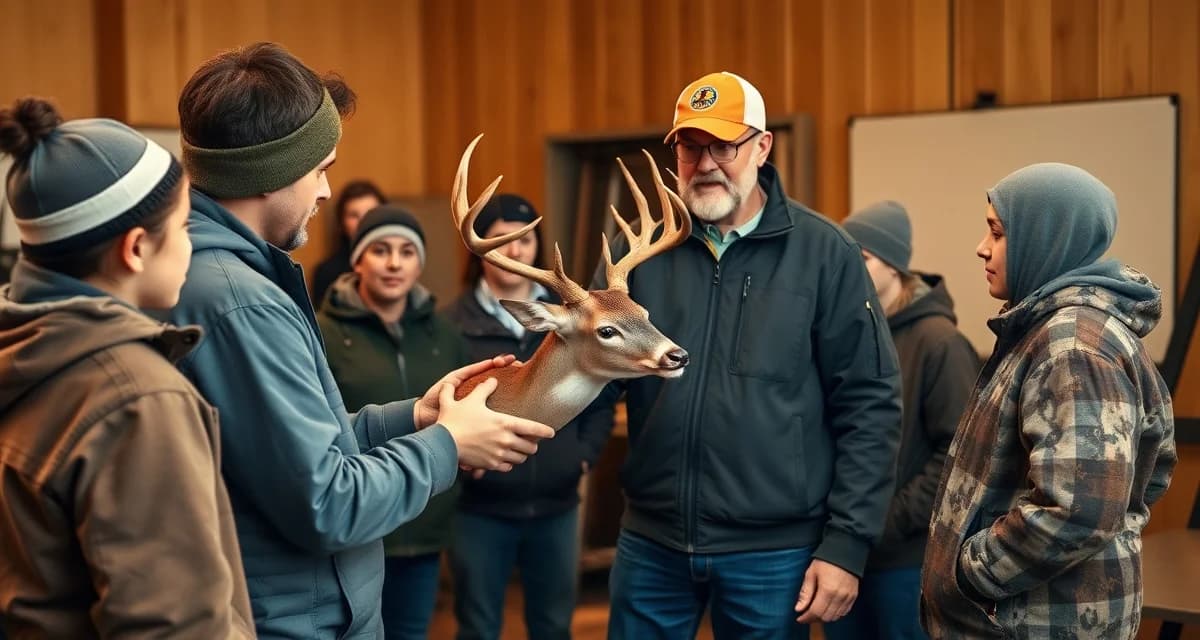
Taxidermy Shop Hunter Education Partnerships: Community and Customers
Hunter ed partnerships generate 5-10 new first-time customer relationships per year. These aren't leads from cold advertising - they're relationships built with new hunters at the start of their hunting lives, before they've developed loyalties to any taxidermist. A first-time deer hunter who learns proper field care from you and has a good experience at their first intake is a customer you can keep for 20-30 years.
Taxidermists who teach proper field care reduce their own cape damage intake rates. This is the practical benefit that most taxidermists overlook: every new hunter who learns your field care recommendations brings you better specimens. Better specimens produce better mounts, generate fewer disputes, and build your reputation faster.
TL;DR
- A first-time deer hunter who learns proper field care from you and has a good experience at their first intake is a customer you can keep for 20-30 years.
- Hunter ed partnerships generate 5-10 new first-time customer relationships per year.
- End with a brief overview of what to bring when they come to your shop and what information you'll need at intake.
- What should I teach hunters about field care for taxidermy?
- This is the practical benefit that most taxidermists overlook: every new hunter who learns your field care recommendations brings you better specimens.
- State hunter education programs are run by your state wildlife agency under a federal program framework.
How Hunter Education Partnerships Work
State hunter education programs are run by your state wildlife agency under a federal program framework. Classes are taught by volunteer instructors and cover hunting safety, wildlife identification, regulations, and conservation ethics. They're required for first-time hunters in most states.
There are two ways to partner with local hunter education programs:
Guest presentation: Contact your local hunter education program coordinator (your state wildlife agency's website has contact information) and offer to present a 15-30 minute segment on field care and specimen preparation. Most programs welcome qualified guest presenters, especially those with practical field experience. A hands-on demonstration with a practice cape is far more memorable than a lecture.
Program sponsorship: Some hunter education programs accept small business sponsorships that fund program materials or event costs in exchange for recognition. This is lower involvement than a presentation but still builds awareness.
The guest presentation approach produces far better results. There's no substitute for a room of new hunters watching you explain how to properly cape a deer and what happens when it's done wrong.
What to Teach
Keep your presentation practical and focused on two things: what to do right and what it costs when it goes wrong.
What to do right:
- How to properly cape a deer for a shoulder mount (cut placement, ear turning basics)
- How to cool a cape quickly after harvest
- How to bag and freeze properly
- How to label the bag so the cape doesn't get mixed up
What it costs when it goes wrong:
Show a photo of a slipped cape. Explain what caused it. Explain that no taxidermist can fix significant slip and that a trophy is lost when this happens. This isn't meant to scare - it's meant to motivate careful field care.
This is where the partnership benefit compounds: hunters who've seen a slipped cape and understand what caused it are far more careful in the field. Your intake quality improves.
Converting Contacts to Customers
Leave a business card or a simple one-page handout with every student. The handout should include your contact information, your location, and a brief description of the work you do.
Follow up with the program coordinator after your presentation. Ask if you can be listed as a "recommended local taxidermist" in any program materials or on any post-class resources they provide.
For off-season marketing that complements this community approach, see the taxidermy shop off-season marketing guide. For how to educate deer hunters on field care more broadly, see the deer cape care guide for hunters.
Frequently Asked Questions
How do I partner with hunter education programs in my area?
Contact your state wildlife agency to identify the hunter education program coordinator in your region. Introduce yourself as a licensed professional taxidermist who wants to contribute a field care presentation to upcoming classes. Most program coordinators welcome qualified guest presenters and will tell you the process for getting on the schedule. You may need to submit a brief outline of your presentation for approval. In some states, you may also be able to connect with individual hunter education instructors through state taxidermist association networks.
What should I teach hunters about field care for taxidermy?
Focus on the three most common mistakes and how to avoid them: delayed field skinning in warm weather (causes slip), improper cooling after skinning (causes bacterial damage), and improper labeling/bagging (causes mix-ups). Use visual examples - a photo of a well-prepared cape versus a slipped cape makes the point immediately and memorably. Demonstrate cut placement for a shoulder mount cape if time allows - hunters who've seen the correct cuts are far less likely to make cuts that compromise mountability. End with a brief overview of what to bring when they come to your shop and what information you'll need at intake.
How do I convert hunter education contacts into taxidermy customers?
Provide a business card or simple one-page handout to every student with your contact information and a brief description of your services. Include a QR code that goes to your website or Google Business Profile so digital-first hunters can save your information immediately. Ask the program coordinator to include your information in any post-class resource packet or email. The conversion happens when those new hunters take their first deer - they remember the taxidermist who helped them understand field care and they call or text. Be responsive to first-time customer inquiries and treat their first mount with extra care - a first-time customer who has a great experience becomes your most valuable word-of-mouth source.
How does this apply to solo taxidermy shops?
The principles in this guide apply to solo shops just as they do to larger operations, though the scale differs. A single-person shop may have lower absolute volume but faces the same documentation, compliance, and customer communication requirements. The practical advice here scales down to any shop size.
What is the most common mistake taxidermists make with taxidermy shop hunter education events?
The most common mistake is treating taxidermy shop hunter education events as an afterthought rather than building it into the standard workflow from the start. Shops that encounter problems in this area typically did not establish clear processes before season, which means every situation becomes a one-off decision rather than a standard response.
Related Articles
- Should Taxidermists Text Customers?
- Marketing Taxidermy Services to New Hunters
- Taxidermy Shop Customer Onboarding: First Impressions That Stick
- How to Raise Taxidermy Prices Without Losing Customers
Try These Free Tools
Put these insights into practice with our free calculators and planners:
Sources
- National Taxidermists Association (NTA)
- US Fish & Wildlife Service
- Small Business Administration (SBA)
Get Started with MountChief
The busiest taxidermy shops run on systems, not memory. MountChief replaces scattered spreadsheets and sticky notes with one organized workflow from intake to pickup.