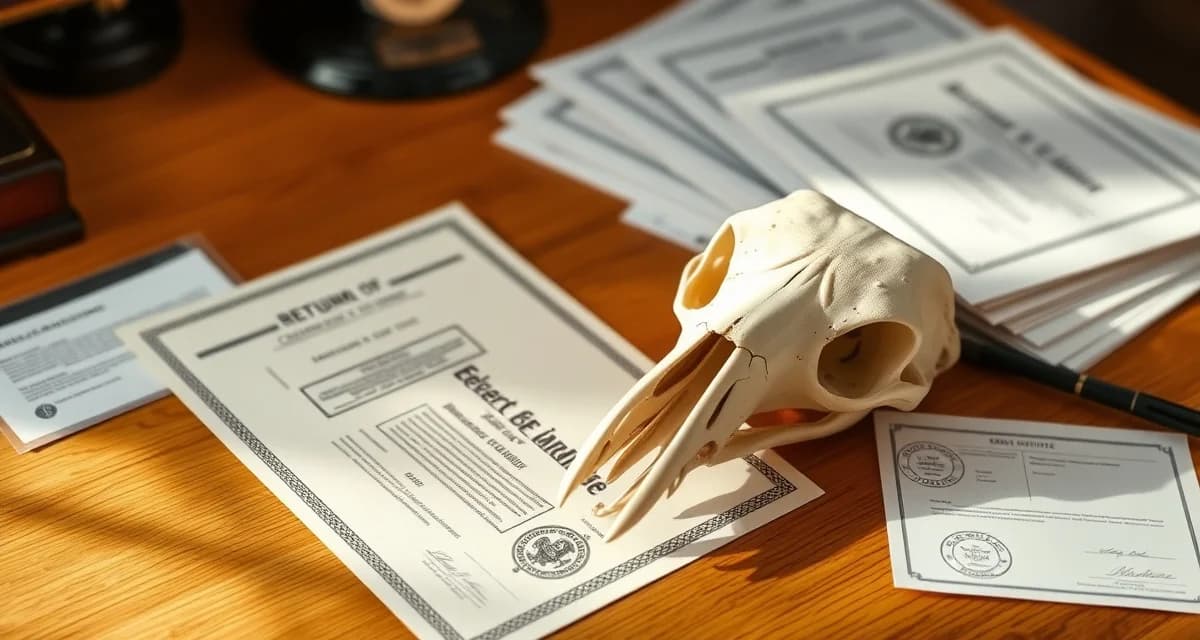
What Records Are Required for Bear Taxidermy?
Bear taxidermy record requirements are among the most involved in the industry. In most states that allow black bear hunting, the skull must be presented to a wildlife officer for sealing before the bear can legally be transferred to a taxidermist. Failure to document bear skull seal information can result in federal wildlife violations - not just state-level penalties.
Bear skull sealing requirements vary across the 35 states with bear hunting, but the general principle is consistent: the state wildlife agency verifies the bear was legally harvested before a taxidermist may possess it. Your intake record for any bear specimen must include the seal number issued by the wildlife officer, the seal date, and the issuing officer or station information when available.
Beyond skull sealing, your bear intake records must include the standard information required for most large game species: customer name and contact information, hunting license number, harvest date, and harvest location (state and county). Some states also require the CITES Appendix II notation for black bear, though this applies primarily to interstate transport and export rather than local taxidermy.
Keep all bear records for a minimum of five years, even if your state only requires two or three. Federal wildlife enforcement has no time limit on investigations related to bear poaching, and having complete documentation is your protection against being inadvertently involved in a poaching case.
[Wildlife compliance software for taxidermy](https://mountchief.com/wildlife-compliance-software-taxidermy) includes fields for skull seal numbers and seal dates to support bear compliance documentation. Bear taxidermy tracking tools let you flag bear jobs as requiring seal verification before any production work begins.
TL;DR
- Most states require a wildlife officer to physically seal the bear skull before you can legally accept it.
- Your intake record must capture the seal number, seal date, and issuing officer or station.
- CITES Appendix II applies to black bear for interstate transport and export, not routine local work.
- Keep all bear records for at least five years regardless of your state's minimum requirement.
- Accepting a bear without a skull seal is a violation even if the animal was legally harvested.
- Federal wildlife enforcement has no fixed time limit on poaching investigations.
Frequently Asked Questions
What records are required for black bear taxidermy?
Most states with legal black bear hunting require taxidermists to document the skull seal number and seal date issued by a wildlife officer, in addition to standard intake information. Standard required fields include the hunter's name and contact information, hunting license number, harvest date, and harvest state and county. Some states additionally require CITES documentation for black bear due to international trade regulations. Check your specific state wildlife agency requirements before bear season, as these requirements vary and are updated periodically. At minimum, document everything your state requires plus the skull seal information - it's the piece most taxidermists miss.
How do I document bear skull sealing for compliance?
When a hunter presents a bear specimen at your shop, ask to see the skull seal before accepting the specimen. The seal is a physical tag or band placed by a wildlife officer after inspection. Record the seal number, the date of sealing, and the name or station of the officer who sealed it when that information is available on the documentation. Enter this directly into your intake record for the job. If a hunter presents a bear without a skull seal, do not accept the specimen. Accepting an unsealed bear skull is a violation regardless of whether the bear was legally harvested, and your documentation won't protect you in that situation.
Which states have the strictest bear taxidermy record requirements?
States with high bear populations and active harvest programs tend to have the most detailed requirements. Maine, New Hampshire, Pennsylvania, New Jersey, Michigan, Wisconsin, Minnesota, and western states including Montana, Idaho, Colorado, and Wyoming all have bear record requirements that go beyond basic intake documentation. Some require the taxidermist to file a copy of the intake record with the state wildlife agency. Alaska has separate requirements for brown bear and black bear that reflect the different management approaches for each species. Always check the current requirements for your specific state and for the state where any out-of-state bear was harvested.
Can I accept a bear specimen before skull sealing occurs?
No. You should not accept a bear specimen until the skull has been physically sealed by a wildlife officer. The seal is your documentation that the harvest was verified as legal before the animal entered your possession. If a hunter arrives without a seal, direct them to the nearest wildlife agency check station before accepting the job.
What happens if I lose a bear intake record?
Missing records for bear are a significant liability. Federal wildlife enforcement can initiate investigations years after a harvest, and your records are your protection against being implicated in a poaching case. Document the loss immediately, reconstruct whatever you can from other sources, and note the reconstruction in writing. Digital records backed up to the cloud eliminate this risk going forward.
Do I need separate records for brown bear versus black bear?
Yes, in states where both species occur, such as Alaska. Brown bear and black bear are managed under separate programs with different harvest documentation. Alaska maintains distinct requirements for each species. Always check the requirements for the specific species and state of harvest.
Related Articles
Try These Free Tools
Put these insights into practice with our free calculators and planners:
Sources
- US Fish & Wildlife Service, Office of Law Enforcement
- National Taxidermists Association (NTA)
- Alaska Department of Fish and Game
- Pennsylvania Game Commission
- Michigan Department of Natural Resources
Get Started with MountChief
Bear taxidermy compliance is one of the most detail-intensive areas of wildlife recordkeeping, and a missed seal number can have serious legal consequences. MountChief includes dedicated fields for skull seal documentation and compliance flagging so bear jobs get the recordkeeping attention they require. Try MountChief before bear season to get your intake process ready.