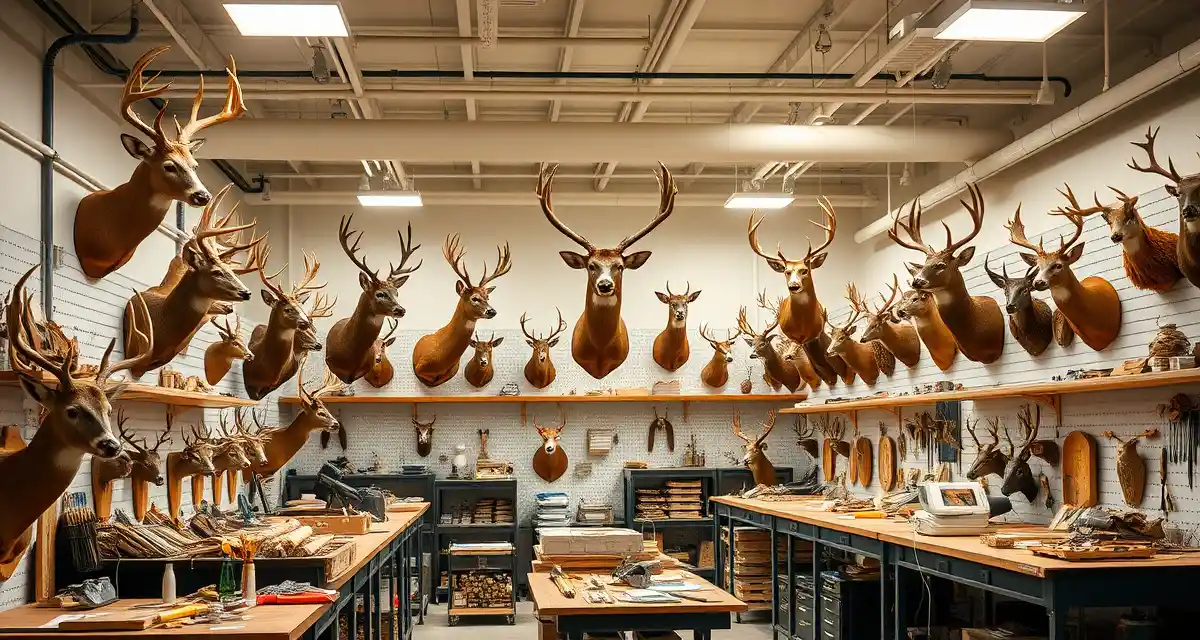
Before and After: Deer Season Workflow with MountChief
Deer season runs from roughly October through January for most shops. In those 12-14 weeks, a shop processing 300+ mounts will take in 200+ capes, handle hundreds of customer interactions, and ship multiple tannery loads. It's the most intense stretch of the taxidermy calendar.
Here's an honest look at what that season looks like with a paper-based system versus what it looks like with MountChief. This is based on the experience of a two-person shop in the Midwest processing around 280 mounts per year.
TL;DR
- In those 12-14 weeks, a shop processing 300+ mounts will take in 200+ capes, handle hundreds of customer interactions, and ship multiple tannery loads.
- fifth cape of the day, a nice 8-pointer from out of state, has a tag that's partially illegible from blood.
- End of day: 14 animals processed, 2+ hours of documentation work, 4 missed calls.
- End of day: 14 animals processed, documentation done in real time, zero filing backlog, customers already have tracking links.
- At even $30/hour shop rate, that's over $4,000 in recovered production time per season.
- This is based on the experience of a two-person shop in the Midwest processing around 280 mounts per year.
Saturday, November 9, Opening Weekend Intake
Before MountChief
The first weekend of firearms deer season. By 10am, there are six hunters in the shop with fresh capes and antlers. More will come this afternoon.
Each intake runs 15-20 minutes. Handwriting the intake form, filling in license numbers, sketching the antler configuration, labeling the tag with a marker, stapling the paper tag to the cape. The phone rings twice while you're working through the third customer. You don't answer.
By 3pm, you've processed 14 animals. The day's forms are in a stack on the counter. You meant to file them in the binder tonight, but you're exhausted. They sit there until Tuesday.
The fifth cape of the day, a nice 8-pointer from out of state, has a tag that's partially illegible from blood. You write down what you can read. You'll try to call the hunter later. You don't have his number written down yet.
End of day: 14 animals processed, 2+ hours of documentation work, 4 missed calls.
After MountChief
Same Saturday, same volume. But now there's an iPad at the intake station.
For each animal: photograph the kill tag (AI reads it and auto-fills species, tag number, harvest date, and zone in about 30 seconds), photograph the specimen, snap a few antler photos, confirm the customer's phone number, select the work order, and print the QR tag. Tape the QR tag to the specimen. Done.
Average time per animal: 3-4 minutes. All 14 animals are processed by 1:30pm. Every record is in the system with photos. MountChief automatically texted each customer a tracking link and intake confirmation.
The out-of-state cape with the illegible tag: you photographed what you could, the AI got the date and zone but flagged the license number as unreadable. A note was added to the job automatically. You'll call the customer when you have a minute, his number is already in the system.
End of day: 14 animals processed, documentation done in real time, zero filing backlog, customers already have tracking links.
January 14, Tannery Shipment
Before MountChief
You've accumulated 80+ capes ready for the tannery. Time to pack them up. You go through your binder, try to pull the record for each cape as you pack it. Some tags have come off during processing. You rematch them by handwriting on the cape. You're pretty sure this one goes with that record. Pretty sure.
You make a packing list by hand: customer name, species, tag number. Stuff the list in the box. Ship two boxes and a barrel.
Three weeks later, the tannery calls with a question about a cape. You need to look it up. The packing list is... somewhere. Maybe in the tannery file folder. Maybe with the January shipping receipts.
Customer calls from February through April: "Is mine at the tannery?" You don't know exactly. "I think so, yes." Some are still in your staging area. You haven't reconciled it lately.
Tannery confidence level: Low. You know roughly what shipped, but not precisely.
After MountChief
Same 80 capes, same packing process. But now you scan the QR tag on each cape as you put it in the box. MountChief moves each job to "At Tannery" status automatically and logs the shipment date. When you seal each box, you photograph the box contents.
You've assigned all 80 capes to a tannery shipment in the system. You can see the full list on your phone: customer name, species, QR tag ID, intake date. Every customer who was just moved to "At Tannery" status received an automated text: "Your [species] cape has been shipped to our tannery for processing. You'll receive an update when it returns to our shop."
When those same customers call in March asking about their mounts, you open MountChief on your phone and can tell them in 10 seconds: "Your cape shipped to the tannery on January 14. I expect it back sometime in March."
Tannery confidence level: Exact. Every specimen tracked by QR. Every customer notified automatically.
March 22, Tannery Return
Before MountChief
Two boxes arrive from the tannery. You open them and start matching tanned capes to your intake records. Some are easy, the capes still have your paper tags, though a few have deteriorated. One has no tag at all.
You spend two hours reconciling capes to records. Most match up. One you're not completely sure about, two very similar 8-point whitetail capes came back from the same tannery shipment. You match them by handwriting comparison on the original tags.
You think you got it right. You update your binder with a note that tannery returned these capes. Some customers have been calling. You'll try to call them back this week.
Post-return confidence level: Moderate. Probably right. One uncertain match.
After MountChief
Boxes arrive. You scan the QR tag on each cape as it comes out. MountChief moves each job to "Tannery Returned" status. Customers receive automated texts: "Good news, your cape is back from the tannery and in the shop."
The cape with no tag isn't a problem. You look at the tannery shipment log, find the two 8-point whitetails from that box, pull up both job records and their intake photos, and match the cape to the right record by comparing the antler photos from intake.
Reconciliation time: 20 minutes for 50+ capes.
Post-return confidence level: Exact. Every cape matched to its QR record by scan.
Peak Call Season: February Through April
Before MountChief
This is the brutal stretch. You're working on mounts, but most are still at the tannery or in the staging area. Customers are getting anxious. The calls come in waves.
Average: 10-12 status calls per day. Each one requires you to stop what you're doing, find the record, figure out where things are, give an answer that might be slightly off. Some days you don't answer and the voicemails pile up.
You're losing an hour to ninety minutes per day to these calls during peak season. That's time not spent mounting.
Daily call volume: 10-12. Daily time lost: 75-90 minutes.
After MountChief
Customers have their tracking links. They can see that their cape is "At Tannery" or "Tannery Returned / Staging." Most don't call because they already know.
The calls that come in are mostly from hunters who've lost their tracking link, older customers who prefer the phone, or people with a specific question about their work order. Actual useful conversations.
Average: 2-3 calls per day. 15-20 minutes total.
Daily call volume: 2-3. Daily time recovered: 60+ minutes.**
End of Season Summary
| Metric | Before MountChief | After MountChief |
|---|---|---|
| Intake time per animal | 15-20 minutes | 3-4 minutes |
| Intake documentation | Paper forms, later filed | Digital, real-time |
| Status calls at peak | 10-12/day | 2-3/day |
| Daily time on customer communication | 75-90 minutes | 15-20 minutes |
| Tannery shipment documentation | Hand list, moderate confidence | QR-tracked, exact |
| Specimen match-up errors | 1-2 per season | 0 |
| Customer satisfaction | "Where's my mount?" culture | Self-service, fewer anxious calls |
| Monthly software cost | $0 (paper + spreadsheet) | $79/month |
The time recovered in peak season at 90 minutes per day over 90 days is 135 hours. At even $30/hour shop rate, that's over $4,000 in recovered production time per season.
Related Articles
- Taxidermy Shop End-of-Season Review: What to Analyze After Deer Season
- Tips for the First Day of Deer Season at Your Taxidermy Shop
- What Should a Hunter Do with a Deer Cape Before the Taxidermist?
- How Far in Advance Should I Book Taxidermy Before Season?
FAQ
Does AI intake really work that well on tags that are covered in blood?
It works well on partially damaged tags and improves with good photography technique. Clean the tag surface gently, lay it flat in good light, and shoot from directly above. The AI can usually read at least the date and tag number even if the license number is obscured. Any field it can't read with confidence is flagged for manual entry, so you know immediately what needs attention.
What if I have employees who aren't tech-savvy?
MountChief's intake interface was designed for shop use, it runs on a tablet and the flow is simple enough that anyone who can use a smartphone can learn it in a single training session. The AI does the reading; the employee just takes the photos and confirms the fields.
Can I use MountChief alongside my existing paper records during the transition?
Yes, and many shops do exactly this during their first season. You run paper records as backup while building confidence in the digital system. By the end of the season, most shops abandon paper entirely because the digital records are more complete and infinitely more searchable.
How does this apply to solo taxidermy shops?
The principles in this guide apply to solo shops just as they do to larger operations, though the scale differs. A single-person shop may have lower absolute volume but faces the same documentation, compliance, and customer communication requirements. The practical advice here scales down to any shop size.
What is the most common mistake taxidermists make with before after deer season workflow?
The most common mistake is treating before after deer season workflow as an afterthought rather than building it into the standard workflow from the start. Shops that encounter problems in this area typically did not establish clear processes before season, which means every situation becomes a one-off decision rather than a standard response.
Try These Free Tools
Put these insights into practice with our free calculators and planners:
Sources
- National Taxidermists Association (NTA)
- US Fish & Wildlife Service
- Breakthrough Magazine
- State wildlife agencies
Get Started with MountChief
Deer season is the most demanding time of year for any taxidermist, and the shops that handle it best are the ones that prepared before opening day. MountChief gives you fast AI intake, automatic customer portal activation, and tannery tracking so your busiest weeks are also your most organized. Try MountChief before your next deer season opener.