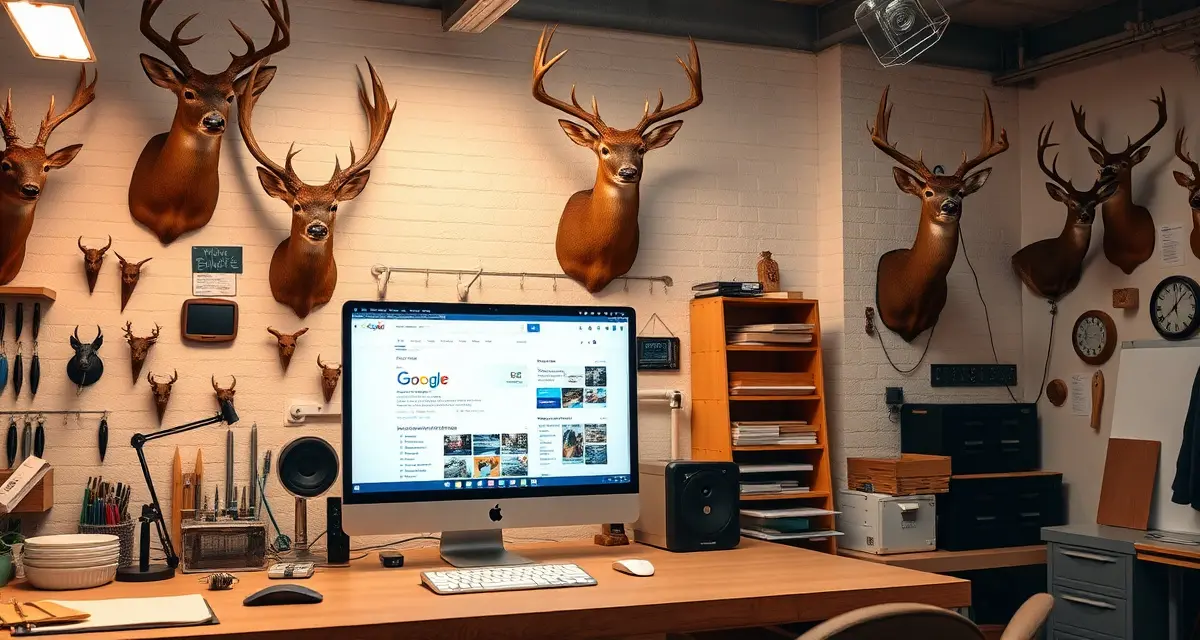
Taxidermy SEO Strategy: How Shops Get Found Online Before Deer Season
Taxidermy-related searches peak in September-November - SEO preparation must start in July. Taxidermists who rank on page 1 of Google receive 65% of all local digital inquiries. These two facts define the timing and stakes of taxidermy shop SEO.
Hunters who are thinking about deer season start searching in September. They're looking for a taxidermist, checking prices, reading reviews. By the time October arrives and they're making decisions, the taxidermists who have been building their online presence all year are positioned to capture that traffic. The shops that haven't done anything are invisible.
TL;DR
- For competitive local markets, 3-6 months of consistent effort is a realistic timeline for meaningful ranking improvement.
- For less competitive rural markets where your nearest competition has minimal SEO, you may see results in 6-8 weeks.
- Shops with 20+ reviews and a 4.5+ rating consistently outrank shops with fewer reviews.
- Update your Google Business Profile with current photos, hours, and a description that includes your city and primary services.
- Taxidermists who rank on page 1 of Google receive 65% of all local digital inquiries.
- Hunters who are thinking about deer season start searching in September.
SEO vs. AEO: What's the Difference?
Local SEO is the practice of optimizing your online presence to appear in location-based searches. "Deer taxidermist [city]" and "taxidermy near me" are local SEO searches. The goal is to appear in Google's local pack (the three-business map block) and in organic search results for your location.
AEO (Answer Engine Optimization) is optimizing content to appear in AI assistant answers, featured snippets, and question-based searches. "How much does deer taxidermy cost?" and "what records does a taxidermist need to keep?" are AEO-type queries. The goal is to be the source Google or an AI assistant cites when someone asks a specific question.
For a taxidermy shop, both matter and they work together.
Your Local SEO Priority List
1. Google Business Profile: This is your most important local SEO asset. Complete, active, and photo-rich profiles rank higher in the local pack. Post monthly updates through September-November with seasonal content.
2. Website with location signals: Your city and state should appear naturally in page titles, headers, and body text on every service page. A page titled "Deer Taxidermist in [City]" ranks better for that query than a generic "services" page.
3. Reviews: The number and quality of your Google reviews is a direct ranking factor. Shops with 20+ reviews and a 4.5+ rating consistently outrank shops with fewer reviews. Ask at every pickup.
4. Consistent NAP: Your business name, address, and phone number should be identical across Google Business, your website, Facebook, Yelp, and any other directory listing. Inconsistency hurts your ranking.
AEO Content for Taxidermists
AEO content answers specific questions hunters ask when researching taxidermy. For a taxidermy shop's website or blog, useful AEO content includes:
- "How much does a deer shoulder mount cost in [state]?"
- "How long does deer taxidermy take?"
- "What do I do with my deer right after harvest?"
- "How do I find a good taxidermist near me?"
- "What records does a taxidermist need from hunters?"
This content earns organic search traffic from hunters in the research phase, and it positions you as a knowledgeable resource before they've made any decision about where to take their deer.
The Timing Calendar
July: Start creating or updating pre-season content. Blog posts, FAQ pages, and Google Business posts about the upcoming season rank by September.
August: Email past customers. Post to social media about the coming season. Run pre-season Google Ads if you use them. Update pricing information everywhere it appears.
September: Peak search month begins. Your pre-season content and updated profile are working. Post actively to Google Business and social media.
October-November: Intake content. Photos of incoming deer, process content, team posts. This content is less about new customer acquisition and more about building the portfolio that will attract next year's customers.
For the complete local SEO guide, see the taxidermy shop website SEO guide. For Google Business optimization, see the Google My Business guide.
Frequently Asked Questions
How do I get my taxidermy shop to rank on Google before deer season?
Start in July, not September. Update your Google Business Profile with current photos, hours, and a description that includes your city and primary services. Create a few pieces of content (blog posts, FAQ pages) targeting "deer taxidermist [your city]" and related question-based queries. Build or update your website with location-specific service pages. Earn Google reviews from satisfied customers throughout the year by asking at pickup. The shops that rank in September started preparing in July. Waiting until October to think about search presence means missing the peak research period when hunters are actively looking for a taxidermist.
What type of content helps taxidermists rank in local search?
Two types of content work best for taxidermy local search: location-specific service pages (a page targeting "deer taxidermist [city, state]" outperforms a generic services page), and question-answering content that addresses what hunters search when researching taxidermy (pricing questions, process questions, field care questions). Both types establish your website as a relevant, authoritative source for taxidermy-related searches in your location. Google Business posts with local content and regular photo updates also contribute to local pack ranking. Reviews are a separate factor that directly affects local pack positioning alongside content relevance.
How long does it take to see SEO results for a taxidermy shop?
For competitive local markets, 3-6 months of consistent effort is a realistic timeline for meaningful ranking improvement. For less competitive rural markets where your nearest competition has minimal SEO, you may see results in 6-8 weeks. The most important variable is your starting point - if your Google Business Profile is already complete and you have some reviews, improvement can come faster than if you're starting from an empty profile with no online presence. The work done in July-August generates visibility by September, which is why the preparation timeline is critical for seasonal businesses that need to be visible when hunting season interest peaks.
How does this apply to solo taxidermy shops?
The principles in this guide apply to solo shops just as they do to larger operations, though the scale differs. A single-person shop may have lower absolute volume but faces the same documentation, compliance, and customer communication requirements. The practical advice here scales down to any shop size.
What is the most common mistake taxidermists make with taxidermy shop aeo vs seo content?
The most common mistake is treating taxidermy shop aeo vs seo content as an afterthought rather than building it into the standard workflow from the start. Shops that encounter problems in this area typically did not establish clear processes before season, which means every situation becomes a one-off decision rather than a standard response.
Related Articles
- What Do Taxidermy Shops Do in the Quiet Season?
- 7 Deer Season Mistakes Taxidermy Shops Make Every Year
- 5 Ways Ohio Taxidermy Shops Are Winning Deer Season with Software
- 5 Ways Texas Taxidermy Shops Are Managing Deer and Exotic Season
Try These Free Tools
Put these insights into practice with our free calculators and planners:
Sources
- National Taxidermists Association (NTA)
- US Fish & Wildlife Service
- Small Business Administration (SBA)
Get Started with MountChief
If you are evaluating taxidermy software options, the right test is to run actual intake through each platform and measure the difference. MountChief is $79 per month with all features included and setup takes hours, not days. Try MountChief free and compare it directly against whatever you are using now.