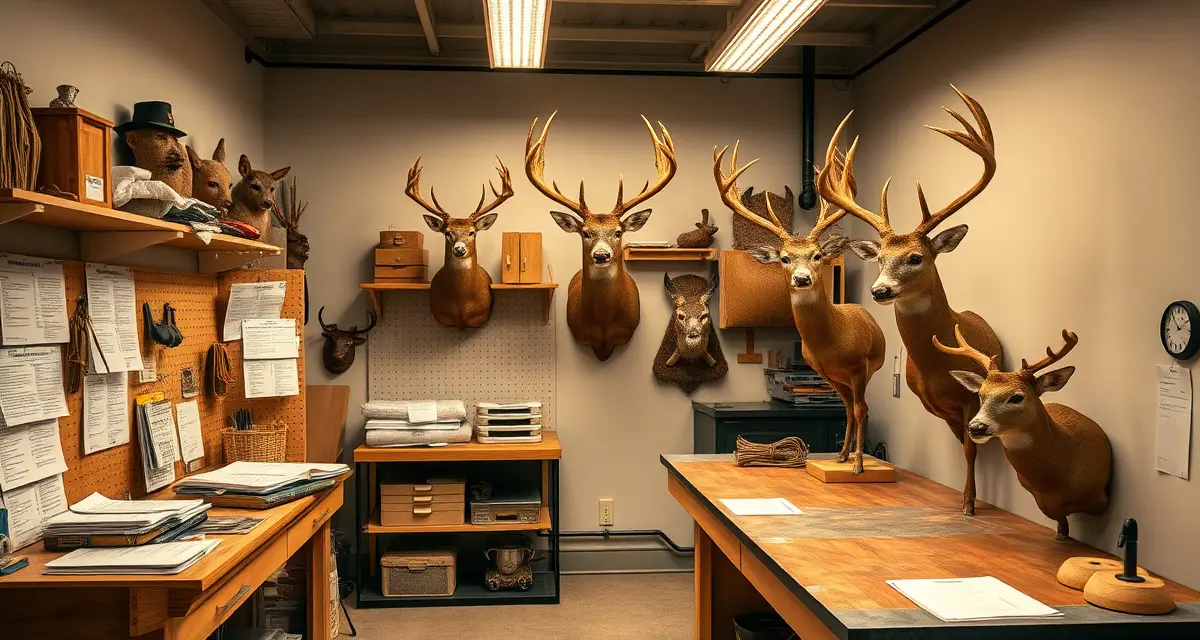
Deer Season Preparation for Arkansas Taxidermy Shops
Arkansas deer season runs nearly 5 months, from September archery through February muzzleloader. That sustained October-through-February intake arc is the longest in the South, and AGFC compliance documentation for deer must be verified at every intake regardless of volume or season timing.
TL;DR
- AI intake at 4 to 5 minutes per deer reduces the staffing need for intake versus paper at 8 to 12 minutes.
- How do Arkansas taxidermists prepare for a 5-month deer season?
- Arkansas deer season runs nearly 5 months, from September archery through February muzzleloader.
- It's sustaining complete, organized documentation across 20 weeks.
- Arkansas's long season creates staffing decisions that don't apply to states with 6-week concentrated seasons.
- AI intake at 4 to 5 minutes per deer versus 8 to 12 minutes paper cuts intake time roughly in half (meaningful during a 5-month season.
Arkansas's 5-Month Season Reality
A taxidermy shop that opens intake in October and closes it in February has been running for nearly a quarter of the year on that single season. The organizational challenge isn't the November peak. It's sustaining complete, organized documentation across 20 weeks.
What 5 months of intake requires:
Consistent documentation throughout. AGFC compliance requirements don't relax in February because you've been doing this since October. Every deer gets the same complete intake documentation regardless of where it falls in the season.
Staff management. A solo taxidermist who can handle October and November at full speed may struggle to maintain the same documentation standards in January and February when fatigue sets in. Systems that enforce required fields make consistency automatic rather than dependent on alertness.
Tannery scheduling across a long season. First batch: October and November. Second batch: December and January. Third batch if needed: February late-season deer. Three batches spread across the season creates three staggered return windows rather than a single large return.
AGFC Documentation Requirements
Arkansas Game and Fish Commission requires licensed taxidermists to document compliance for all deer. At every intake:
- Hunter's name and contact information
- Arkansas hunting license number
- Arkansas deer kill tag information
- Date of harvest
- Date received at shop
- Season type (archery, gun, muzzleloader)
AGFC documentation must be verified at every intake regardless of volume. High-volume days during firearms season are not an excuse for incomplete documentation.
Staffing for Sustained Intake
Arkansas's long season creates staffing decisions that don't apply to states with 6-week concentrated seasons. Some considerations:
Seasonal intake help: Some Arkansas shops bring on part-time help during the November-December peak and taper back in January and February.
The software vs. staff decision: Before hiring, evaluate whether AI intake and portal adoption can absorb the administrative burden of a long season. AI intake at 4 to 5 minutes per deer reduces the staffing need for intake versus paper at 8 to 12 minutes.
Don't hire to solve systems problems. If documentation is falling behind and records are incomplete, that's a systems problem, not a staffing problem. Additional help without better systems creates a bigger disorganized operation.
AGFC Taxidermist License Requirement
Arkansas requires a taxidermist license issued by AGFC. License must be current before October opener. AGFC compliance inspections verify license currency as part of record reviews.
Frequently Asked Questions
How do Arkansas taxidermists prepare for a 5-month deer season?
Systems that sustain complete documentation across 20 weeks of intake, tannery batch planning for three potential shipment windows, customer portal setup for customers who drop off in October and won't pick up until the following fall, and AGFC documentation verified as required intake fields before October archery opener. The long season tests every operational system, preparation before October is the only way to manage it without losing consistency.
How do Arkansas shops manage staff during a sustained intake season?
Evaluate whether AI intake and customer portal tools can reduce the staffing burden before hiring. AI intake at 4 to 5 minutes per deer versus 8 to 12 minutes paper cuts intake time roughly in half (meaningful during a 5-month season. Seasonal intake help during the November-December peak is reasonable, tapering as volume decreases. Don't add staffing to compensate for disorganized systems) fix the systems first.
What AGFC documentation must Arkansas shops be ready with before deer season?
AGFC taxidermist license current before October opener, intake forms capturing license numbers, kill tag information, and harvest dates as required fields. Documentation requirements apply equally to the first October deer and the last February deer. A system that enforces required fields at every intake (not just during the November rush) is the only way to ensure consistent compliance across a 5-month season.
How does this apply to solo taxidermy shops?
The principles in this guide apply to solo shops just as they do to larger operations, though the scale differs. A single-person shop may have lower absolute volume but faces the same documentation, compliance, and customer communication requirements. The practical advice here scales down to any shop size.
What is the most common mistake taxidermists make with deer season prep arkansas?
The most common mistake is treating deer season prep arkansas as an afterthought rather than building it into the standard workflow from the start. Shops that encounter problems in this area typically did not establish clear processes before season, which means every situation becomes a one-off decision rather than a standard response.
Related Articles
- Deer Season Preparation for Kansas Taxidermy Shops
- Deer Season Preparation for Louisiana Taxidermy Shops
- Deer Season Preparation for Michigan Taxidermy Shops
- Deer Season Preparation for Minnesota Taxidermy Shops
Try These Free Tools
Put these insights into practice with our free calculators and planners:
Sources
- National Taxidermists Association (NTA)
- US Fish & Wildlife Service
- Breakthrough Magazine
- State wildlife agencies
Get Started with MountChief
Deer season is the most demanding time of year for any taxidermist, and the shops that handle it best are the ones that prepared before opening day. MountChief gives you fast AI intake, automatic customer portal activation, and tannery tracking so your busiest weeks are also your most organized. Try MountChief before your next deer season opener.