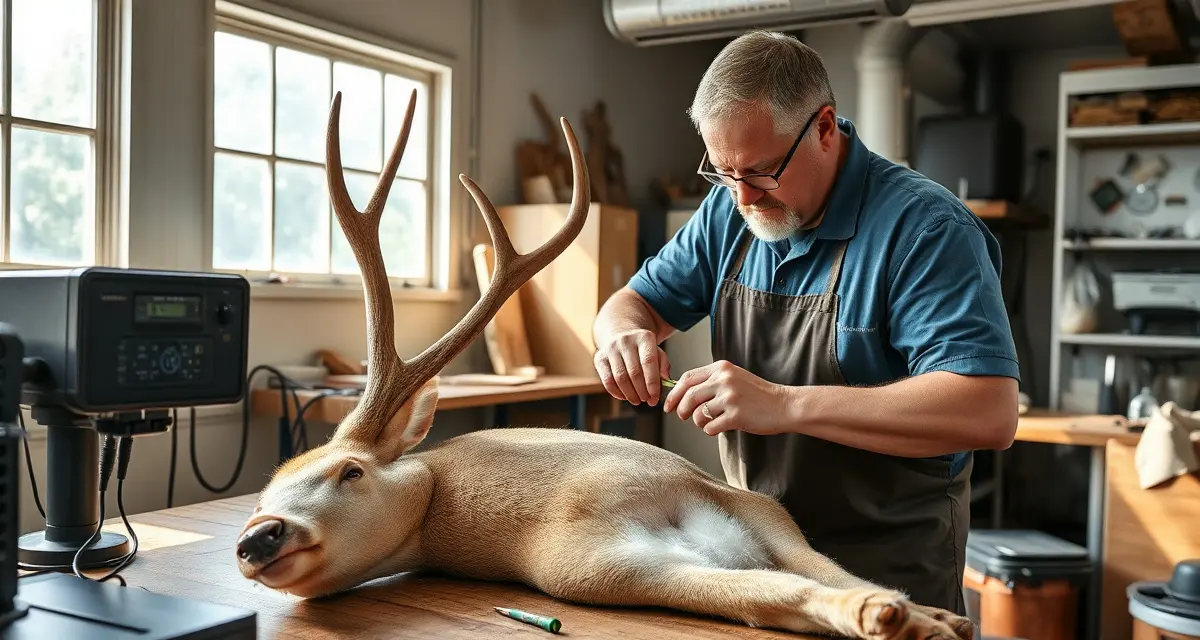
Deer Season Preparation for Louisiana Taxidermy Shops
Louisiana's September archery opener creates intake during the hottest part of the year. When Louisiana deer season starts, it's still summer. Temperatures regularly exceed 90 degrees, and warm weather intake requires immediate cape processing to prevent heat damage. Paper systems can't keep up with the speed this environment demands.
TL;DR
- Warm-weather intake protocol. Have a specific procedure for September deer intake that includes immediate freezer staging. The cape should be in your freezer within 15 minutes of arriving at your shop.
- AI intake that reduces per-deer time to 4 to 5 minutes is critical when every minute at room temperature matters for September deer.
- That 5-month intake arc requires an organizational system that holds up over the long haul.
- What LDWF documentation must Louisiana shops be ready with before deer season?
- Temperatures regularly exceed 90 degrees, and warm weather intake requires immediate cape processing to prevent heat damage.
- deer cape taken in 90-degree weather and not processed quickly is a damaged cape.
Louisiana's Early-Season Warm Weather Challenge
No other state in the country faces the combination Louisiana taxidermists deal with in September: active deer season in summer heat. A deer cape taken in 90-degree weather and not processed quickly is a damaged cape.
Heat causes slippage, the breakdown of the hair follicle attachment that makes hair fall out. Once significant slippage begins, a cape is either unusable or requires costly repairs. In Louisiana's September heat, the timeline from harvest to freezer or tannery prep is measured in hours, not days.
For taxidermists, this means:
Intake must be fast. A hunter arriving with a September deer cape needs immediate, fast documentation and immediate transition to frozen storage. AI intake at 4 to 5 minutes per deer gets the cape from the customer's hands to your freezer faster than a 10-minute paper intake.
Condition photos must be taken immediately. Any slippage beginning at intake needs to be documented before it progresses further. Intake photos capture the cape condition as it arrived, essential documentation if the heat damage becomes a dispute later.
Warm-weather intake protocol. Have a specific procedure for September deer intake that includes immediate freezer staging. The cape should be in your freezer within 15 minutes of arriving at your shop.
Louisiana LDWF Documentation Requirements
Louisiana LDWF requires basic harvest documentation for deer at taxidermist intake:
- Hunter's name and contact information
- Louisiana hunting license number
- Season-appropriate tag or license information for the deer
- Date of harvest
- Date received at shop
LDWF documentation must be captured at intake, not reconstructed later. A September deer that got processed quickly to prevent heat damage still needs complete documentation.
Louisiana's Extended Deer Season
Louisiana's deer season runs from September through late January, one of the longest seasons in the country. That 5-month intake arc requires an organizational system that holds up over the long haul. Paper records accumulated from September through January become difficult to manage and search.
Digital records allow you to find any deer from any point in the season in seconds.
Deer and Duck Season Overlap
Louisiana sits at the core of the Mississippi Flyway. Duck season begins in Louisiana in late November or December, running concurrent with late deer season. For shops that work both species:
- Deer and duck intake documentation requirements are different
- Waterfowl require federal permit verification; deer don't
- Your intake system needs to apply species-specific required fields
The multi-species intake situation is managed in software that applies different documentation workflows based on the species entered. Paper intake has no way to enforce species-specific requirements automatically.
Frequently Asked Questions
How do Louisiana taxidermists prepare for the early-season warm-weather deer intake?
Preparation includes fast intake protocols that transition September deer capes to freezer storage quickly, intake systems that capture condition photos immediately at arrival, and warm-weather intake procedures that prioritize cape preservation speed. AI intake that reduces per-deer time to 4 to 5 minutes is critical when every minute at room temperature matters for September deer.
How do Louisiana shops process deer capes quickly to prevent heat damage?
A warm-weather intake protocol: document the intake digitally (4 to 5 minutes with AI intake), photograph the cape condition immediately including any early slippage signs, apply a QR tag, and move the cape to freezer staging within 15 minutes of shop arrival. The faster the cape gets cold, the better the preservation. Don't let September deer capes sit in a warm intake area while you complete a 10-minute paper form.
What LDWF documentation must Louisiana shops be ready with before deer season?
Taxidermist license current with LDWF, intake forms capturing hunter license numbers and tag information as required fields, and a warm-weather intake protocol that doesn't sacrifice documentation completeness for speed. September opener is the documentation test. If your intake process is fast and complete when temperatures are 90 degrees and deer are coming in urgently, the rest of the season will be manageable.
How does this apply to solo taxidermy shops?
The principles in this guide apply to solo shops just as they do to larger operations, though the scale differs. A single-person shop may have lower absolute volume but faces the same documentation, compliance, and customer communication requirements. The practical advice here scales down to any shop size.
What is the most common mistake taxidermists make with deer season prep louisiana?
The most common mistake is treating deer season prep louisiana as an afterthought rather than building it into the standard workflow from the start. Shops that encounter problems in this area typically did not establish clear processes before season, which means every situation becomes a one-off decision rather than a standard response.
Related Articles
- Deer Season Preparation for Iowa Taxidermy Shops
- Deer Season Preparation for Kansas Taxidermy Shops
- Deer Season Preparation for Michigan Taxidermy Shops
- Deer Season Preparation for Minnesota Taxidermy Shops
Try These Free Tools
Put these insights into practice with our free calculators and planners:
Sources
- National Taxidermists Association (NTA)
- US Fish & Wildlife Service
- Breakthrough Magazine
- State wildlife agencies
Get Started with MountChief
Deer season is the most demanding time of year for any taxidermist, and the shops that handle it best are the ones that prepared before opening day. MountChief gives you fast AI intake, automatic customer portal activation, and tannery tracking so your busiest weeks are also your most organized. Try MountChief before your next deer season opener.