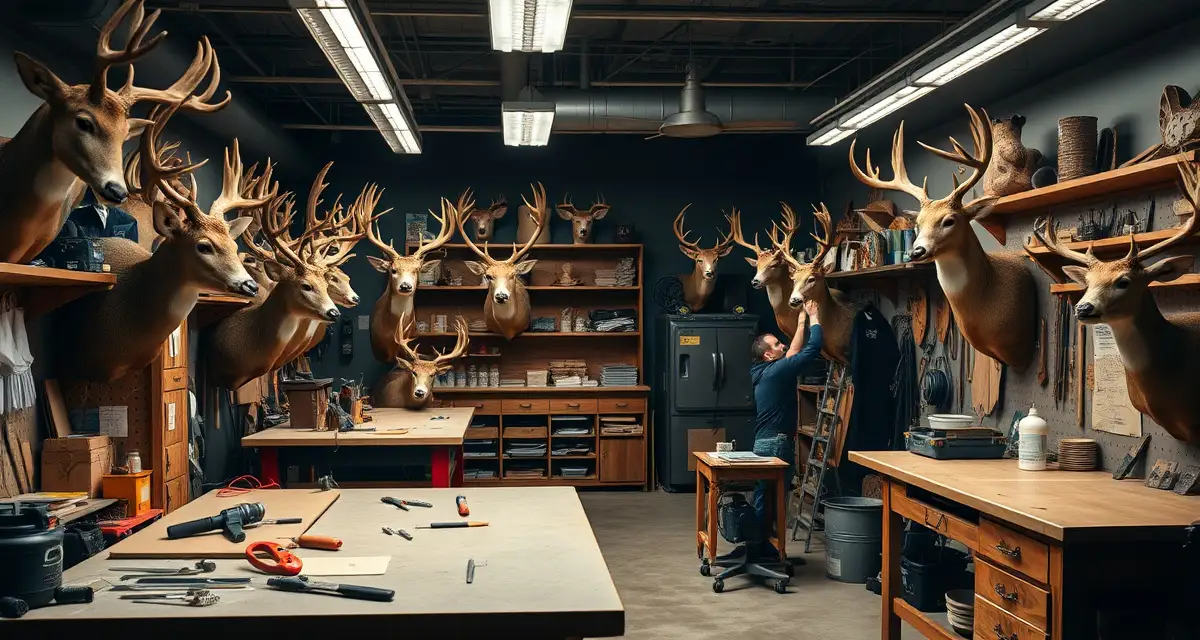
Deer Season Preparation for Texas Taxidermy Shops
Texas deer season starts earlier than almost anywhere else in the country. Archery opens September 28, which means Texas taxidermists are fielding drop-offs before most northern shops have even thought about prepping. With over 700,000 deer harvested annually (more than the next three states combined) the volume is extraordinary and the timeline pressure is real.
If you run a Texas taxidermy shop, "getting ready for deer season" isn't a two-week project. It's a 60-day runway.
TL;DR
- Early season archery deer will need to ship within two to four weeks of your first archery intake.
- Archery opens September 28, which means Texas taxidermists are fielding drop-offs before most northern shops have even thought about prepping.
- With over 700,000 deer harvested annually (more than the next three states combined) the volume is extraordinary and the timeline pressure is real.
- It's a 60-day runway.
- Exotic ranch season runs year-round on top of whitetail, which means some Texas shops never truly have an off-season.
- Your intake records for deer must include the customer's name and address, the species, date of receipt, and the hunter's license number.
Know Your Texas Deer Season Dates
Texas runs a complex deer season structure that creates different intake windows for different regions:
Archery season: September 28 through November 1 (North Zone and South Zone)
General season (North Zone): November 1 through January 4
General season (South Zone): November 1 through January 18
Extended antlerless and spike season: varies by county
The overlap of early archery and general season means Texas shops see intake stretched across nearly four months. You're not hitting one massive week like Wisconsin, you're absorbing a long, sustained wave.
Exotic ranch season runs year-round on top of whitetail, which means some Texas shops never truly have an off-season.
TPWD Documentation Requirements
The Texas Parks and Wildlife Department requires taxidermists to maintain records for all wildlife received. Your intake records for deer must include the customer's name and address, the species, date of receipt, and the hunter's license number.
For exotic species received from private ranches, additional documentation applies. Ranch-harvested exotics (axis deer, fallow deer, blackbuck, and others) require documentation that differs from wild game. Ask for the ranch name and harvest documentation at intake for any non-native species.
TPWD licenses over 2,000 active taxidermists in Texas, more than any other state. The agency conducts compliance inspections, so your records need to be in order. Get your Texas taxidermy shop management records current before September.
Preparing for Exotic Ranch Drop-Offs
If your shop is in Central Texas, the Hill Country, or near major ranch country, exotic ranch deer represent a significant and year-round revenue stream. These jobs have different documentation requirements and often different tanning protocols. Axis deer and fallow deer are processed differently than whitetail.
Set up separate intake categories in your management system for ranch exotics. This makes TPWD documentation cleaner and helps you track which work came from which source.
Ranch clients are often commercial hunting operations booking multiple mounts per year. Building a professional relationship with two or three large ranches can stabilize your revenue across the full calendar year.
Tannery Coordination for Texas Volume
Texas shops often work with tanneries that specialize in the volume and species mix typical of the state. Coordinate with your tanneries before September to confirm capacity, pricing, and first pickup dates.
Early season archery deer will need to ship within two to four weeks of your first archery intake. If you wait until November to contact your tannery about capacity, you're too late.
Some larger Texas shops run their own in-house tannery operation or use regional Texas-based tanneries to reduce shipping costs and turnaround times. If you're shipping out of state, factor shipping time into your customer timeline estimates.
Setting Up Your Deer Season Prep Guide Systems
For the September 28 archery opener, your intake systems should be fully configured and tested no later than September 1. That gives you four weeks to catch any issues before volume hits.
Configure your customer portal, test your automated intake confirmation messages, verify that your QR tag printer is stocked, and walk through a complete intake sequence as a dry run. Training any part-time help should happen in August, not October.
Related Articles
- Deer Season Preparation for Kansas Taxidermy Shops
- Deer Season Preparation for Louisiana Taxidermy Shops
FAQ
How do Texas taxidermists prepare for an early September deer opener?
Texas's September 28 archery opener requires preparation to start in earnest no later than August 1. Taxidermists should have their TPWD documentation setup complete, intake software configured, tannery capacity confirmed, and supplies stocked before September 1. The early opener leaves no room for last-minute scrambling.
How do Texas shops handle exotic deer alongside wild whitetail intake?
Exotic ranch deer require different intake documentation than wild-harvested whitetail under TPWD rules. Set up separate intake categories in your management system for ranch exotics, and confirm at intake whether each deer is a wild harvest or a ranch animal. This keeps your records clean and simplifies compliance tracking when your shop handles both types regularly.
What TPWD records must be ready before Texas deer season opens?
TPWD requires taxidermists to maintain written records for all wildlife received, including customer name and address, species, date of receipt, and hunter license number. Ensure your intake forms capture all of these fields by default. For exotic species from ranches, include ranch name and harvest documentation. Review TPWD's current taxidermist regulations each season, as requirements can be updated.
How does this apply to solo taxidermy shops?
The principles in this guide apply to solo shops just as they do to larger operations, though the scale differs. A single-person shop may have lower absolute volume but faces the same documentation, compliance, and customer communication requirements. The practical advice here scales down to any shop size.
What is the most common mistake taxidermists make with deer season prep texas?
The most common mistake is treating deer season prep texas as an afterthought rather than building it into the standard workflow from the start. Shops that encounter problems in this area typically did not establish clear processes before season, which means every situation becomes a one-off decision rather than a standard response.
Try These Free Tools
Put these insights into practice with our free calculators and planners:
Sources
- National Taxidermists Association (NTA)
- US Fish & Wildlife Service
- Breakthrough Magazine
- State wildlife agencies
Get Started with MountChief
Deer season is the most demanding time of year for any taxidermist, and the shops that handle it best are the ones that prepared before opening day. MountChief gives you fast AI intake, automatic customer portal activation, and tannery tracking so your busiest weeks are also your most organized. Try MountChief before your next deer season opener.