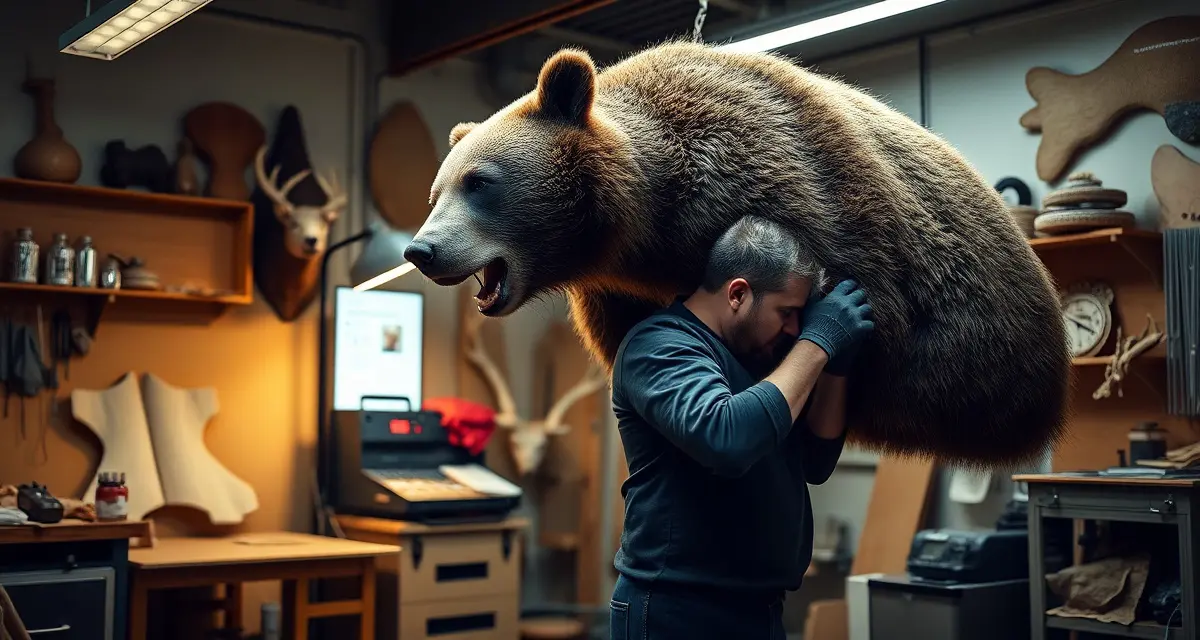
Bear Taxidermy Pricing Calculator: Set Profitable Rates for Bear Mounts
Bear work is some of the most labor-intensive and tannery-intensive work in taxidermy. The hides are thick, heavy, and require significantly more processing time than any standard deer or elk cape. The forms, especially for life-size, are expensive and often custom.
Yet plenty of taxidermists underprice bear work because they haven't done the math on what it actually costs to produce. Bear rug tannery processing alone costs three to four times what deer cape processing costs, and that's before you touch form, materials, or labor.
Here's how to calculate what you actually need to charge.
TL;DR
- If you're below $2,500 on a full life-size, you need to revisit your cost structure.
- From hide prep to finishing, expect 14 to 22 hours depending on bear size and your skull sealing and open-mouth work.
- Custom forms add $200 to $600 to material costs versus standard deer forms, and the labor hours reflect the scale of the work.
- Most taxidermists spend 30 to 50 hours on a life-size bear depending on size and complexity.
- hides are thick, heavy, and require significantly more processing time than any standard deer or elk cape.
- Here's how to calculate what you actually need to charge.
Bear Rug Pricing
A black bear rug is the most common bear mount. The final product is a full-skin rug with the head, claws, and paws included, typically open-mouthed.
Tannery Cost for Bear Rugs
Bear hide tannery processing is intensive. Commercial tanneries charge based on hide weight, and bear hides are heavy. Expect:
- Small bear (150 lbs live weight): $175 to $225
- Medium bear (200 to 300 lbs): $225 to $310
- Large bear (300+ lbs): $310 to $425
Shipping a bear hide to the tannery is also expensive due to weight and packaging. Budget $40 to $80 round-trip depending on distance and hide size.
Form and Materials for Bear Rugs
A rug backing with form-fitted head mount and open-mouth configuration requires:
- Felt or fabric backing: $30 to $60 depending on size
- Open-mouth head form: $65 to $120
- Glass eyes: $12 to $20
- Teeth set (if using artificial teeth): $25 to $60
- Earliners: $8 to $14
- Adhesives and finishing compounds: $30 to $50
Materials total: $170 to $325 depending on bear size and options
Labor Cost for Bear Rugs
Bear rug production is time-consuming. From hide prep to finishing, expect 14 to 22 hours depending on bear size and your skull sealing and open-mouth work.
At $30 per hour:
- 14 hours: $420
- 18 hours: $540
- 22 hours: $660
Bear skull sealing is a regulatory requirement in most states and must happen before the taxidermist can accept possession of the skull. If you're assisting customers with the skull sealing process, include that time.
Minimum Profitable Price for Bear Rugs
| Component | Mid-Range Estimate |
|---|---|
| Tannery + shipping | $300 |
| Form + materials | $240 |
| Labor (18 hrs at $30/hr) | $540 |
| Overhead | $200 |
| Total cost | $1,280 |
With a 15 to 20 percent margin: $1,470 to $1,540 minimum
Bear rugs priced below $1,200 in most markets are either losing money or reflect a taxidermist who hasn't run the real numbers.
Life-Size Bear Mount Pricing
Life-size bears are among the most expensive and time-consuming mounts in the business. Custom forms add $200 to $600 to material costs versus standard deer forms, and the labor hours reflect the scale of the work.
Custom Form Costs
Life-size bear forms are either stock or custom. Stock forms run $250 to $450 depending on size and pose. Custom forms for unusual poses or very large bears run $400 to $700.
Many taxidermists require a deposit before ordering custom forms because of the upfront cost.
Labor for Life-Size Bear
Life-size mount production is significantly more labor-intensive than a rug. Most taxidermists spend 30 to 50 hours on a life-size bear depending on size and complexity.
At $30 per hour:
- 30 hours: $900
- 40 hours: $1,200
- 50 hours: $1,500
Life-Size Bear Minimum Profitable Price
| Component | Estimate |
|---|---|
| Tannery + shipping | $350 |
| Form (life-size stock or semi-custom) | $350 |
| Materials (eyes, adhesives, finishing) | $120 |
| Labor (40 hrs at $30/hr) | $1,200 |
| Overhead | $300 |
| Total cost | $2,320 |
With margin: $2,670 to $2,790 minimum
Professional life-size bears in most markets price at $2,500 to $4,000+ depending on size, pose, and habitat work. If you're below $2,500 on a full life-size, you need to revisit your cost structure.
Bear Skull Sealing Considerations
In most states, bear skulls must be sealed by a wildlife officer before the taxidermist can take possession. This is worth noting on your intake form and explaining to customers at drop-off.
If you're doing European skull mounts on bear, that's additional work that must be priced separately. A pricing calculator framework that breaks out skull work from hide work keeps your records clean and your customer communication clear.
If you offer skull cleaning and sealing coordination as a service, that time is billable. Don't absorb it. Account for it in your bear taxidermy pricing.
Frequently Asked Questions
How do I calculate the cost of a bear rug mount?
Add your tannery cost based on hide weight (typically $175 to $425), round-trip shipping ($40 to $80), form and materials ($170 to $325), labor at your actual hourly rate (14 to 22 hours), and overhead allocation. Most bear rug production costs fall between $1,100 and $1,400, meaning minimum profitable pricing starts at $1,300 to $1,600.
What is the minimum profitable price for a life-size bear mount?
For most markets, a minimum profitable price for a life-size black bear mount built on honest cost accounting falls between $2,500 and $3,000. Larger bears, custom forms, or habitat work push prices higher. Anything significantly below $2,500 for a full life-size bear is likely being produced at a loss or at a heavily discounted labor rate.
How do I account for bear skull sealing costs in my pricing?
If bear skull sealing requires a wildlife officer inspection (as it does in most states), that's not your direct cost. But the time you spend coordinating with customers and handling the skull around the sealing process is. Build that time into your labor estimate, and if you offer skull cleaning or European mount work on bear skulls, price that as a separate line item on your invoice.
How does this apply to solo taxidermy shops?
The principles in this guide apply to solo shops just as they do to larger operations, though the scale differs. A single-person shop may have lower absolute volume but faces the same documentation, compliance, and customer communication requirements. The practical advice here scales down to any shop size.
What is the most common mistake taxidermists make with taxidermy shop pricing calculator bear?
The most common mistake is treating taxidermy shop pricing calculator bear as an afterthought rather than building it into the standard workflow from the start. Shops that encounter problems in this area typically did not establish clear processes before season, which means every situation becomes a one-off decision rather than a standard response.
Related Articles
- Bird Taxidermy Pricing Calculator: Turkey, Duck, and Upland Bird Rates
- High-Volume Taxidermy Shop Software: 300–500 Mounts Per Year
Try These Free Tools
Put these insights into practice with our free calculators and planners:
Sources
- National Taxidermists Association (NTA)
- US Fish & Wildlife Service
- Breakthrough Magazine
- State wildlife agencies
- Small Business Administration (SBA)
Get Started with MountChief
Bear taxidermy requires more documentation than almost any other species, and MountChief has bear-specific fields built in from the start. Try MountChief before bear season to make sure every intake is complete, compliant, and ready for any inspection.