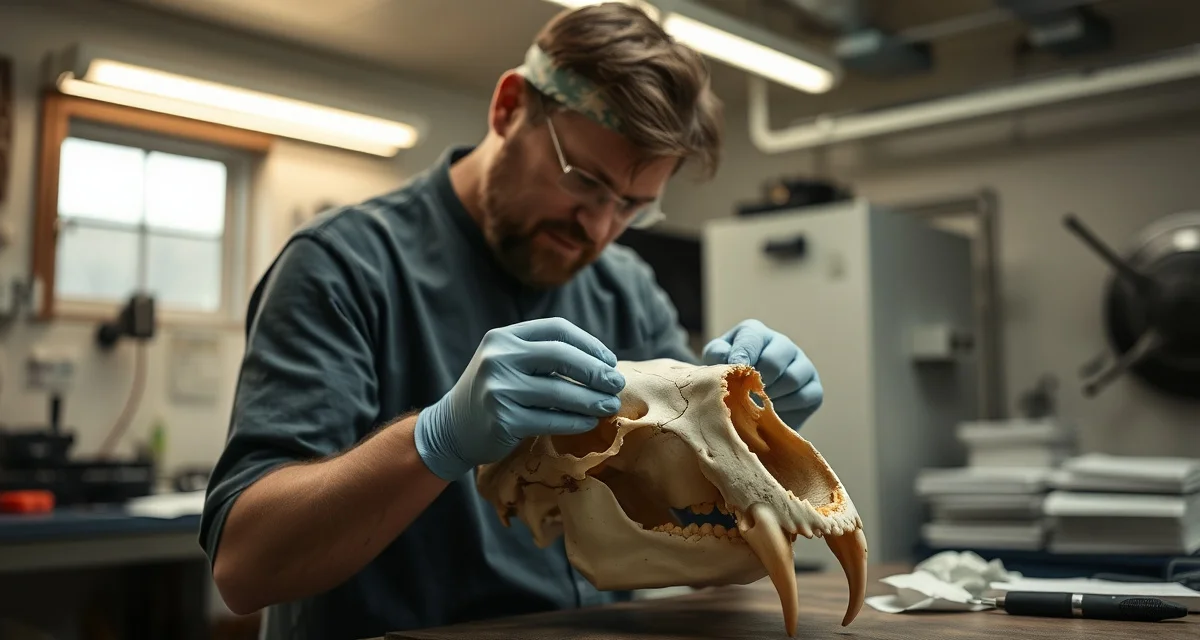
The Complete Bear Season Taxidermy Guide: Skull Sealing to Finished Mount
Bear skull sealing requirements are among the most commonly missed compliance steps in taxidermy, and they're enforced at the state level, often before the bear even reaches your shop. If your customer brings you a bear hide without a sealed skull, you may be holding evidence of a compliance violation that started before intake.
Bear rug and life-size mounts are the highest per-unit revenue jobs in most shops. A bear rug averages $800-$1,500. Life-size bears run $2,500-$6,000+. Managing the compliance requirements and extended production timelines on these high-value jobs directly affects your shop's reputation with your most valuable customers.
This guide covers every stage of bear season operations from field care to compliance documentation to intake to tannery to finished mount.
TL;DR
- Skinning and salting within 2-4 hours of harvest in warm weather is critical.
- The hide must be cooled immediately after harvest. A bear carcass holds heat for hours. Skinning and salting within 2-4 hours of harvest in warm weather is critical.
- Bear rug (flat with head): After tannery return, 15-30 hours of production depending on head complexity and size.
- Total timeline: 12-18 months from intake for most shops.
- Life-size bear: 60-120 hours of production for most taxidermists.
- Document everything. A $2,000+ bear mount dispute is much easier to resolve when you have photographic documentation of condition at intake.
Bear Season Timing by Region
Western states (Idaho, Montana, Wyoming, Colorado): Spring bear seasons run April through June. Fall seasons run September through October.
Eastern states (Pennsylvania, Virginia, North Carolina, Maine): Fall bear season typically runs November, overlapping with deer firearms season.
Upper Midwest (Minnesota, Wisconsin): Fall season, often in September before deer firearms season.
Southern states (Louisiana, Arkansas): Fall season, October through December.
The implication: bear intake can come from multiple directions throughout the year. A shop that accepts bear needs compliance readiness and intake preparation regardless of season.
State Skull Sealing: The Critical Compliance Step
Most states that have regulated bear hunting require skull sealing. The skull seal is applied by a state wildlife officer and serves as verification that the bear was legally harvested.
What skull sealing involves:
- The hunter must bring the skull (or the intact bear) to a state wildlife check station
- A wildlife officer examines the skull, extracts a premolar tooth for aging, and applies a physical seal
- The sealed skull is legally documented as a lawfully harvested bear
Your responsibility at intake:
- Verify the skull seal is present if required by your state (or the harvest state)
- Document the seal number in your intake record
- Do not remove or disturb the skull seal, it's a legal document
What to do if a customer arrives without a sealed skull:
- Do not accept the bear hide until the seal is obtained
- Explain the requirement clearly and professionally
- Hold the hide briefly if needed while the customer gets compliance, but document the hold
Different states have different skull sealing requirements, timelines, and procedures. Know the requirements for every harvest state your customers hunt in, not just your home state.
Bear Hide Care: Field to Shop
Bear hides are among the most challenging to handle properly. Heat is the enemy. Bears are killed in all four seasons, often in warm weather during spring season.
Field care requirements you should communicate to customers before season:
The hide must be cooled immediately after harvest. A bear carcass holds heat for hours. Skinning and salting within 2-4 hours of harvest in warm weather is critical.
If the customer isn't skinning in the field:
- Keep the whole carcass in shade
- Pack ice around the neck and shoulder if available
- Get to a processor or your shop as fast as possible
At intake, assess the hide for:
- Slippage, run your hand against the grain and look for loose hair patches
- Any cuts, bullet holes, or harvest damage to document
- Salt coverage (was it properly salted?)
- Hide temperature at arrival
Document everything. A $2,000+ bear mount dispute is much easier to resolve when you have photographic documentation of condition at intake.
Documenting Bear Intake to Protect Against Liability
Bear is the highest per-unit liability exposure in most shops. A customer who brings you a $3,000 black bear or an $8,000 grizzly cape has real money invested in the outcome.
The bear taxidermy tracking documentation includes:
- Skull seal number and state
- Species (black, brown, grizzly, these matter legally and for production)
- Estimated hide size
- Harvest state, date, and method
- Condition assessment at intake with photos
- Customer documentation (license, tag, skull seal receipt)
- Mount type agreed upon (rug, life-size, skull mount)
- Deposit collected
Have the customer sign the intake form acknowledging the condition assessment. Pre-existing damage documented and signed at intake cannot become a post-production dispute.
Tannery Timelines for Bear
Bear hides have the longest tannery timelines of any common trophy species:
Black bear hides: 8-12 weeks at most tanneries
Brown bear hides: 10-14 weeks
Grizzly hides: 12-16 weeks
Tannery timelines for bear depend heavily on hide thickness. A large boar black bear has significantly thicker hide than a sow, which affects processing time.
Bear hides also cost significantly more to tan than deer capes:
- Black bear: $120-$175 plus shipping
- Brown/grizzly: $200-$350 plus shipping (size-dependent)
Build these costs accurately into your pricing. Tannery costs have increased substantially since 2020 and many shops are still quoting pricing based on pre-2022 tannery rates. Undercharging for tannery is a direct profit leak.
Production Timelines by Mount Type
Bear rug (flat with head): After tannery return, 15-30 hours of production depending on head complexity and size. Total timeline: 12-18 months from intake for most shops.
Bear rug (no head): Faster, 8-15 hours of production. But these are less common and generate less revenue.
Life-size bear: 60-120 hours of production for most taxidermists. A high-quality life-size bear is one of the most complex and time-consuming mounts in the industry. Total timeline: 18-24 months for quality production.
Skull mount: European-style skull cleaning and display. 15-25 hours. Total timeline: 6-9 months.
Set customer timeline expectations at intake with these ranges and document them in the signed intake form.
Customer Communication for Bear Jobs
Bear customers are often among your most invested. They may have traveled long distances to harvest a trophy bear. The mount has significant personal and financial meaning.
Proactive communication at key milestones is essential:
At intake: Confirm receipt, review timeline expectations, and send the portal link
At tannery shipment: "Your bear hide shipped to the tannery today. Expected return in 10-12 weeks. You can track this stage in your portal."
At tannery return: "Your bear hide is back from the tannery and looking excellent. Production begins [timeframe]. Portal updated."
At completion: "Your bear [mount type] is complete. Ready for pickup. Final balance: $[amount]. Please schedule pickup at [link/phone]."
Customers who receive these updates don't call. Customers who hear nothing for 18 months do, and they're not happy when they do.
Frequently Asked Questions
How do I manage bear skull sealing compliance?
Know the skull sealing requirements for every state your customers harvest bears in. At intake, require the sealed skull documentation before accepting the hide. Document the seal number in your intake record. If a customer arrives without a sealed skull, hold the hide while they get compliance, but get the compliance before processing begins. Never disturb or remove a state skull seal, it's a legal document. If you're unsure about a specific state's requirements, contact that state's wildlife agency directly. Compliance regulations change, and verifying annually is better than assuming consistency.
What tannery timeline should I tell bear customers to expect?
Give ranges, not exact dates: black bear 8-12 weeks at the tannery, brown or grizzly 10-16 weeks. Add shipping time (1-2 weeks each way). Then add your production queue time after tannery return. The honest total timeline for a quality bear mount is 12-18 months for most shops, and 18-24 months for life-size. Customers who understand this at intake, and have it documented in their signed intake form, are far less likely to become impatient or confrontational about timeline. Overpromising a faster turnaround to secure the business creates problems that are worse than losing the job.
How do I document bear intake to protect against $2000+ liability claims?
Photograph the entire hide from multiple angles before touching it, back, belly, head, face, all four paws. Write a detailed condition assessment noting every cut, hole, thin area, slippage patch, or quality concern. Have the customer review and sign the condition assessment before you finalize intake. Note the skull seal number and photograph it. Collect a meaningful deposit (30-50% of the total is standard for high-value jobs). All of this documentation creates a defensible record if the customer later disputes the condition, timeline, or outcome. Without documentation, your word against theirs is not a strong position on a $3,000 job.
How does this apply to solo taxidermy shops?
The principles in this guide apply to solo shops just as they do to larger operations, though the scale differs. A single-person shop may have lower absolute volume but faces the same documentation, compliance, and customer communication requirements. The practical advice here scales down to any shop size.
What is the most common mistake taxidermists make with taxidermy shop bear season complete?
The most common mistake is treating taxidermy shop bear season complete as an afterthought rather than building it into the standard workflow from the start. Shops that encounter problems in this area typically did not establish clear processes before season, which means every situation becomes a one-off decision rather than a standard response.
Related Articles
- The Complete Deer Season Preparation Guide for Taxidermy Shops
- Elk Season Taxidermy Management Guide: Western Shop Operations
- Fish Skin Taxidermy Preparation Guide: From Fresh to Ready to Mount
Try These Free Tools
Put these insights into practice with our free calculators and planners:
Sources
- National Taxidermists Association (NTA)
- US Fish & Wildlife Service
- Breakthrough Magazine
- State wildlife agencies
- Small Business Administration (SBA)
Get Started with MountChief
Bear taxidermy requires more documentation than almost any other species, and MountChief has bear-specific fields built in from the start. Try MountChief before bear season to make sure every intake is complete, compliant, and ready for any inspection.