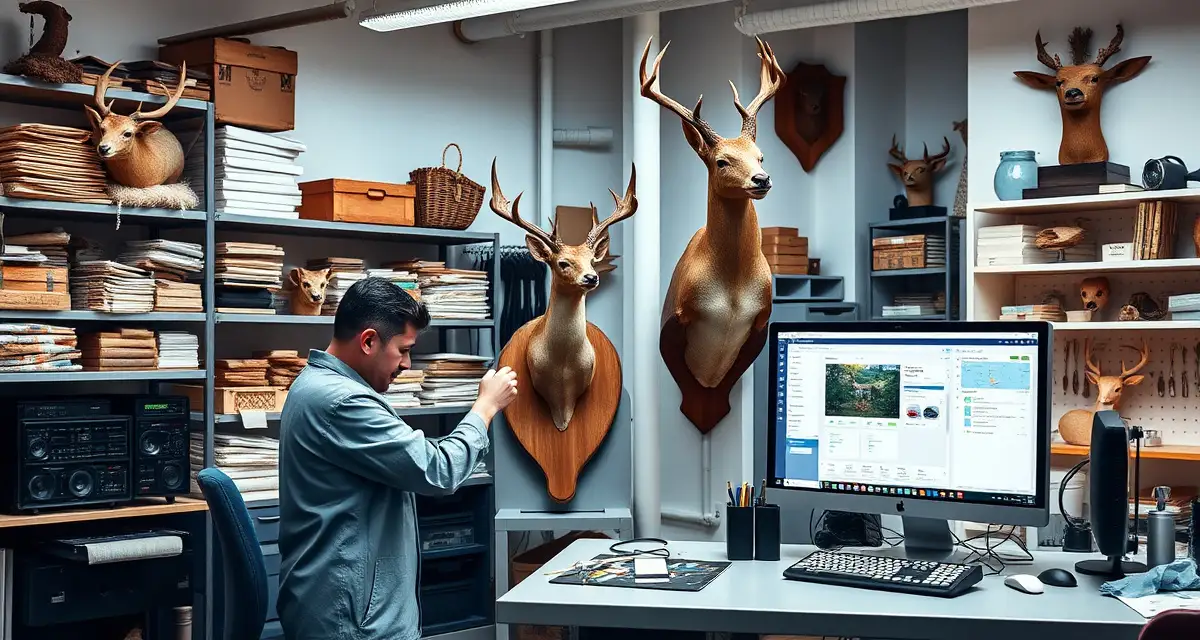
High-Volume Taxidermy Shop Software: 300–500 Mounts Per Year
At 300 mounts per year, you're not a hobbyist anymore. You're running a production operation. And a production operation needs production-grade tools.
Paper systems don't scale to this volume. Spreadsheets require someone doing full-time manual data entry to stay current. Generic job management software doesn't know what a tannery is or why it matters.
At 400 mounts per year, manual intake alone wastes 133+ hours annually. MountChief's AI intake brings that under 22 hours. That's 111 hours returned to the bench, or to your family.
TL;DR
- 300 active jobs at various stages, some in cold storage, some at the tannery, some on the bench, some in finishing, require a system.
- At 400 mounts per year, manual intake alone wastes 133+ hours annually.
- MountChief's AI intake brings that under 22 hours.
- That's 111 hours returned to the bench, or to your family.
- At 20 to 25 intakes per week during peak season, even a 15-minute intake per animal means 5+ hours per day of nothing but intake.
- At 7 minutes each, that's 70 hours of phone time per year.
What Changes at High Volume
Intake becomes a bottleneck. At 20 to 25 intakes per week during peak season, even a 15-minute intake per animal means 5+ hours per day of nothing but intake. That's before you've touched a mount.
Job tracking complexity multiplies. 300 active jobs at various stages, some in cold storage, some at the tannery, some on the bench, some in finishing, require a system. You can't hold this in your head or in a binder.
Customer communication becomes impossible to manage manually. 300 customers waiting on mounts, each one potentially calling once or twice during the process, is 600 phone interactions. At 7 minutes each, that's 70 hours of phone time per year.
Mix-up liability increases with volume. At 50 mounts per year, a mix-up is rare. At 400 mounts per year across multiple employees and a tannery cycle, the statistical probability of a paper tag failure or record mismatch is meaningful.
Staffing decisions need data. At this volume you're making decisions about whether to hire intake help, whether to add a second tannery relationship, whether to invest in finishing equipment. Those decisions require operational data that paper systems can't provide.
How MountChief Handles 300–500 Mounts Per Year
AI Intake That Scales With Volume
MountChief's AI intake processes a new specimen in under 3 minutes regardless of volume. Whether you're doing 5 intakes a day or 25, the per-specimen time is constant. Paper intake gets slower as you get tired; AI doesn't.
At 400 mounts per year with 17 minutes saved per intake vs. paper, you recover 113 hours annually at the intake desk alone.
Multi-Employee Job Assignment
High-volume shops have multiple people, maybe a full-time employee handling intake, someone doing finishing work, and the primary taxidermist on complex mounts. MountChief lets you assign jobs to specific people and track production stage by employee.
When something needs attention, you can see who has what and what's stalled.
Tannery Management at Scale
A 400-mount shop might ship 60 to 80 hides per tannery batch. Tracking which hides went in which shipment, to which tannery, when they shipped, and when they're due back, all while managing three or four batches at different stages, requires a system. MountChief's tannery tracking handles multiple concurrent shipments across multiple tanneries.
Customer Portal That Runs on Autopilot
With 300 customers waiting on mounts, you can't be making individual outreach calls. The customer portal handles routine communication automatically. Customers check their status online. Milestone notifications go out when jobs advance. You're not spending any time on routine updates.
Flat Pricing Regardless of Volume
MountChief is $79/month whether you're doing 100 mounts or 500. MountMonitor's pricing scales with usage, costs escalate as your volume grows. The shops that need software most are high-volume shops. Penalizing them with volume-based pricing is backward.
ROI at 400 Mounts Per Year
| Cost area | Without MountChief | With MountChief | Annual savings |
|---|---|---|---|
| Intake labor (at $25/hr) | $2,750 | $550 | $2,200 |
| Status call time (at $25/hr) | $1,750 | $175 | $1,575 |
| Mix-up liability (avg claim) | $2,500 risk | ~$0 | $2,500 risk removed |
| Software cost | $0 | $948 | |
| Net benefit | | | $4,827/year |
This calculation is conservative. It doesn't account for revenue from additional mounts you can take due to faster intake, or the referral value of customers who have a professional portal experience.
Related Articles
- How Do I Choose the Right Taxidermy Software for My Shop?
- What Should a First-Year Taxidermy Shop Expect During Deer Season?
- How Do I Get a Demo of Taxidermy Shop Software?
- Best Taxidermy Software for Bird Mount Shops in 2026
FAQ
How do large taxidermy shops manage job tracking?
High-volume shops need a combination of QR-based specimen tracking, digital job records with stage management, and tannery shipment logging. The shops that successfully manage 400+ mounts per year use purpose-built taxidermy software, not spreadsheets, not generic job management tools. MountChief is built specifically for this volume range.
What staffing level is needed for 400 mounts per year?
A well-run shop with AI intake and automated customer communication can handle 400 mounts per year with 2 to 3 people, a primary taxidermist doing the majority of mounting work, one person handling intake and customer communication, and part-time finishing help. Without automation, the same workload typically requires an additional full-time administrative person.
How do high-volume shops handle customer communication?
The only scalable answer at 300+ mounts per year is automated milestone notifications and a customer self-serve portal. Making individual outreach calls for 300+ customers is a full-time job. Shops that try to do it manually either stop doing it (and get flooded with calls) or hire someone just for customer communication. A portal eliminates the need for both.
How does this apply to solo taxidermy shops?
The principles in this guide apply to solo shops just as they do to larger operations, though the scale differs. A single-person shop may have lower absolute volume but faces the same documentation, compliance, and customer communication requirements. The practical advice here scales down to any shop size.
What is the most common mistake taxidermists make with high volume taxidermy shop software?
The most common mistake is treating high volume taxidermy shop software as an afterthought rather than building it into the standard workflow from the start. Shops that encounter problems in this area typically did not establish clear processes before season, which means every situation becomes a one-off decision rather than a standard response.
Try These Free Tools
Put these insights into practice with our free calculators and planners:
Sources
- National Taxidermists Association (NTA)
- US Fish & Wildlife Service
- Taxidermy Today
- Small Business Administration (SBA)
Get Started with MountChief
The right shop management software is the foundation of a well-run taxidermy operation. MountChief combines AI intake, tannery tracking, customer portal communication, and compliance documentation in one platform built specifically for taxidermists. Try MountChief free and see the operational difference in your first week.