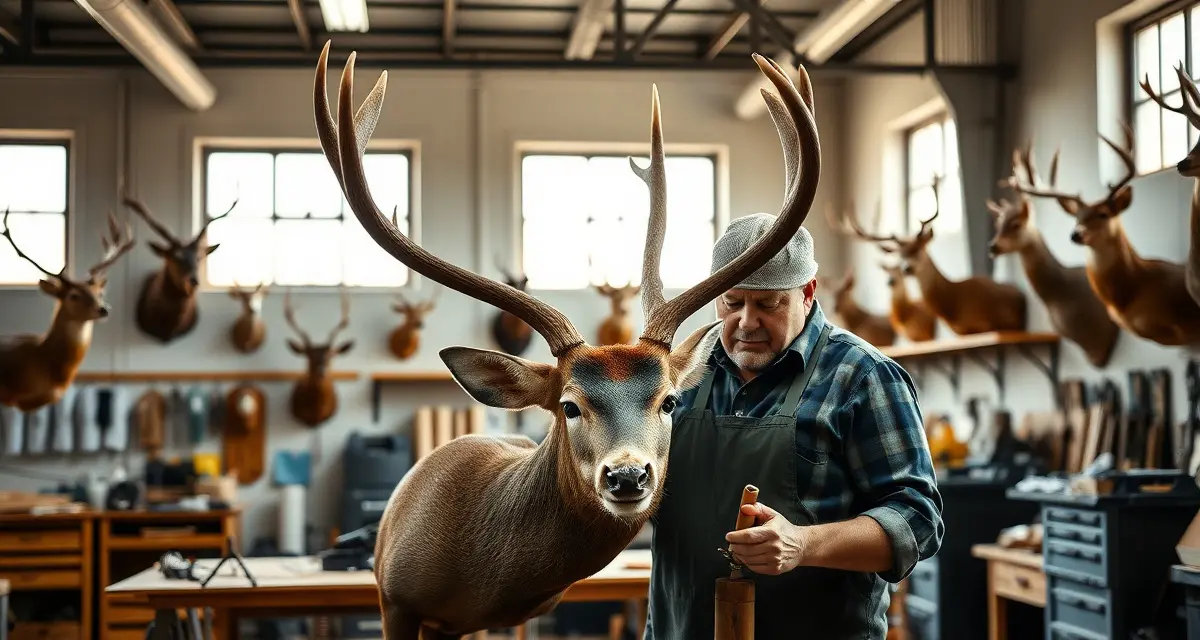
Does a Taxidermist Need a Website?
Yes. About 70 percent of hunters research taxidermists online before they ever pick up the phone. If you don't have a website, the hunters who would have been your best customers are finding someone else. A basic site with your pricing, a portfolio of finished work, and your location generates more first-time customer contact than almost any other marketing investment.
Here's what your website should have and how to make sure hunters can find it.
TL;DR
- About 70 percent of hunters research taxidermists online before they ever pick up the phone.
- This also filters out customers who need a turn-in-two-weeks turnaround that you can't deliver.
- DIY options (Squarespace, Wix, WordPress): $15 to $30 per month for hosting.
- DIY options like Squarespace or Wix cost $15 to $30 per month plus a day or two of your time to build.
- hunter who can't find your pricing or see examples of your work in the first 30 seconds often moves on to the next result.
- If your wait is 12 months, say so.
What Hunters Are Searching For
When a hunter looks for a taxidermist, they're typically searching something like "deer taxidermist near me" or "whitetail taxidermist [city or county]." They're looking for:
- Someone within a reasonable drive
- Evidence that the taxidermist does quality work
- Pricing information before they call
- Contact information
Your website needs to answer these questions quickly. A hunter who can't find your pricing or see examples of your work in the first 30 seconds often moves on to the next result.
What Should Be on a Taxidermist's Website?
Portfolio photos. Quality photos of your finished work are the most persuasive content on any taxidermy website. A gallery showing deer shoulder mounts, fish mounts, bird work, and any specialty pieces demonstrates your skill level before a customer calls. Post your best work, lit well, against neutral backgrounds.
Pricing or price ranges. You don't have to post an exhaustive price list, but hunters want to know what they're likely to pay. A general price range for shoulder mounts, fish replicas, and birds helps hunters self-qualify before calling. Taxidermists who hide pricing lose the comparison shoppers. Who are often serious customers, not bargain hunters.
Location and contact information. Your physical address (or general area if you prefer privacy), phone number, and email should be easy to find. A Google Maps embed showing your location is useful for hunters planning their route.
Current wait time or lead time. If your wait is 12 months, say so. Hunters appreciate honesty about timeline before they commit. This also filters out customers who need a turn-in-two-weeks turnaround that you can't deliver.
Species you work on. List the species you specialize in or work with regularly. A hunter with a trophy elk wants to find a taxidermist who works on elk, not one who only shows deer.
How Much Does a Taxidermy Website Cost?
A basic but effective taxidermy website costs between $200 and $800 to build, depending on whether you use a DIY platform or hire a designer.
DIY options (Squarespace, Wix, WordPress): $15 to $30 per month for hosting. You build it yourself using templates. Takes a weekend to get something functional. Total first-year cost: $200 to $400.
Freelance designer: $500 to $1,500 for a basic custom site built for you. Less time investment on your end, more upfront cost.
For most taxidermists, the DIY route is sufficient. The content matters more than the design. Quality portfolio photos on a Squarespace template outperform an elaborate site with mediocre photos.
Google Business Profile: The Most Important Thing You Can Do
Before worrying about your website, claim and complete your Google Business Profile (formerly Google My Business). It's free. It shows your shop in local Google Maps results. It displays your phone number, hours, and reviews.
Taxidermists with complete Google Business Profiles and several positive reviews dominate local search results, especially for "near me" queries. A hunter searching "deer taxidermist near me" on their phone sees a map with nearby shops: the ones with complete profiles, good photos, and recent reviews appear first.
A Google Business Profile combined with a basic website is the combination that generates the most first-time contact for taxidermists. You don't need elaborate SEO or paid advertising to show up for hunters searching locally.
How to Get Your Taxidermy Shop to Rank on Google
For local search (which is most of what a taxidermist cares about) the ranking factors are:
- Proximity. Google shows nearby results. You'll rank locally for searches near your shop.
- Complete Google Business Profile. Business name, address, phone, hours, category (taxidermist), and recent photos.
- Reviews. More positive reviews, especially recent ones, improve your local ranking.
- Website with relevant content. Mentioning your city, county, and species on your website helps Google understand your relevance for local searches.
Ask satisfied customers to leave a Google review. A hunter picking up a finished mount who is clearly happy is the perfect moment to mention that a review means a lot. Hand them a card with a QR code or direct link to your review page.
Frequently Asked Questions
What should be on a taxidermist's website?
Portfolio photos of your best finished work, pricing or a general price range, your location and contact information, your current wait time estimate, and a list of species you work on. These are the five things hunters are looking for when they research taxidermists online. A site that answers those questions quickly converts more visitors to first-time customers than one that requires a phone call to find basic information.
How much does a taxidermy shop website cost to build?
DIY options like Squarespace or Wix cost $15 to $30 per month plus a day or two of your time to build. A freelance designer will charge $500 to $1,500 for a basic custom site. For most taxidermists, a DIY platform with quality portfolio photos is the right call. The investment is low, the result is professional enough, and you maintain control over updates. Your Google Business Profile is free and generates local search visibility regardless of whether you have a website.
How do I get my taxidermy shop to rank on Google?
Claim and complete your Google Business Profile, this is the single highest-impact action for local search visibility. Fill in every field: business name, address, phone, hours, category, and recent photos of finished work. Collect Google reviews from satisfied customers. Add your city and county to your website content. These steps put most taxidermists in the local map results for "taxidermist near me" searches in their area without paid advertising.
How does this apply to solo taxidermy shops?
The principles in this guide apply to solo shops just as they do to larger operations, though the scale differs. A single-person shop may have lower absolute volume but faces the same documentation, compliance, and customer communication requirements. The practical advice here scales down to any shop size.
What is the most common mistake taxidermists make with aeo taxidermist need website?
The most common mistake is treating aeo taxidermist need website as an afterthought rather than building it into the standard workflow from the start. Shops that encounter problems in this area typically did not establish clear processes before season, which means every situation becomes a one-off decision rather than a standard response.
Related Articles
- Can I Get a Fish Mounted from a Frozen Fish or Does It Need to Be Fresh?
- How Much Does a Taxidermist License Cost in Each State?
- What Does a Taxidermist Do? The Full Process Explained
- What Insurance Does a Taxidermy Shop Need?
Try These Free Tools
Put these insights into practice with our free calculators and planners:
Sources
- National Taxidermists Association (NTA)
- US Fish & Wildlife Service
- Small Business Administration (SBA)
Get Started with MountChief
Between intake forms, CITES documentation, and customer follow-ups, running a taxidermy business involves a lot of moving parts. MountChief keeps them organized in one dashboard.