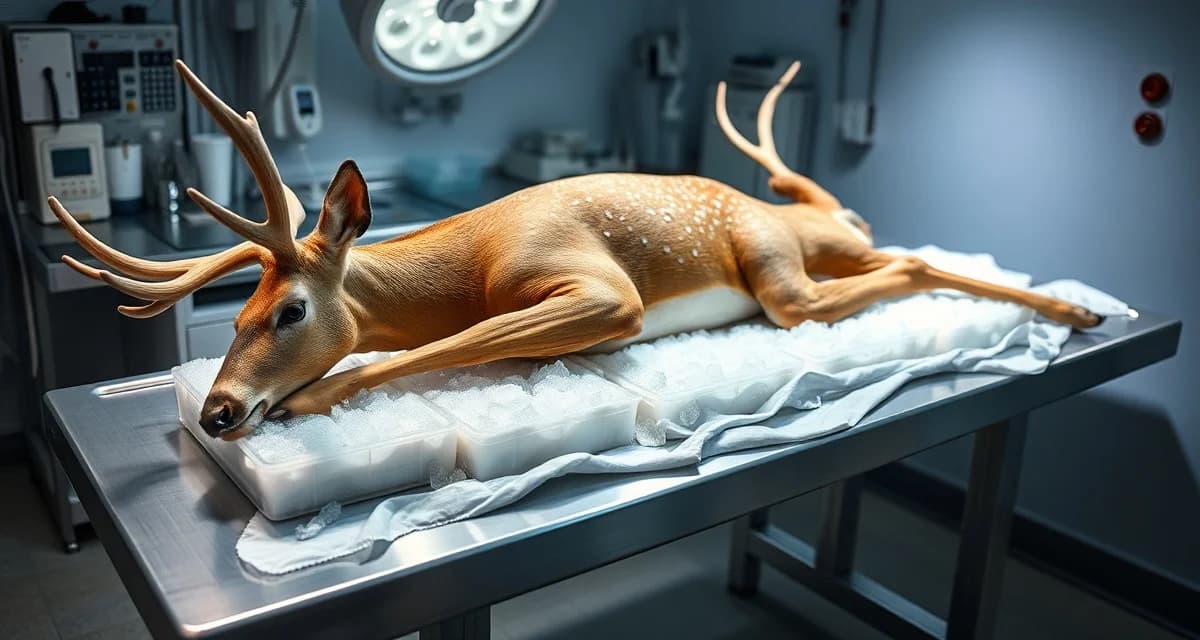
How to Store a Specimen Before Taking It to the Taxidermist
The short answer: Freeze it, whole if possible, or get it to the taxidermist within 24 hours. The biggest mistake hunters make is leaving a specimen in a warm vehicle, a warm garage, or the refrigerator for too long. Slippage (hair loss due to bacterial decomposition) starts within hours in warm conditions and cannot be reversed.
Here's exactly what to do by species.
TL;DR
- Freeze specimens as quickly as possible after harvest to prevent decomposition and preserve quality.
- Never gut a bird or fish intended for a full mount; gutting changes body shape.
- Wrap specimens tightly to prevent freezer burn, which degrades mount quality significantly.
- Cape deer and elk before freezing, but do not cut the cape too short at the brisket.
- Do not salt a hide unless you cannot freeze it; improper salting can cause hair damage.
- Label every specimen with your name and the date frozen before it goes in the freezer.
The Core Rule
Heat and time are your enemies. A fresh kill starts decomposing immediately. In warm conditions (above 40°F), bacterial activity under the skin can cause hair slippage within 4-8 hours. At 70°F and above, you have very little time.
Cold slows this process dramatically. Freezing stops it completely.
If you can't get to the taxidermist same-day or next-day: freeze the specimen. This is almost always the right answer.
Deer and Big Game (Shoulder Mounts)
The best approach: Cape the animal in the field (remove the hide from the front half) and freeze the cape as soon as possible. If you don't know how to cape, get the animal to a taxidermist before the end of the day.
If you can't cape it yourself:
- Keep the animal out of direct sun and in the coolest environment possible
- Don't put it in a plastic bag, plastic traps heat and moisture, accelerating decomposition
- Get it to your taxidermist the same day or next morning
- If next-day isn't possible: make a Y-cut from between the shoulders up the neck and over the skull, peel the hide back, and pack ice under the cape at the neck and around the head
Don't do this:
- Don't put a whole uncaped deer in a warm garage overnight
- Don't transport it in a black garbage bag in the sun
- Don't assume refrigerator temperatures are cold enough for more than 24 hours (they're often not consistent enough)
If you froze it: A frozen cape is fine. Freeze it in a plastic bag with as much air removed as possible. A good frost-free freezer at 0°F will keep a cape indefinitely until your taxidermist is ready. Thaw it slowly in a refrigerator, don't thaw in warm water.
Critical: Don't cut the throat, don't cape up the neck too short, and don't cut around the ears or face unless you know exactly what you're doing. Too-short caping ruins a shoulder mount because the taxidermist doesn't have enough material to work with.
Turkey
Turkeys need to get to the taxidermist quickly, faster than deer. Turkey feathers slipping off the skin is just as catastrophic as mammal hair slippage, and it can happen fast.
Same-day delivery is strongly preferred. If that's not possible:
- Do NOT freeze a whole turkey if you plan a full-body strutter mount, feathers can be damaged by ice crystal formation in the skin
- Do freeze if you plan a fan mount only (the tail portion)
- Keep the bird cool, dry, and in a breathable bag (not plastic)
- Do not wash it, moisture worsens feather quality
- Get it to your taxidermist within 24 hours if at all possible
For a fan mount: you can freeze just the tail fan in a plastic bag. Remove the tail from the body (cut through the base of the tail), fold it gently into a natural position, wrap in paper towels, place in a zip-lock bag, and freeze.
Waterfowl (Ducks and Geese)
Waterfowl feathers are particularly susceptible to damage if handled wrong.
Best practice:
- Don't pluck, gut, or skin waterfowl intended for mounting
- Keep feathers clean and dry, blood on feathers is very difficult to remove after the fact
- Gently fold the wings against the body in the natural resting position
- Wrap loosely in paper towels to absorb any moisture
- Put in a plastic bag with air removed and freeze immediately
Don't:
- Don't freeze in water (feather quality suffers)
- Don't let waterfowl sit in the game bag soaking in blood
- Don't store with other game that might bleed on the feathers
When you're ready to deliver, call ahead and tell the taxidermist you have a frozen duck or goose, most prefer to work with them frozen or freshly thawed rather than fully thawed and room temperature.
Fish
For skin mounts:
- Do not gut or clean the fish
- Wet the fish, wrap in wet paper towels, put in a zip-lock bag, and freeze immediately
- Lay flat to freeze, don't freeze in a curved or crumpled position as the skin will set in that shape
- Mark the bag with species, length, and which side is the display side
For replicas:
- Measure total length (snout to tail, tail compressed) and maximum girth before anything else
- Photograph both sides, top, and belly in good light (before colors fade)
- Take a close-up photo of any unique markings
- You can release the fish at this point, you have what the taxidermist needs
Bear
Bear hides are very thick and fatty, they decompose quickly and require more aggressive cooling.
- Get a bear to your taxidermist immediately if at all possible
- If you have to wait: skin the bear yourself or have a guide do it, salt the entire hide heavily with non-iodized salt, and fold with the salted flesh sides together
- Do not leave a salted bear hide in a humid environment, the salt needs to draw moisture out of the hide
- Freeze if you can't get to a taxidermist within 2-3 days
What to Tell Your Taxidermist at Intake
When you arrive, tell your taxidermist:
- How long ago the animal was harvested
- How it was stored and for how long
- Any temperature exposure (if it sat in a warm truck for several hours, say so)
- Any existing damage, cuts, bullet/arrow damage, torn ears
Taxidermists want this information because it affects their assessment of the cape's quality. They're not going to judge you, they just need to know what they're working with.
Related Articles
- Can a Taxidermist Keep Antlers from Unclaimed Mounts?
- What Is the Difference Between a Tannery and a Taxidermist?
- How Do You Ship a Taxidermy Specimen Across State Lines?
- How to Find a Good Taxidermist Near Me
FAQ
My cape was in the truck for 8 hours before I could freeze it. Is it ruined?
Maybe not. At cool ambient temperatures (under 50°F), 8 hours in the truck with good airflow may not have caused slippage. At warm temperatures (above 60°F), some slippage may have started. Bring it to your taxidermist and let them assess it. An experienced taxidermist can usually tell within a few minutes whether the hide is viable. Slippage in areas that will be less visible on the finished mount (back of the neck) may not be disqualifying. Slippage on the face is much more problematic.
Can a taxidermist fix a cape that has some hair slippage?
Depending on where and how severe, yes, sometimes. Small areas of slippage in low-visibility locations can be addressed with hide glue and strategic positioning. Significant slippage, especially on the face, cannot be fixed and the cape isn't viable for a quality mount. Early-stage slippage (loose hair but not yet falling out) is sometimes treatable with borax. A taxidermist who tells you a damaged cape can't be saved is usually telling you the truth, a quality taxidermist won't mount a compromised cape and attach their name to it.
Should I cape a deer myself in the field or wait for the taxidermist to do it?
If you know how to cape properly, do it in the field and get the hide cold as soon as possible. If you're not sure about the caping cuts, especially around the eyes, ears, lips, and nostrils, it's often better to get the whole animal to the taxidermist quickly than to attempt an improper field cape. A too-short cape or a cut through the wrong spot can limit what's achievable in the finished mount.
How long can I keep a deer cape frozen before it is unusable for taxidermy?
A properly wrapped deer cape can be kept frozen for 12-18 months without significant quality loss. Poorly wrapped specimens with freezer burn deteriorate faster. Frost-free freezers cycle the temperature and cause faster degradation than deep freezers set at a constant temperature. The sooner you get the cape to your taxidermist, the better the result.
What is the right way to cape a deer for a shoulder mount?
Make your cut around the body well behind the front legs, not at the neck. Give your taxidermist at least 6-8 inches of additional cape behind the shoulder, more is better than less. Cut up the back of the neck to the base of the skull. Do not cut too close to the ears, eyes, or lips. Excess material can always be trimmed; missing material cannot be replaced.
Can I store multiple specimens in the same bag?
No. Each specimen should be individually wrapped and labeled. Specimens that share a bag can become entangled, making individual identification difficult, and any contamination from one specimen affects the others. Label every individually wrapped specimen with the species, your name, and the date frozen.
Try These Free Tools
Put these insights into practice with our free calculators and planners:
Sources
- National Taxidermists Association (NTA)
- Rocky Mountain Elk Foundation
- Breakthrough Magazine
Get Started with MountChief
Customers who know how to handle their specimens produce better mounts and have fewer complaints. MountChief lets you send care instruction messages to customers at intake so they know exactly what to do before they arrive. Try MountChief to turn customer education into part of your intake workflow.