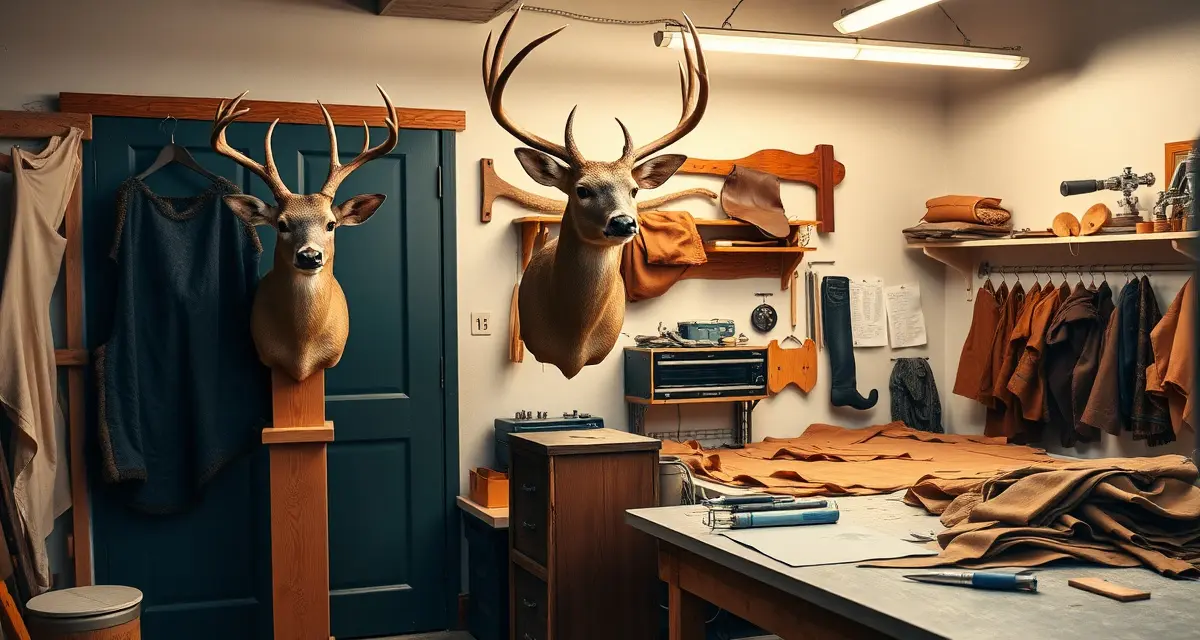
What Is the Difference Between a Tannery and a Taxidermist?
These two terms come up in conversations about mounted trophies all the time, and they describe completely different things. Understanding what each one does helps explain why taxidermy takes as long as it does and why your hide leaves the shop before production begins.
TL;DR
- A tannery chemically preserves raw hides to prevent decomposition; a taxidermist mounts the preserved hide onto a form.
- Most taxidermists ship capes to professional tanneries rather than tanning in-house.
- Tannery turnaround typically runs 8-12 weeks, which accounts for most of the total mount timeline.
- Some high-volume shops do their own tanning, but specialized tanneries generally produce more consistent results.
- The taxidermist-tannery relationship is critical: delays at the tannery directly affect customer timelines.
What a Taxidermist Does
A taxidermist is the skilled craftsperson who creates the finished mount. They:
- Take in the specimen at intake
- Prepare the hide for the tannery
- Send the hide out for tanning
- Receive the preserved hide back from the tannery
- Mount the hide onto a form
- Finish and detail the mount (eyes, ears, nose, paint)
- Complete and deliver the finished piece to the customer
The taxidermist is the person you work with directly. They're responsible for the artistic and craft elements of the mount. The skill, the quality, the finished appearance.
What a Tannery Does
A tannery chemically preserves hides, capes, and skins. The tanning process converts raw animal hide into a preserved state that won't rot or deteriorate.
Without tanning, a raw deer cape would eventually decay, even if it's on a form. Proper tanning creates a hide that's durable, flexible, and stable for decades.
The tanning process involves:
- Receiving the raw or salt-dried hide
- Cleaning and fleshing to remove fat and tissue
- Chemical treatment (the actual tanning process, which varies by method)
- Finishing and softening the hide
- Returning the tanned hide to the taxidermist
This process takes 8 to 14 weeks for most commercial tanneries. That's the primary reason taxidermy takes months rather than weeks, the hide needs to travel to the tannery, be processed, and return before production work can begin.
Why Taxidermists Use Tanneries
90 percent of professional taxidermists use commercial tanneries rather than doing their own in-house processing. The reasons are practical:
Quality. Commercial tanneries specialize in hide processing. They produce consistently excellent results using industrial-scale equipment.
Efficiency. In-house tanning requires equipment, chemicals, space, and specialized expertise. Most taxidermists would rather focus on their craft (mounting) than learn the chemistry of hide preservation.
Cost. At the volumes most taxidermists operate, using a commercial tannery is more cost-effective than building and maintaining an in-house tanning operation.
Some large operations do their own tanning. And some taxidermists use alternative preservation methods (dry preserve, freeze-dry) that don't require commercial tanning for certain applications. But commercial tannery is the standard for most professional mammal mount work.
The Tannery Step in the Timeline
This is the part customers understand least. And explaining it reduces complaints significantly.
Here's the typical timeline for a deer shoulder mount:
- Intake: November (deer season)
- Storage and tannery prep: November to December
- Tannery shipment: December to January
- Tannery processing (8 to 14 weeks): January to April
- Tannery return: March to May
- Production (mounting, finishing): April to July
- Completion: Spring to Summer
The tannery step is where 8 to 14 weeks of the total timeline live. It's completely out of the taxidermist's hands. The hide is at a different facility being processed.
When customers understand this, tannery-related delays feel less mysterious. "Your cape is at the tannery and expected back in 6 weeks" makes complete sense once the customer knows what the tannery is and why it takes time.
How to Know Which Tannery Your Taxidermist Uses
If you're curious which tannery your taxidermist works with, just ask. Professional taxidermists should be comfortable telling you which tannery they use and why they chose it.
Signs of a good tannery relationship:
- Your taxidermist knows the tannery's typical turnaround time
- Your taxidermist has worked with this tannery for multiple seasons
- The taxidermist can tell you when your specific hide shipped and when it's expected back
With a customer portal, you can actually see when your cape moved to tannery status, removing the mystery from the tannery step entirely.
Frequently Asked Questions
What does a tannery do to a deer hide?
A tannery chemically preserves the deer hide through a process that converts raw animal skin into a stable, durable material that won't deteriorate. The process involves cleaning and fleshing the hide, chemical treatment that preserves the skin structure, and finishing to make the hide soft and pliable for mounting. This typically takes 8 to 14 weeks and is the main reason deer shoulder mounts take 6 to 12 months from intake to completion.
Why do taxidermists use tanneries?
Most taxidermists use commercial tanneries because they specialize in hide processing and produce consistent, high-quality results. Setting up an in-house tanning operation requires significant equipment, space, chemicals, and specialized knowledge. For most taxidermists, using a commercial tannery is more practical and cost-effective than maintaining those capabilities themselves.
How do I know which tannery my taxidermist uses?
Ask your taxidermist directly, they should be comfortable answering this question. A taxidermist who works with the same tannery season after season typically has a relationship based on quality and reliability. If your shop uses a customer portal, you may be able to see when your hide's status changes to "at tannery," which confirms when the hide was shipped.
Can a taxidermist tan their own hides?
Yes, and some do. In-house tanning gives the taxidermist more control over timing and quality, but requires significant additional equipment, chemistry knowledge, and space. Most taxidermists find it more efficient to use professional tanneries that process hundreds of hides at a time with consistent chemistry and methods. The decision is primarily one of volume, space, and expertise.
How do I choose a tannery as a taxidermist?
Evaluate tanneries on turnaround reliability, hide quality consistency, communication practices, and pricing. Ask other taxidermists in your network which tanneries they use and what their experience has been. A tannery that consistently runs on time and communicates about delays is worth more than one with lower pricing but unreliable turnaround.
Does it matter which tannery I use from a customer's perspective?
Customers do not see the tannery process, but they feel the results. A high-quality tan produces a supple, well-preserved hide that mounts beautifully and lasts decades. A poor-quality tan can cause hair slippage, stiffness, or premature deterioration. The tannery you choose directly affects the quality of every mount you produce.
Related Articles
- How Does Taxidermy Tannery Processing Work?
- How to Find a Good Taxidermist Near Me
- How to Store a Specimen Before Taking It to the Taxidermist
- How Many Weeks Is a Taxidermist's Peak Busy Season?
Try These Free Tools
Put these insights into practice with our free calculators and planners:
Sources
- National Taxidermists Association (NTA)
- Breakthrough Magazine
- Taxidermy Today
- American Institute for Conservation
Get Started with MountChief
Your tannery relationship is one of the biggest variables in your shop's timeline and quality. MountChief's tannery tracking tools give you a running log of every shipment, expected return date, and actual return date so you always know where every hide stands. Try MountChief to take control of your tannery tracking.