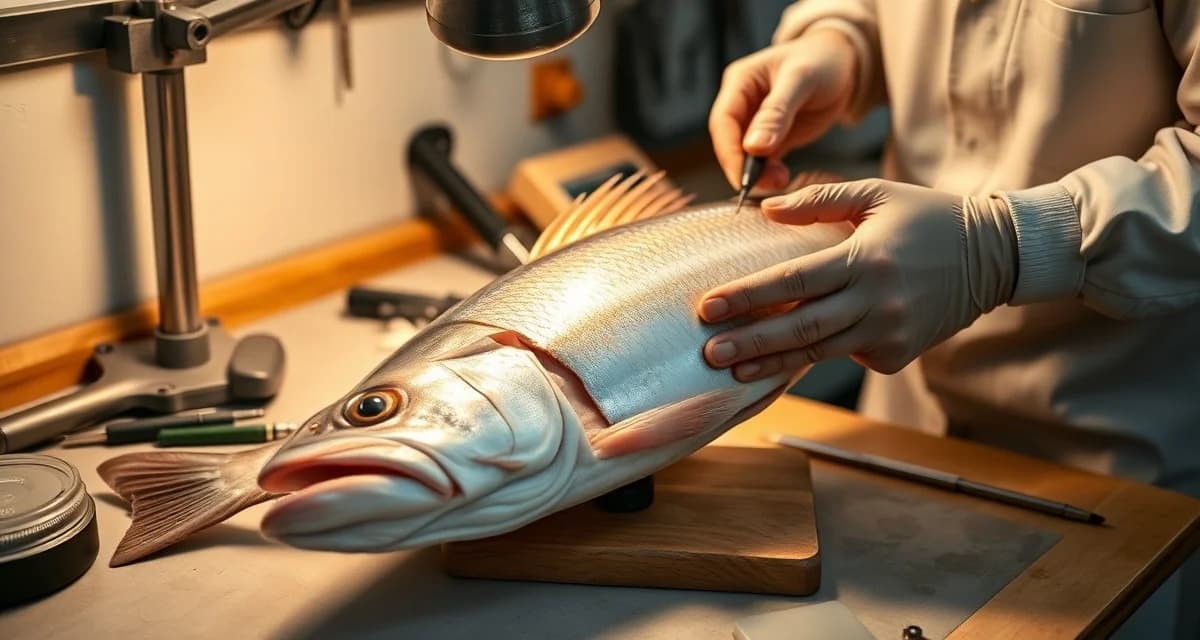
Can I Get a Fish Mounted from a Frozen Fish or Does It Need to Be Fresh?
The short answer: frozen fish are fine for skin mounting. For replicas, the fish doesn't even need to come into the shop at all.
This is one of the most common questions anglers have before they decide to mount a catch. And the answer has changed the way many catch-and-release fishermen approach the decision. Because if you only need measurements and photos for a replica, you can release the fish and still get a mount.
TL;DR
- Fresh fish produce the best color and detail preservation for skin mounts.
- Properly frozen fish, wrapped airtight and frozen quickly, produce acceptable results and are the practical standard.
- Freezer burn is the most common problem with frozen fish specimens and degrades mount quality significantly.
- Never gut a fish intended for a skin mount; gutting removes the body shape reference.
- Freeze the fish in a natural, straight position to preserve body shape for the mount.
Skin Mounts from Frozen Fish
A properly frozen fish can be used for skin mounting. The key word is "properly": a fish that's been freezer-burned, partially thawed and refrozen, or stored in a bag full of ice water is going to present problems.
How to freeze a fish correctly for skin mounting:
- Wipe the fish dry, don't put it in water or ice water
- Lay it flat (on its side, in the position you want the mount to face)
- Place it in a heavy-duty plastic bag
- Remove all air from the bag
- Freeze immediately without any additional water or ice in the bag
The key points: dry, flat, no water, no air. A fish frozen this way can be kept up to 12 months before skin mounting. That gives you flexibility, if you're on a remote fishing trip and won't see a taxidermist for weeks, a properly frozen fish is not a problem.
Common mistakes that damage a frozen fish:
- Putting the fish in a bag of ice or ice water (the water saturates the scales and causes problems)
- Tossing it in the freezer without bagging (freezer burn)
- Storing it bent or curled (it freezes that way and the skin cracks when straightened)
Replicas: No Fish Required
Fish replicas are cast fiberglass or resin mounts painted to match the fish's appearance. They look extraordinary when done well, and they have a significant advantage: the fish doesn't need to be present.
For a replica, your taxidermist needs:
- Total length (nose to tail)
- Girth measurement at the widest point
- Weight (if known)
- Multiple color reference photos taken at the water before the fish fades
That's it. You can release the fish, send the measurements and photos, and get a mount that accurately represents your trophy.
Why replicas are popular:
- Catch-and-release fishing is increasingly common, especially for certain species
- Replicas don't involve fish deterioration concerns
- A high-quality replica is difficult to distinguish from a skin mount
- Some species are better represented by replicas (large saltwater fish, for example)
The photo requirement is critical. Fish lose 80 percent of their vivid coloration within 30 minutes of death. If you want accurate color on a replica, photograph the fish as immediately as possible at the water. Ideally while it's still in the water or just lifted for a quick photo. The more photos, the better. Top, bottom, both sides, head, tail.
Fresh Fish vs. Frozen Fish: Is There a Difference in Mount Quality?
For skin mounts, a fresh fish handled correctly is theoretically optimal. But the quality difference between a fresh fish and a properly frozen fish is minimal for most species. What matters more is:
- Whether the fish was handled carefully (no scale damage)
- Whether it was frozen correctly
- Whether color reference photos were taken at the water
An improperly handled fresh fish creates more problems than a properly frozen one. Scales that got rubbed off, a fish that sat out for 2 hours in the sun before freezing, these are bigger quality concerns than the fresh-vs-frozen question itself.
When a Frozen Fish Won't Work
There are situations where a fish's condition prevents good skin mounting:
- Extensive scale loss (common in improperly bagged or handled fish)
- Freezer burn from long storage without proper bagging
- Species-specific fragility (some fish have very delicate scales that freeze poorly)
When a skin mount isn't viable, a quality replica from your reference photos is often the better option regardless.
Frequently Asked Questions
How do I freeze a fish properly for skin mounting?
Wipe the fish completely dry. Lay it flat on its side in the position you want for the mount. Place it in a heavy-duty plastic bag with all air removed. Freeze immediately without any water or ice in the bag. Do not put the fish in a bag of ice water, the moisture damages the scales and skin. A properly frozen fish can be kept for up to 12 months before mounting.
Can I get a replica made from photos without bringing the fish in?
Yes. Replicas require only your fish measurements (total length, girth, weight) and high-quality color reference photos taken at the water. The fish does not need to come into the taxidermy shop at all. Take photos immediately at the water while the fish still has its full coloration. Fish begin to fade within 30 minutes, so the sooner you photograph it, the better the color reference for painting.
How long can a fish be frozen before it can no longer be mounted?
A properly frozen fish (dried, laid flat, double-bagged with all air removed) can typically be kept for up to 12 months before skin mounting. Beyond that, scale and skin degradation can affect mount quality. If you're uncertain about a frozen fish you've had for an extended period, bring it to your taxidermist for an assessment before committing to a skin mount. A replica may be the better option.
How should a customer freeze a fish for the best taxidermy result?
Wet the fish thoroughly, wrap it tightly in plastic wrap molding to the body without gaps, then place it in a heavy plastic bag and remove as much air as possible. Freeze it laying flat in a natural position. Never gut it. Bring it to the taxidermist still frozen if possible, or thaw it only immediately before the appointment.
Can a taxidermist still mount a fish that was gutted before freezing?
Yes, with some limitations. Gutting removes the internal reference for body shape and may require the taxidermist to estimate proportions more. For most common species, experienced taxidermists can produce good results even from gutted fish. For fish where body depth or girth is an important characteristic, a non-gutted specimen produces better shape accuracy.
How long can a fish be frozen before it is too deteriorated to mount?
A properly wrapped and frozen fish can be kept for 12-18 months without significant quality loss. Fish kept in frost-free freezers, which cycle freeze-thaw repeatedly, deteriorate faster. Freezer burn shows up as white, dry patches on the skin and degrades mount quality. If a specimen has significant freezer burn, discuss it with your taxidermist before bringing it in.
Related Articles
- What Signs Does a Taxidermy Shop Need?
- How Long Does an Elk Taxidermy Mount Take?
- How Does AI Intake Work for Taxidermy Shops?
- How Does Tannery Tracking Work in Taxidermy Software?
Try These Free Tools
Put these insights into practice with our free calculators and planners:
Sources
- National Taxidermists Association (NTA)
- Breakthrough Magazine
- Bass Anglers Sportsman Society (B.A.S.S.)
Get Started with MountChief
Good fish specimens start with how the angler handles them before they ever reach your shop. MountChief lets you send customers preparation guidelines at intake and tracks their fish jobs through every production stage. Try MountChief to give your fish customers a professional experience.