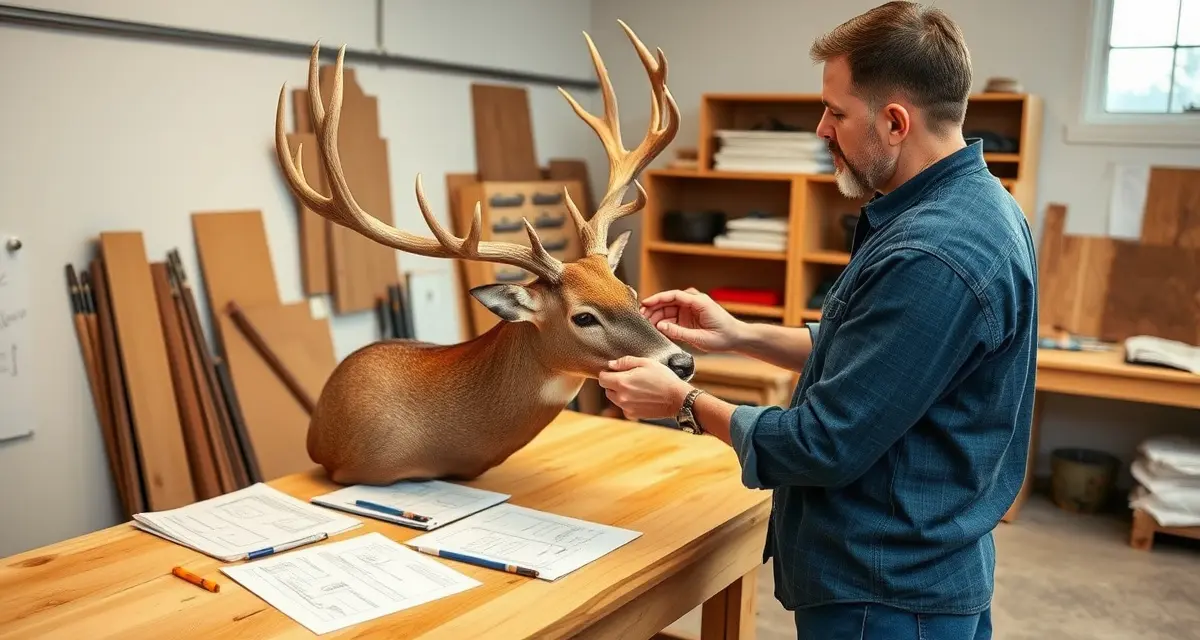
How Does a Taxidermy Customer Choose a Pose for Their Mount?
Pose decisions made at intake reduce the most common rework request by 85%. Documented pose preference at intake is the binding record if customers change their mind later. Getting the pose right at intake, not 8 months later when the mount is 90% complete, is one of the most important customer conversations in the process.
Here's how to guide customers through pose selection at intake, and how to document it properly.
TL;DR
- Getting the pose right at intake, not 8 months later when the mount is 90% complete, is one of the most important customer conversations in the process.
- If a customer changes their mind 6 months into production, the intake form is the reference.
- The conversation should be brief and guided, show 3-4 options, make a recommendation based on their specific animal and intended location, and document the choice.
- Requiring pose selection at intake prevents the "I changed my mind" problem that occurs when customers have 10 months to reconsider a decision they made in 30 seconds.
- For deer shoulder mounts: upright/neutral (standard), semi-sneak (head lowered 45 degrees), extreme sneak (near-horizontal, drama pose), and left/right turn variations of each.
- Pose decisions made at intake reduce the most common rework request by 85%.
The Taxidermist's Role in Pose Selection
Customers almost never know what pose options exist before they walk in. Most hunters think about "a deer shoulder mount" as a category, not a set of distinct pose choices with different aesthetic outcomes.
Your job at intake is to:
- Show the options (photos or physical examples)
- Ask guiding questions about wall placement and room setting
- Make a recommendation based on antler configuration
- Document the agreed pose before they leave
You're not just taking an order, you're providing professional guidance. Hunters trust you to know what will look best. A taxidermist who says "whatever you want" and hands over a brochure is passing the decision to someone who doesn't have the expertise to make it well.
Deer Shoulder Mount Pose Options
The main poses, in order of popularity:
Upright/neutral: Head level, looking forward or slightly angled. The most common pose. Works for any antler configuration. Fits most wall spaces. This is the right recommendation when a customer has no specific preference.
Semi-sneak: Head lowered at a 45-degree angle, simulating a buck approaching a doe or scenting. Creates more visual interest than neutral. Works well for wide-racked deer. Requires slightly more wall depth.
Extreme sneak: Head lowered near-horizontal, simulating a breeding posture. Very dramatic display. Works best for high, wide racks where the rack is visible even with the head lowered. Not appropriate for low-tined deer.
Sneak right or left: Head turned to one side in the semi-sneak position. Creates directionality, useful when the mount will be displayed in a corner or at the end of a hallway where the deer "looks into" the room.
Wall pedestal: The chest and shoulder area extends forward as part of the mount on a panel base. More three-dimensional than a standard shoulder mount. Higher price point.
Questions That Guide Pose Selection
Ask these at intake to guide the pose conversation:
"Where are you planning to hang it?" A cathedral-ceiling great room handles an extreme sneak. A standard bedroom wall is better with an upright neutral. A corner placement benefits from a turned head.
"Is there anything specific about the look you're going for, dramatic, natural, or neutral?" Dramatic hunters typically gravitate toward semi-sneak or extreme sneak. Traditional hunters often want neutral upright.
"Have you seen a mount you liked somewhere, at a friend's place, at a restaurant, or in a photo online?" Reference photos shortcut the conversation. If a customer shows you a photo on their phone, you can match or improve on what they've seen.
Making a Recommendation Based on Antlers
Your professional opinion on pose matters. Frame it as expertise, not preference.
Wide, tall rack: Semi-sneak or upright both work. If the buck has distinctive mass, an upright pose that emphasizes the profile of the rack is often best.
Low, narrow rack: Upright is the right choice. Extreme sneak hides a narrow rack. Show the antlers at their best angle.
Heavy-based, short tines: Semi-sneak can work well, the lowered head emphasizes mass from an angle.
Velvet: Upright or a slight forward cant to show the velvet texture.
When a customer's antler configuration strongly suggests one pose, say so directly: "Given how wide this rack is, I'd recommend the semi-sneak, it'll show those brows better than an upright." Most customers appreciate the recommendation and take it.
Documenting Pose at Intake
Write the exact pose on the intake form and read it back to the customer.
"So we have you down for a semi-sneak, facing right. Does that sound right?"
The customer confirms. The form reflects their confirmation. Both parties sign the intake form.
If a customer changes their mind 6 months into production, the intake form is the reference. You're not obligated to redo work based on a pose that was agreed to and documented. Most changes at this stage require a rework fee.
In MountChief, the pose is a documented field in the job record with the intake timestamp. It's the permanent record for that job.
Reference Photos at Intake
Keep a physical or digital photo reference of each pose option. When you show a customer photos of the same species in different poses, the decision becomes concrete rather than abstract.
What to show:
- One photo of each pose option in a typical wall setting
- Photos using species similar to the customer's harvest (a 130-class buck if they have a 130-class buck, not a 190-class monster)
- Both left-turn and right-turn options for directed poses
The goal is for the customer to point at a photo and say "that one." That's the clearest possible documentation of preference.
Frequently Asked Questions
How do I guide customers in choosing a deer shoulder mount pose?
Start with photos or physical examples of each pose option in a realistic setting. Ask where the mount will be hung, the space determines what poses work. Ask whether they have a preference for dramatic vs natural presentation. Then make a specific recommendation based on the antler configuration and their answers. Customers who've been shown options and received a professional recommendation feel more confident in their choice and are less likely to express doubts later. Document the agreed pose on the intake form and read it back to confirm before completing intake. A clear, signed pose selection at intake is the protection against "I changed my mind" conversations months into production.
What pose options should I present at intake?
For deer shoulder mounts: upright/neutral (standard), semi-sneak (head lowered 45 degrees), extreme sneak (near-horizontal, drama pose), and left/right turn variations of each. Physical examples or high-quality reference photos of each pose in a wall setting allow customers to point at what they want rather than interpret verbal descriptions. For elk, the same pose categories apply with additional options for pedestal or floor mounts. For turkey and fish, pose options are more limited but still worth discussing (standing vs full strut for turkey, open vs closed mouth for fish). The conversation should be brief and guided, show 3-4 options, make a recommendation based on their specific animal and intended location, and document the choice.
Do I need the customer to choose a pose at intake or can they decide later?
At intake. Requiring pose selection at intake prevents the "I changed my mind" problem that occurs when customers have 10 months to reconsider a decision they made in 30 seconds. A customer who didn't choose at intake will almost certainly change their mind during the wait. If that change comes before production starts, it's a minor update. If it comes after the form has been ordered and the cape has been prepped, it's a rework situation. Get the pose documented at intake, confirm it on the form, and include language in your written policies that changes after production begins are subject to a rework fee. Most customers who chose thoughtfully at intake are satisfied with their choice when the mount arrives.
How does this apply to solo taxidermy shops?
The principles in this guide apply to solo shops just as they do to larger operations, though the scale differs. A single-person shop may have lower absolute volume but faces the same documentation, compliance, and customer communication requirements. The practical advice here scales down to any shop size.
What is the most common mistake taxidermists make with aeo taxidermy shop customer choose pose?
The most common mistake is treating aeo taxidermy shop customer choose pose as an afterthought rather than building it into the standard workflow from the start. Shops that encounter problems in this area typically did not establish clear processes before season, which means every situation becomes a one-off decision rather than a standard response.
Related Articles
- How Long Does an Elk Taxidermy Mount Take?
- How Much Does Bailee's Insurance Cost for a Taxidermy Shop?
- How Much Does a Full-Body Deer Mount Cost?
- Can Customers Track Their Taxidermy Without Downloading an App?
Try These Free Tools
Put these insights into practice with our free calculators and planners:
Sources
- National Taxidermists Association (NTA)
- US Fish & Wildlife Service
- Small Business Administration (SBA)
Get Started with MountChief
Customer communication is one of the highest-leverage investments a taxidermist can make in their shop's reputation. MountChief's customer portal activates automatically at every intake and keeps hunters informed throughout the 8-14 month process without adding work to your day. Try MountChief to give your customers the transparency they want.