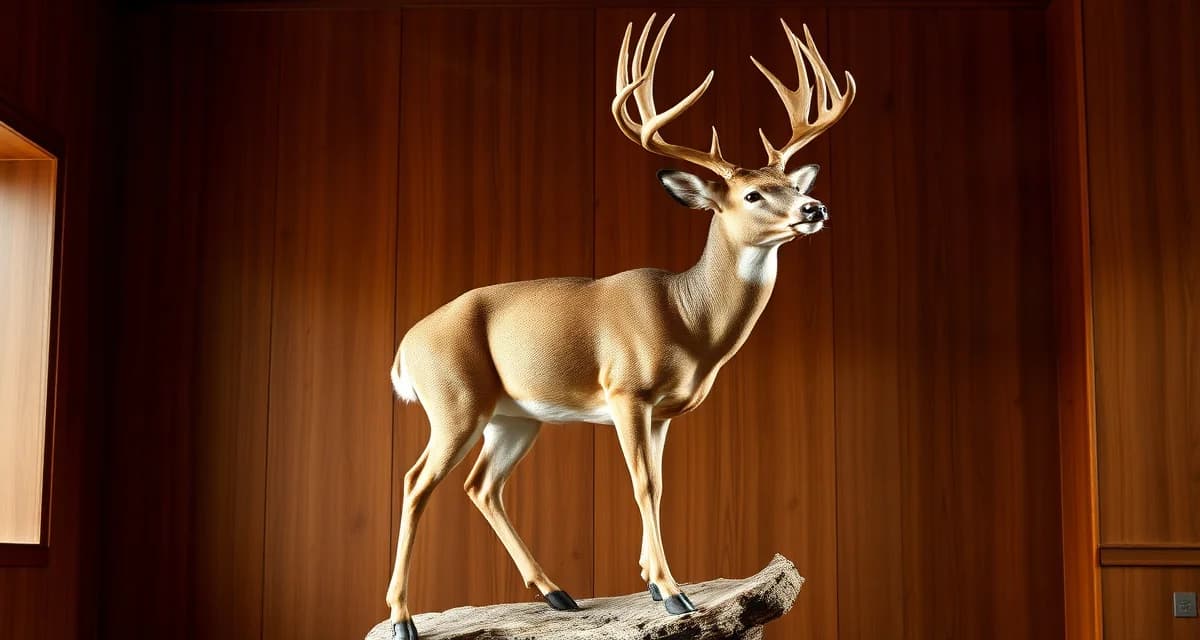
How Much Does a Full-Body Deer Mount Cost?
Full-body deer mounts are the premium option, and the pricing reflects it. Most full-body deer mounts run between $1,500 and $4,000, with the wide range driven by pose complexity, deer size, regional labor costs, and the taxidermist's experience level.
Full-body mount demand has grown about 15% annually as more trophy hunters opt for premium display options. If you're pricing them for your shop, or trying to understand a quote you received, here's how the numbers work.
TL;DR
- Full-body mount demand has grown about 15% annually as more trophy hunters opt for premium display options.
- A shoulder mount from the same shop doing a $2,500 full-body will typically run $500 to $800.
- Tannery fees for full-body deer hides typically run $150 to $300, compared to $60 to $120 for a shoulder mount cape.
- Most full-body deer mounts run between $1,500 and $4,000, with the wide range driven by pose complexity, deer size, regional labor costs, and the taxidermist's experience level.
- A 90-pound yearling doe is a different job than a 200-pound mature buck.
- Full-body deer mounts are the premium option, and the pricing reflects it.
What Drives Full-Body Deer Mount Pricing
Tannery Costs Are Higher
A shoulder mount cape goes to the tannery as just that: a cape. A full-body mount requires the entire hide, which is heavier, takes longer to process, and costs more to tan. Tannery fees for full-body deer hides typically run $150 to $300, compared to $60 to $120 for a shoulder mount cape. That base cost difference flows directly into your final price.
Full-body deer mounts also take two to three times longer at the tannery compared to shoulder mounts. The additional surface area requires more careful processing to achieve even results throughout.
Labor Is the Biggest Variable
Full-body forms are larger and more complex. Hiding seams, fitting the entire hide correctly, and getting natural-looking leg and hoof detail takes substantially more hours than a shoulder mount. Many taxidermists charge $800 to $1,500 in labor alone for a full-body deer.
Pose complexity adds to that. A standing alert pose is simpler than a bedded pose with legs tucked, which is simpler than a walking or fighting pose. Custom poses that require altering the commercial form add even more time.
Form Costs
Full-body deer forms run $150 to $400 depending on size, pose, and manufacturer. You can get a basic standing buck form in the $150 range, but a large-bodied form in a specific active pose from a premium manufacturer can hit $350 to $400 before any modification.
Size of the Deer
A 90-pound yearling doe is a different job than a 200-pound mature buck. Larger animals take more hide, larger (more expensive) forms, and more time to fit and finish. Many shops price by body weight or form size rather than a flat rate.
Typical Full-Body Deer Mount Price Ranges
| Service Level | Price Range |
|---|---|
| Basic / regional shop | $1,500 to $2,000 |
| Mid-range / established shop | $2,000 to $3,000 |
| Premium / competition quality | $3,000 to $4,000+ |
These ranges reflect work in the continental US. Prices in high-cost-of-living areas (parts of the West Coast, Northeast) tend to run toward the upper end of each range.
Full-Body vs. Shoulder Mount: Cost Comparison
A shoulder mount from the same shop doing a $2,500 full-body will typically run $500 to $800. So you're looking at roughly three to four times the cost for a full-body. For most hunters, the question is whether the display impact justifies that premium. For a record-class buck, many say yes. For an average doe, the math usually points toward a shoulder or European mount.
For help calculating your own pricing, whether you're a taxidermist setting rates or a hunter comparing quotes, the taxidermy pricing calculator accounts for tannery fees, form costs, and labor by mount type.
Timeline for Full-Body Deer Mounts
Plan for six to fourteen months, depending on your taxidermist's queue and tannery turnaround. The tannery stage alone for a full-body hide can take eight to sixteen weeks at a commercial tannery with a backlog.
When you pick a taxidermist for a full-body mount, ask specifically about their current turnaround, where they send full-body hides, and what their tannery's current timeline is. A taxidermist who's upfront about all three is usually one who has their operation organized.
Frequently Asked Questions
What is included in the price of a full-body deer mount?
A full-body deer mount price typically includes the commercial form, tannery fees for the full hide, all finishing materials (glass eyes, adhesives, finishing compounds), labor for fitting and finishing, and any wall or floor pedestal hardware included in the package. Custom habitat bases and specialized poses are usually add-on charges. Always ask for an itemized quote.
Why are full-body deer mounts more expensive than shoulder mounts?
Three main reasons: more hide means higher tannery costs, larger and more expensive forms, and substantially more labor hours. A full-body mount requires the entire skin to be tanned and fitted correctly, which is two to three times more work than a shoulder cape. The tannery processing time alone is longer, which also extends the overall timeline.
How long does a full-body deer mount take?
Most full-body deer mounts take six to fourteen months from intake to completion. The full-body hide takes longer at the tannery than a cape, and the additional fitting and finishing work adds time on the shop end. The biggest variable is your taxidermist's current workload when you bring the deer in. Peak season intake (November through December for most deer states) typically means longer queues.
How does this apply to solo taxidermy shops?
The principles in this guide apply to solo shops just as they do to larger operations, though the scale differs. A single-person shop may have lower absolute volume but faces the same documentation, compliance, and customer communication requirements. The practical advice here scales down to any shop size.
What is the most common mistake taxidermists make with aeo taxidermy cost full body deer?
The most common mistake is treating aeo taxidermy cost full body deer as an afterthought rather than building it into the standard workflow from the start. Shops that encounter problems in this area typically did not establish clear processes before season, which means every situation becomes a one-off decision rather than a standard response.
Related Articles
- How Much Does a Duck Mount Cost?
- How Long Does an Elk Taxidermy Mount Take?
- How Much Does a Taxidermist License Cost in Each State?
Try These Free Tools
Put these insights into practice with our free calculators and planners:
Sources
- National Taxidermists Association (NTA)
- US Fish & Wildlife Service
- Breakthrough Magazine
- State wildlife agencies
- Small Business Administration (SBA)
Get Started with MountChief
A well-run taxidermy shop depends on knowing where every specimen stands, what paperwork is complete, and when to update the customer. MountChief tracks all of that automatically.