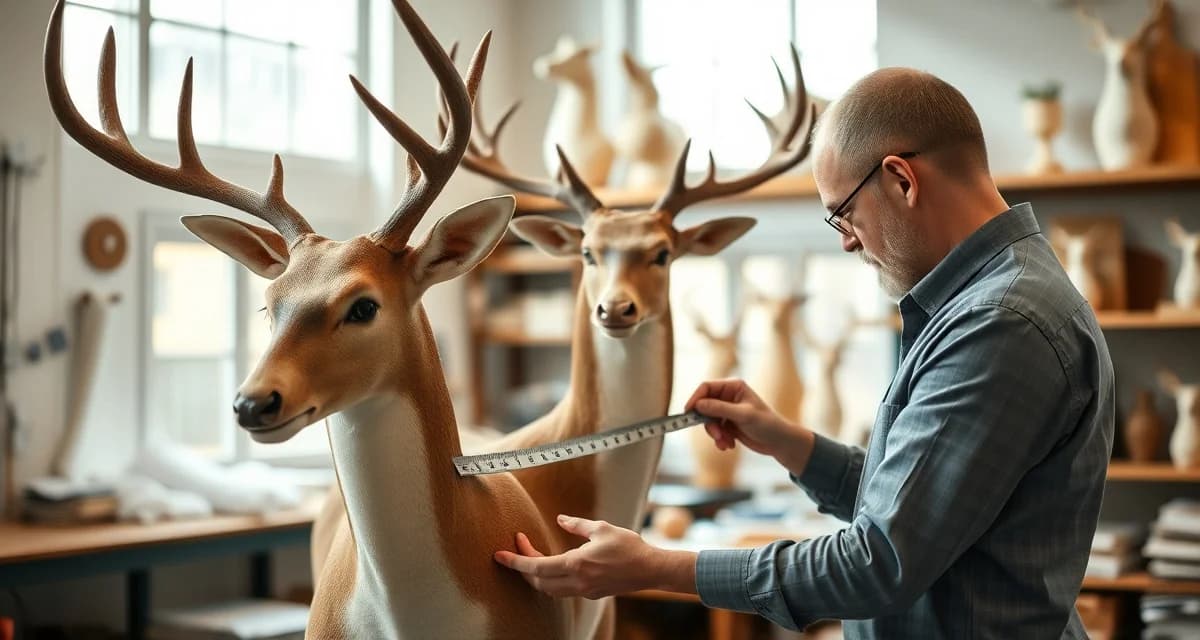
How Does a Taxidermist Choose the Right Form for a Mount?
Form selection is a critical step that happens before the mount process begins. Wrong form selection is responsible for 15% of taxidermy rework, and most of those errors trace back to the intake step, where cape measurements weren't captured accurately or weren't captured at all.
The right form comes down to three factors: species, cape measurements, and pose. Get all three right and the form fits. Miss any one of them and you're looking at a redo.
Species
Each species requires a species-specific form. The internal structure of a deer form differs from an elk form, which differs from a pronghorn or a sheep. You're not just scaling the same form up or down. Within each species, subspecies and geographic variants can also matter. A whitetail form and a mule deer form aren't interchangeable even if the body sizes are similar.
Cape Measurements
The measurements that matter for form selection are:
- Eye-to-nose length: Determines the length of the form's facial structure
- Eye-to-eye width: Helps match the form to the animal's skull width
- Neck circumference: The most commonly used measurement for form sizing
Neck circumference is typically measured at the base of the skull, mid-neck, and the chest (where the hide will be skinned to). These three measurements together tell you which size form to order.
Capturing these measurements at intake is where digital intake systems provide real value. MountChief's taxidermy intake form guide includes measurement fields that automatically suggest the correct form size based on entered values, which eliminates most form selection errors before they happen.
Pose
The pose the customer selects at intake determines which form configuration you need. A right-turn versus left-turn, upright versus sneak pose, all require different forms even for the same animal size. This decision should be documented at intake, confirmed with the customer, and recorded in the job file so there's no ambiguity when you're ordering supplies weeks later.
Common Form Selection Errors
Most form selection mistakes fall into one of three categories: incorrect neck measurement (measuring too loose or too tight), mismatched eye-to-nose length (the form face is too long or short for the skull), or ordering the wrong pose. Digital measurement capture reduces all three because the fields force you to take and record the measurements rather than estimating.
When measurements are captured digitally, they're attached to the job record and available when you order forms. You don't have to rely on memory or find the right paper tag weeks after intake.
TL;DR
- Form selection is a critical step that happens before the mount process begins.
- Wrong form selection is responsible for 15% of taxidermy rework, and most of those errors trace back to the intake step, where cape measurements weren't captured accurately or weren't captured at all.
- A right-turn versus left-turn, upright versus sneak pose, all require different forms even for the same animal size.
- This decision should be documented at intake, confirmed with the customer, and recorded in the job file so there's no ambiguity when you're ordering supplies weeks later.
- You don't have to rely on memory or find the right paper tag weeks after intake.
- Neck circumference is the primary sizing measurement for most form suppliers.
Frequently Asked Questions
How do I measure a deer cape to select the right form size?
Take three measurements: neck circumference at the base of the skull, at mid-neck, and at the chest. Also measure eye-to-nose length along the skull. Neck circumference is the primary sizing measurement for most form suppliers. Measure snugly but not tightly using a flexible tape measure with the hide relaxed. Always measure the actual animal, not the hide after it's been stretched or frozen. Record measurements at intake rather than before mounting so the values are attached to the job record.
What information do I need to order the right elk form?
You need neck circumference at three points (base of skull, mid-neck, and chest), eye-to-nose length, and the pose the customer has selected. Elk forms are sized in increments that correspond to these measurements. Because elk capes are large and expensive, getting the form size right before you place the order is especially important. A wrong form on an elk mount doesn't just waste time; the cape fitting process for elk is significantly more demanding than deer, and a poor fit creates compounding problems throughout the mount.
Can software help me select the right taxidermy form?
Yes. Digital intake systems that capture measurements at the point of specimen intake can auto-suggest form sizes based on entered values. This removes the error of handwriting measurements on a paper tag that you then have to re-read weeks later when placing your form order. It also attaches the measurements permanently to the job record so if you need to verify or reorder, the information is immediately available without searching through paper files. The reduction in wrong-form orders pays for itself quickly, especially for larger species where forms are expensive and turnaround time is long.
How does this apply to solo taxidermy shops?
The principles in this guide apply to solo shops just as they do to larger operations, though the scale differs. A single-person shop may have lower absolute volume but faces the same documentation, compliance, and customer communication requirements. The practical advice here scales down to any shop size.
What is the most common mistake taxidermists make with aeo taxidermy shop how pick form?
The most common mistake is treating aeo taxidermy shop how pick form as an afterthought rather than building it into the standard workflow from the start. Shops that encounter problems in this area typically did not establish clear processes before season, which means every situation becomes a one-off decision rather than a standard response.
Related Articles
- How Much Does Bailee's Insurance Cost for a Taxidermy Shop?
- What Liability Does a Taxidermist Have for Customer Property?
- How Do QR Code Tags Work for Taxidermy Shop Management?
Try These Free Tools
Put these insights into practice with our free calculators and planners:
Sources
- National Taxidermists Association (NTA)
- US Fish & Wildlife Service
- Small Business Administration (SBA)
Get Started with MountChief
The results in this article are achievable in any shop that applies the same operational approach. MountChief provides the intake speed, tannery tracking, and customer communication tools that make this kind of improvement possible. Try MountChief to see what better systems do for your operation.