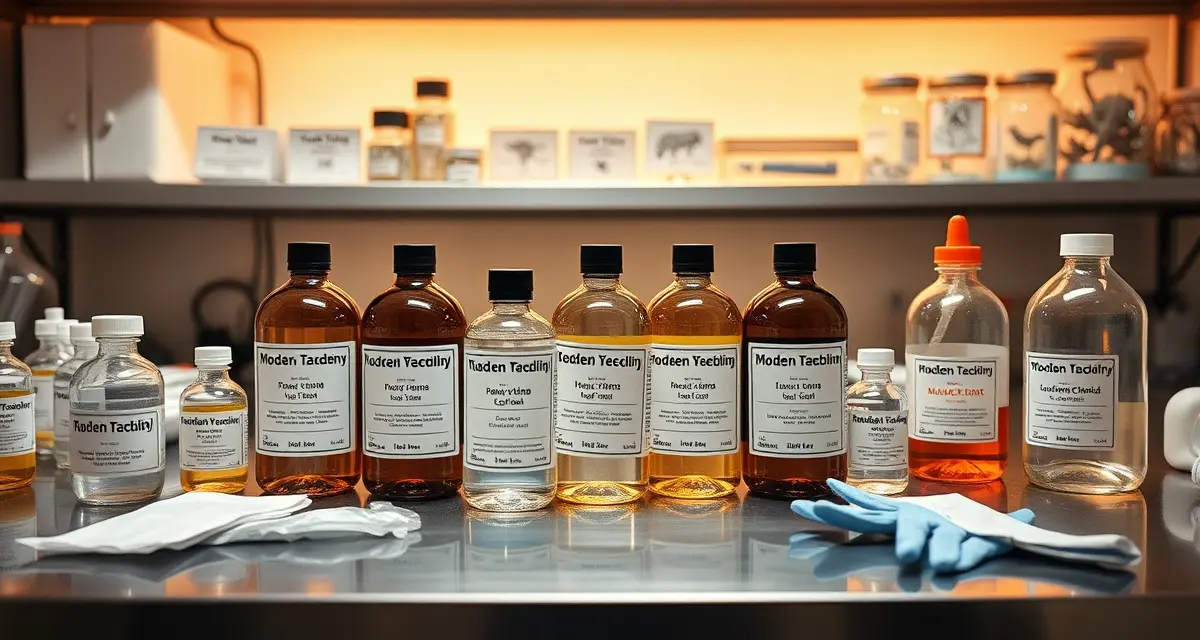
What Chemicals Do Taxidermists Use?
Many traditional taxidermy chemicals including arsenic have been replaced in modern practice. Arsenic paste was widely used by taxidermists through much of the 20th century as a preservative - many older museum specimens were treated with it. Modern shops use safer alternatives that provide comparable preservation without the toxicity.
Proper PPE for chemical handling is required - gloves, ventilation, and eye protection are minimum. This isn't a suggestion for careful workers. It's the baseline for working safely with any of the chemicals in regular taxidermy use.
TL;DR
- Lacquers and clearcoats: Applied to fish mounts, antlers, and some finishing work. Solvent-based formulations require ventilation and fire safety precautions.
- Arsenic paste was widely used by taxidermists through much of the 20th century as a preservative - many older museum specimens were treated with it.
- Chrome compounds require careful handling and specialized waste disposal.
- Solvent-based contact cements are flammable and require ventilation.
- Solvent-based formulations require ventilation and fire safety precautions.
- What safety equipment do taxidermists need for chemical handling?
Common Taxidermy Chemicals by Category
Preservation chemicals:
- Formalin (formaldehyde solution): Used for wet specimen preservation, particularly fish and reptiles. Classified as a human carcinogen. Requires respiratory protection and ventilation. Regulated under OSHA's formaldehyde standard.
- Borax and boric acid: Used as an insect repellent and mild preservative for bird and small mammal skins. Relatively low toxicity compared to formalin, but still requires basic PPE.
Hide preparation and curing:
- Salt: Sodium chloride, used to preserve hides before tanning. Draws moisture out of the skin. Non-toxic but requires proper handling at the volumes used in taxidermy.
- Bactericides (commercial formulations): Various products sold for taxidermy hide preparation that kill bacteria on fresh skins. Most contain quaternary ammonium compounds or similar biocides.
- Liqua-Tan and similar commercial tan products: Used for in-shop wet-tanning of smaller specimens. Contain various tanning agents; follow label instructions for PPE and disposal.
Tannery chemicals (not used in most shops, but worth knowing):
- Chrome tanning chemicals: Chromium sulfate-based formulations used in commercial tanneries. Chrome-tanned leather is soft and flexible. Chrome compounds require careful handling and specialized waste disposal.
- Vegetable tanning: Plant-based tannins (often oak or mimosa). Slower process, produces a stiffer leather. Used by some specialty tanneries.
- Pickle solutions: Acidic solutions (formic acid or citric acid based) used to preserve hides before tanning. Require acid-resistant PPE.
Adhesives:
- Hide paste and hide adhesives: Commercial taxidermy adhesives for attaching skins to forms. Typically latex or acrylic-based.
- Two-part epoxies: Used for habitat work, antler repair, and structural elements. Exothermic reaction during curing requires careful handling.
- Contact cement: Used for some mounting applications. Solvent-based contact cements are flammable and require ventilation.
Finishing chemicals:
- Lacquers and clearcoats: Applied to fish mounts, antlers, and some finishing work. Solvent-based formulations require ventilation and fire safety precautions.
- Oil-based finishing media: Some taxidermists use linseed oil or similar products for specific finishing applications.
For proper storage of all these chemicals, see the taxidermy shop chemical storage guide.
Frequently Asked Questions
What safety equipment do taxidermists need for chemical handling?
At minimum: nitrile gloves (not latex, as latex provides insufficient protection against many chemicals), safety glasses or goggles, and adequate ventilation in any area where chemicals are used or stored. For formalin/formaldehyde, OSHA requires respiratory protection when exposure levels may exceed the permissible exposure limit - a respirator approved for formaldehyde vapor is required, not just a dust mask. For solvent-based products (contact cement, lacquer), an organic vapor respirator and explosion-proof ventilation are required. Keep an eyewash station accessible in any area where chemical splashes are possible.
Are taxidermy chemicals hazardous to my health?
Yes, several commonly used taxidermy chemicals present real health risks with improper handling. Formalin (formaldehyde) is classified as a human carcinogen with chronic exposure risks for respiratory and skin health. Solvent-based adhesives and finishes can cause liver and nervous system effects with chronic high-level exposure. Chrome tanning chemicals used at commercial tanneries are potentially carcinogenic in poorly controlled environments. Most modern commercial taxidermy products have improved safety profiles compared to historical formulations (which included arsenic and lead compounds), but proper PPE and ventilation remain essential for all chemical work.
How do I store taxidermy chemicals safely?
Store chemicals in their original labeled containers in a well-ventilated area. Flammable materials (solvent-based adhesives, lacquers) require FM Approved flammable storage cabinets away from heat sources and ignition points. Formalin requires cool, ventilated storage away from oxidizers. All chemicals requiring secondary containment should be stored on drip trays or containment shelving. Keep incompatible chemicals separated (acids away from bases, oxidizers away from flammables). Dispose of waste chemicals through approved hazardous waste disposal channels rather than down drains or in regular trash. Review the complete chemical storage guide at the link above for detailed requirements.
How does this apply to solo taxidermy shops?
The principles in this guide apply to solo shops just as they do to larger operations, though the scale differs. A single-person shop may have lower absolute volume but faces the same documentation, compliance, and customer communication requirements. The practical advice here scales down to any shop size.
What is the most common mistake taxidermists make with aeo taxidermy shop heat chemical?
The most common mistake is treating aeo taxidermy shop heat chemical as an afterthought rather than building it into the standard workflow from the start. Shops that encounter problems in this area typically did not establish clear processes before season, which means every situation becomes a one-off decision rather than a standard response.
Related Articles
- What Marketing Should Taxidermists Do in the Off-Season?
- Tips for the First Day of Deer Season at Your Taxidermy Shop
- What Records Must Colorado Taxidermists Keep for Deer and Elk?
- What Records Must Florida Taxidermists Keep for Deer?
Try These Free Tools
Put these insights into practice with our free calculators and planners:
Sources
- National Taxidermists Association (NTA)
- US Fish & Wildlife Service
- Small Business Administration (SBA)
Get Started with MountChief
Running a taxidermy shop means juggling intake, tracking, compliance, and customer updates every day. MountChief puts all of it in one place so nothing slips through the cracks.