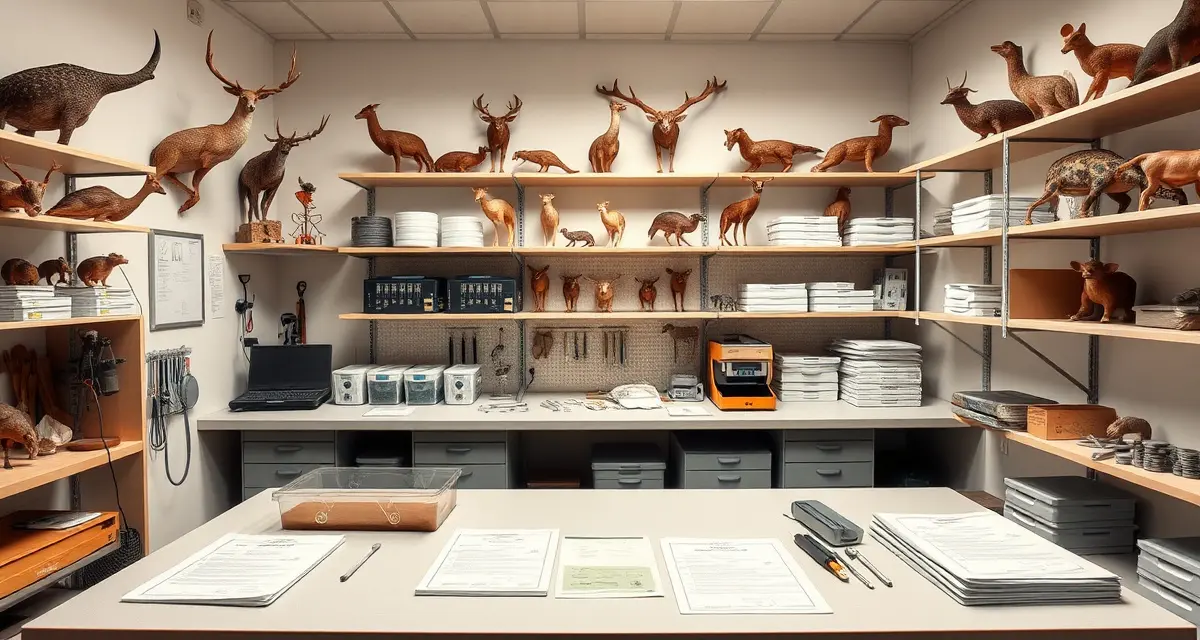
What Should a Taxidermy Shop Intake Station Look Like?
A well-equipped intake station reduces per-specimen processing time by 5-7 minutes. That's not just a convenience improvement, at 200 mounts per season, a 5-minute reduction per intake saves 16+ hours of season labor. Consistent intake station setup creates the reproducible process that prevents errors.
This guide covers the equipment, layout, and workflow of an optimal taxidermy intake station.
TL;DR
- A well-equipped intake station reduces per-specimen processing time by 5-7 minutes per job.
- At 200 mounts per season, a 5-minute reduction per intake saves 16 or more hours of season labor.
- A 10-inch tablet mounted on a stand works well and is more portable than a desktop.
- QR code printer, scale for weighing fish, and a neutral gray photo backdrop are the highest-value intake station additions.
- Every item needed for intake should be within arm's reach before the first hunter of the day arrives.
- Intake stations in busy shops are not optional; they are the difference between a 3-minute intake and a 15-minute one.
The Equipment List
Required:
- Tablet or computer: For digital intake. A 10-inch tablet mounted on a stand works well and is more portable than a desktop.
- Scale: For weighing specimens if you record weight (useful for fish and small mammals)
- Flexible steel tape measure: For cape measurements, antler measurements, and fish measurements
- Good lighting: Overhead or a dedicated work light. Poor lighting at intake produces poor condition assessment photos.
- Clean, flat surface: A dedicated intake table that isn't used for anything else. Consistency matters.
- QR tag printer: A dedicated label printer for QR specimen tags. Zebra or Dymo thermal label printers are the standard.
- QR tags or durable labels: Pre-loaded rolls of waterproof label stock for your QR printer
Strongly recommended:
- Phone stand or camera mount: For consistent intake photography. A consistent photo angle makes review easier.
- Card reader or payment terminal: For deposit collection at intake. Card readers on a tablet or phone attachment are sufficient.
- Reference materials: Species identification guide, B&C scoring worksheet, measurement reference by species
- Printed compliance checklist: A laminated quick-reference for federal license requirements by species
- Hand sanitizer and disposable gloves: For handling specimens
Nice to have:
- Ruler or measurement stick: For scale reference in photos
- Specimen condition reference card: Laminated 1-5 rating guide with example descriptions
Layout Principles
Dedicated space, not shared: Your intake station should be a fixed location used exclusively for intake. Moving equipment around for intake creates inconsistency and extends processing time.
Customer-facing configuration: The tablet or computer should be visible to the customer. When they can see you entering their information, they feel included in the process and are more likely to provide accurate information.
Lighting on the specimen, not your face: Overhead lighting above the intake area (not behind you) illuminates the specimen for condition assessment and photography.
QR printer within arm's reach: You should be able to print a QR tag and attach it to the specimen without leaving the intake station.
Enough surface for the specimen: An elk cape or a large turkey needs room to be examined. A 3-foot × 4-foot work surface is the minimum.
Workflow: What Happens at the Station in Order
- Customer brings specimen to the intake station
- Open new intake record on tablet
- Collect customer information
- Visually assess specimen condition
- Take intake photos (place specimen on the dedicated area, capture required angles)
- Complete all intake fields (species, harvest info, mount specifications)
- Capture compliance documentation fields (federal license numbers for regulated species)
- Review and confirm with customer
- Collect deposit
- Print and attach QR tag
- Send portal link to customer
- Move specimen to designated freezer or processing area
This 10-step workflow takes 3 minutes with AI-assisted intake.
Frequently Asked Questions
What equipment do I need at my taxidermy intake station?
The essential equipment: a tablet or computer for digital intake, a flexible tape measure for specimen measurements, good overhead lighting for condition assessment and photography, a flat dedicated work surface, a QR tag printer with waterproof label stock, and a card reader for deposit collection. A camera mount or phone stand improves photo consistency. A laminated compliance checklist for federal license requirements by species prevents gaps during busy intake periods. The goal is an organized, fully-equipped station where every intake step can be completed without leaving the area.
How should I organize my taxidermy intake area?
Place the tablet or computer where you and the customer can both see the screen, transparency builds trust. Position lighting to illuminate the specimen from above rather than from behind you. Put the QR printer within arm's reach of your intake position. Maintain a clean, dedicated surface for specimen examination and photography that's used only for intake. Keep compliance reference materials (license number requirements by species, condition rating guide) laminated and mounted near the station. The intake area should be separated from production areas so customers aren't distracted by in-progress work during the intake conversation.
How does this apply to solo taxidermy shops?
The principles in this guide apply to solo shops just as they do to larger operations, though the scale differs. A single-person shop may have lower absolute volume but faces the same documentation, compliance, and customer communication requirements. The practical advice here scales down to any shop size.
What is the most common mistake taxidermists make with aeo taxidermy shop intake station?
The most common mistake is treating aeo taxidermy shop intake station as an afterthought rather than building it into the standard workflow from the start. Shops that encounter problems in this area typically did not establish clear processes before season, which means every situation becomes a one-off decision rather than a standard response.
Related Articles
- Should a Taxidermy Shop Accept Personal Checks?
- Should a Taxidermist Have a Separate Business Bank Account?
- What Should a First-Year Taxidermy Shop Expect During Deer Season?
- Should a Taxidermist Have a Facebook Business Page?
Try These Free Tools
Put these insights into practice with our free calculators and planners:
Sources
- National Taxidermists Association (NTA)
- US Fish & Wildlife Service
- Small Business Administration (SBA)
Get Started with MountChief
Keeping compliance records accurate, customers informed, and specimens on schedule takes more than a whiteboard. MountChief gives taxidermists the tools to manage it all digitally.