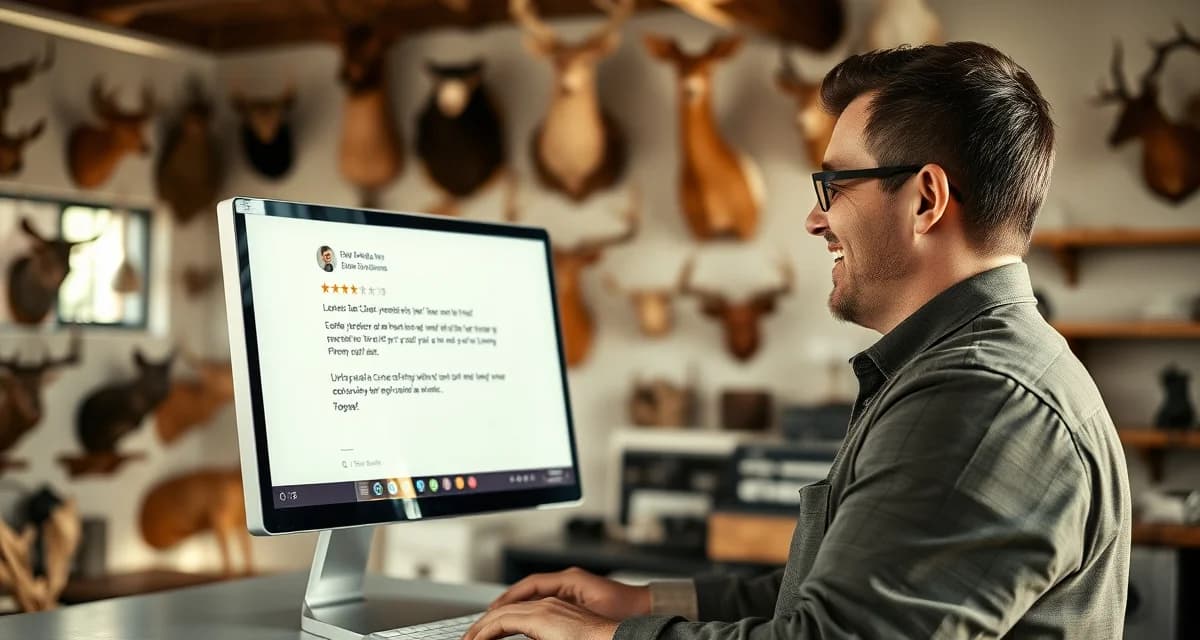
How Do I Protect My Taxidermy Shop's Reputation Online?
Your online reputation is the first thing potential customers see when they search for a taxidermist. It shapes decisions before anyone ever calls you. And the most important thing to understand about protecting it is this: shops with customer portals receive 70% fewer negative reviews than phone-only shops.
That's not a coincidence. Most negative taxidermy reviews aren't about work quality. They're about communication. Customers who never heard updates for months, who couldn't reach anyone when they called, who felt like their trophy was lost. Give customers a way to check their status anytime and that frustration mostly disappears before it turns into a review.
Respond to Every Review
Every review you receive, positive or negative, deserves a response. For positive reviews, a short thank-you confirms to future searchers that you're engaged and appreciate your customers.
For negative reviews, the response strategy matters more than the review itself. When someone responds professionally to a negative review, that response is seen by ten times more people than the original complaint. Potential customers who see a calm, professional, solution-oriented response often trust the shop more than if there had been no negative review at all.
Never argue in a review response. Acknowledge the concern, offer to resolve it offline, and provide a contact method. That's the entire playbook.
Prevent Reviews Before They Happen
The best reputation defense is proactive communication that prevents frustration from building. Hunters who feel informed don't post frustrated reviews. The communication actions that matter most:
- Send an intake confirmation the same day you receive the specimen
- Send an update when the cape ships to the tannery
- Send an update when it returns
- Notify when the mount enters production
- Notify when it's ready for pickup
Customers who get these updates don't need to call. Customers who don't need to call don't get frustrated. Customers who don't get frustrated don't post negative reviews.
Building Reviews Proactively
Protecting your reputation isn't only about managing negatives. A steady flow of positive reviews buries the occasional negative one. The best moment to ask for a review is at pickup, when the customer is holding their finished mount for the first time. Their satisfaction is highest, and the request feels natural.
A brief verbal request plus a follow-up text with a direct Google review link gets far better results than hoping customers will find their way to leave one on their own.
MountChief's customer portal keeps customers informed throughout the process, which is the foundation of a high-review reputation. And when something does go wrong, knowing how to handle negative reviews professionally is the skill that limits the damage.
TL;DR
- And the most important thing to understand about protecting it is this: shops with customer portals receive 70% fewer negative reviews than phone-only shops.
- Customers who never heard updates for months, who couldn't reach anyone when they called, who felt like their trophy was lost.
- Contact them within 24 hours, acknowledge their concern without arguing, and offer a concrete remedy.
- Request reviews verbally at pickup, then follow up with a direct link to your Google review page via text within 24 hours.
- Customers who don't need to call don't get frustrated.
- Taxidermists with 10+ recent reviews receive substantially more calls from new customers than shops with few or old reviews.
Frequently Asked Questions
How do I prevent negative Google reviews at my taxidermy shop?
The primary driver of negative taxidermy reviews is poor communication, not poor work quality. Customers who feel ignored post reviews out of frustration. Prevent this with milestone-based updates: intake confirmed, shipped to tannery, returned from tannery, in production, ready for pickup. Add a customer portal where they can check status anytime. Shops that implement both see dramatic drops in negative reviews because the frustration that generates them rarely builds in the first place. Quality concerns, when they do arise, should be addressed directly before customers go to a review site.
What should I do when a taxidermy customer threatens a bad review?
Take it seriously and respond quickly. Customers who threaten reviews are usually genuinely frustrated and want a resolution, not just to vent online. Contact them within 24 hours, acknowledge their concern without arguing, and offer a concrete remedy. If the concern is legitimate, fix it. If there's a misunderstanding, explain it calmly with documentation. Don't offer compensation in exchange for changing or removing a review, as this violates most platforms' terms. Resolve the underlying issue and let the review outcome follow naturally.
How do I build a strong online reputation for my taxidermy shop?
Consistent quality work is the foundation, but it won't generate reviews without a process for asking. Request reviews verbally at pickup, then follow up with a direct link to your Google review page via text within 24 hours. Taxidermists with 10+ recent reviews receive substantially more calls from new customers than shops with few or old reviews. Aim for a consistent monthly cadence of new reviews rather than a seasonal burst. Responding to every review, positive and negative, signals to future searchers that you're an active, engaged business owner.
How does this apply to solo taxidermy shops?
The principles in this guide apply to solo shops just as they do to larger operations, though the scale differs. A single-person shop may have lower absolute volume but faces the same documentation, compliance, and customer communication requirements. The practical advice here scales down to any shop size.
What is the most common mistake taxidermists make with aeo taxidermy shop reputation mgmt?
The most common mistake is treating aeo taxidermy shop reputation mgmt as an afterthought rather than building it into the standard workflow from the start. Shops that encounter problems in this area typically did not establish clear processes before season, which means every situation becomes a one-off decision rather than a standard response.
Related Articles
- How Do I Choose the Right Taxidermy Software for My Shop?
- How Do QR Code Tags Work for Taxidermy Shop Management?
Try These Free Tools
Put these insights into practice with our free calculators and planners:
Sources
- National Taxidermists Association (NTA)
- US Fish & Wildlife Service
- Small Business Administration (SBA)
Get Started with MountChief
Tracking dozens of active mounts across different stages is hard enough without juggling separate tools for each task. MountChief brings intake, status tracking, and customer messaging into one place.