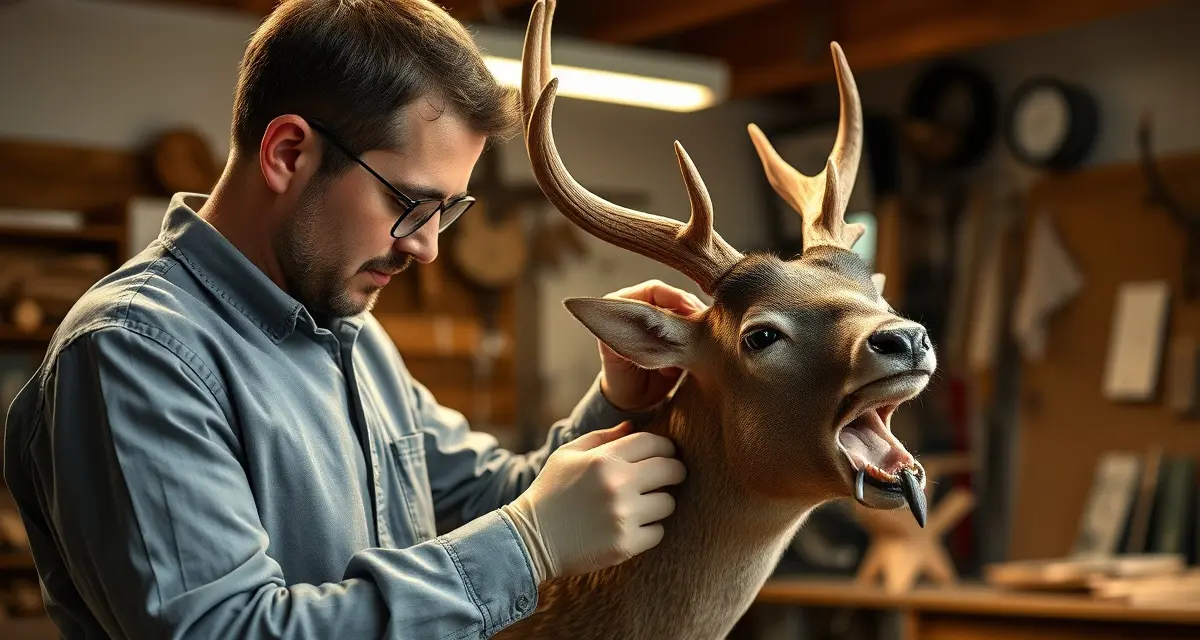
Is Taxidermy Worth Learning as a Career in 2026?
Yes. Taxidermy has consistent, season-driven demand tied to a stable activity, hunting. The US market has approximately 25,000 professional taxidermists and generates over $700 million in annual revenue. Demand has grown roughly 15% annually over the past decade, driven by a growing hunter population and increasing trophy mount value per customer.
Shops that systematize early in their career build significantly more value than craft-only shops. The income gap between taxidermists who operate with management systems and those who don't is widening as software adoption separates high-efficiency operations from paper-based ones.
Taxidermy is worth learning as a career in 2026, with one important caveat: the craft skills are necessary but not sufficient for financial success. You also need business skills.
TL;DR
- The US taxidermy market has approximately 25,000 professional taxidermists and generates over $700 million in annual revenue.
- Demand has grown roughly 15% annually over the past decade, driven by a growing hunting population and higher average mount values.
- The best taxidermists in quality markets earn $600-$900 or more for a single deer shoulder mount.
- Taxidermy is a local service business: you are competing with the 3-5 taxidermists within 30-50 miles, not shops across the country.
- Shops that adopt digital management systems are building structural advantages over paper-based competitors who have not modernized.
- Craft skills are necessary but not sufficient; business systems are what separate financially successful shops from struggling ones.
The Industry Fundamentals
Demand is tied to hunting, which is stable and growing: The US has approximately 15 million licensed deer hunters annually. Even a small percentage of those hunters wanting a shoulder mount creates significant market demand. Turkey, waterfowl, elk, and bear hunters add additional volume.
Competition is local, not national: Taxidermy is a local service business. You're not competing with shops across the country, you're competing with the 3-5 taxidermists within 30-50 miles. Local reputation, word-of-mouth, and Google reviews determine most new business.
Pricing power is real: The best taxidermists in quality markets earn $600-$900+ for a single deer shoulder mount. That's several hundred dollars more per unit than shops a decade ago. Pricing has moved faster than supply in most markets.
The technology gap is an opportunity: Most existing taxidermists are still operating on paper. Shops that adopt taxidermy shop management software in 2026 are entering the market with a structural advantage over established competitors who haven't modernized.
Frequently Asked Questions
Is taxidermy a growing industry?
Yes. Taxidermy demand has grown approximately 15% annually over the past decade, tracking with increases in the licensed hunting population and trophy quality in major whitetail states. The $700 million US market is spread across roughly 25,000 practitioners, meaning the average shop serves a meaningful local market. Growth is not uniform, high-volume trophy states like Iowa, Kansas, and Texas have seen faster growth than low-harvest states. The trend toward higher-quality mounts has also increased average revenue per job, even for shops with flat volume.
How do I start a career in taxidermy?
Start with formal training: a taxidermy school or an apprenticeship with an established taxidermist. Several multi-week intensive programs exist at reputable schools across the country. Follow formal training with competition participation, entering state competitions accelerates skill development faster than any other post-training activity. Get your state taxidermy license before accepting any paid work. Apply for a federal USFWS permit before accepting migratory birds. Set up management software before your first season to build good habits from the beginning rather than having to fix paper-based chaos later.
What is the long-term career outlook for taxidermists?
Strong, with differentiation emerging. The overall industry will continue growing as hunting participation holds and trophy mount demand increases. Within that growth, the market is bifurcating: high-efficiency shops using digital systems are capturing more volume and generating higher margins, while paper-based shops are falling behind on both customer experience and operational capacity. By 2028-2030, customer portal expectations will likely become standard across the industry. Taxidermists who adopt technology early build compounding advantages in online reviews, customer loyalty, and intake capacity. The long-term outlook is best for taxidermists who combine craft skill with business systems.
How does this apply to solo taxidermy shops?
The principles in this guide apply to solo shops just as they do to larger operations, though the scale differs. A single-person shop may have lower absolute volume but faces the same documentation, compliance, and customer communication requirements. The practical advice here scales down to any shop size.
What is the most common mistake new taxidermists make in their first year?
The most common mistake is focusing exclusively on craft skill development while neglecting the business systems that determine long-term financial success. A highly skilled taxidermist running on paper intake, no customer communication system, and inconsistent pricing will earn significantly less than a slightly less refined craftsperson who operates with digital intake, clear pricing, and organized records. Both craft and systems matter; neither alone is sufficient.
Related Articles
- What Is a Typical Wait Time for Taxidermy in 2026?
- What Records Are Required for Bear Taxidermy?
- What Happens to a Bear Skull in Taxidermy?
Try These Free Tools
Put these insights into practice with our free calculators and planners:
Sources
- National Taxidermists Association (NTA)
- US Fish & Wildlife Service
Get Started with MountChief
Taxidermy is worth learning, and building good operational systems from your first season is what separates the shops that grow from those that plateau. MountChief gives you AI intake, tannery tracking, customer portal communication, and compliance documentation in one platform built specifically for taxidermists. Try MountChief from your first season and build the habits that compound into a sustainable business.