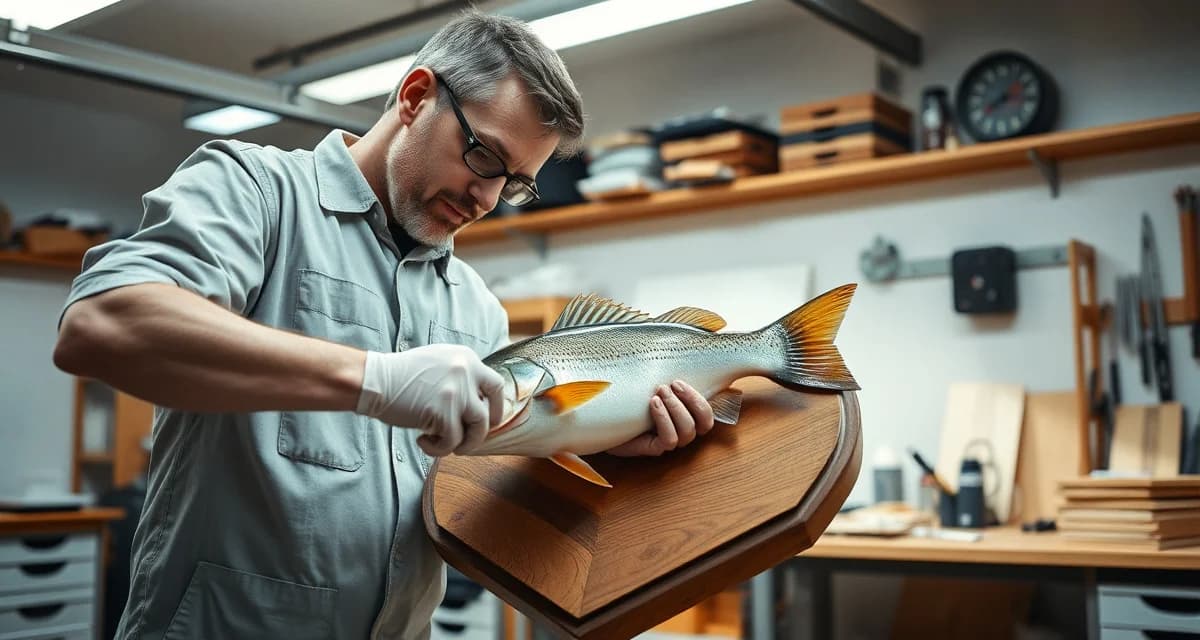
How Much Does a Fish Mount Cost in 2026?
Fish mounts are typically priced by the inch. The standard range is $12-$18 per inch of the fish's total length. A 24-inch largemouth bass would cost approximately $288-$432. A 30-inch walleye runs $360-$540.
Fish replicas now account for 55% of fish mount orders, up from 30% a decade ago. Most anglers today are choosing replicas over skin mounts for catch-and-release fish. Replicas look better, last longer, and let the fish go.
TL;DR
- Fish skin mounts typically cost $10-$14 per inch of fish length.
- Fiberglass replica mounts cost $12-$18 per inch, slightly more than skin mounts of the same size.
- A 20-inch bass skin mount runs approximately $200-$280; a replica of the same fish runs $240-$360.
- Species complexity, habitat additions, and finish detail affect the final price.
- Saltwater species like tarpon and marlin tend to be priced higher than freshwater species of the same size.
What Affects Fish Mount Pricing
Species complexity. Walleye and trout have intricate scale and color patterns that require more painting time than a bass. These typically command the upper end of the per-inch range.
Saltwater species. Redfish, snook, mahi, and other saltwater fish require special preservation chemistry. Expect to pay a 15-25% premium over the per-inch rate for equivalent freshwater fish. A 30-inch redfish skin mount might run $450-$650, not the base $360-$540 a freshwater fish of the same length would cost.
Replica vs. skin mount. Customer-facing prices are similar for both. Behind that price is a different cost structure, but taxidermists who do quality work on both typically charge comparable rates per inch.
Mount pose and habitat. A fish in a flat, basic position costs less than a custom habitat scene with driftwood, rocks, and water effects. Some shops offer habitat upgrades for an additional $50-$200 depending on complexity.
Shop location. Like all taxidermy, coastal and metro markets charge more than rural markets. Expect $15-$22/inch in high-cost markets vs. $12-$15/inch in rural inland markets.
Replica vs. Skin Mount: Is One Cheaper?
The retail prices are usually similar, but the practical advantages differ:
Fish replicas:
- Angler can release the fish
- No preservation risk during shipping or storage
- Typically more vibrant, longer-lasting color
- Requires good reference photos at the time of catch
Skin mounts:
- Some anglers prefer mounting the actual fish
- Requires the fish to be kept (not released)
- Greater risk of preservation issues if field care isn't done well
Most taxidermists who do both charge comparable per-inch rates. If there's a price difference, replicas are sometimes slightly higher because of painting labor, and skin mounts are sometimes slightly higher because of tannery or preservation costs.
Minimum Charges
Very small fish priced at $12-$18/inch would result in unrealistically low quotes. Most taxidermists have a minimum charge of $100-$150 for any fish mount regardless of size. A 10-inch crappie at $14/inch would be $140 before the minimum kicks in anyway, but the minimum protects against pricing errors on unusually small specimens.
Deposits and Turnaround Time
Most fish taxidermists collect a 40-50% deposit at intake. Turnaround for fish mounts ranges from 4-12 months depending on the shop's queue. Replicas from a catalog may arrive faster than custom-order species-specific blanks.
You can track the status of your fish mount from any MountChief-powered shop using the taxidermy pricing calculator for quotes and the fish mount tracking system for status updates.
Frequently Asked Questions
How do taxidermists charge for fish mounts?
The standard method is per-inch pricing based on total fish length. Rates typically range from $12-$18 per inch for common freshwater species, with saltwater species carrying a 15-25% premium due to more complex preservation requirements. Some shops use size tiers (pricing increases per inch for longer fish) because larger fish take more material and labor.
Is a fish replica cheaper than a skin mount?
In most cases, no. Retail prices are similar for replicas and skin mounts of the same size and species. Replicas require skilled painting labor. Skin mounts require preservation and tannery work. These costs tend to balance out. The real advantage of a replica isn't lower price, it's that the fish can be released and the result is often more visually vibrant and longer-lasting.
How long does a fish mount take to complete?
Turnaround varies by shop, but 4-12 months is typical for most fish taxidermists. Shops with high volume during busy fishing seasons may have longer queues. Replica orders depend on whether the taxidermist is ordering from a catalog blank or commissioning a custom casting for an unusual species. Some shops offer rush service at a premium for anglers with specific deadlines.
Why are replicas more expensive than skin mounts of the same fish?
Fiberglass replicas require more labor-intensive painting and finishing than skin mounts. The replica process involves casting, painting each scale and detail by hand, and finishing work that can take considerably longer than a skin mount. The materials cost is also higher for fiberglass work than for a preserved fish skin.
Does size affect the per-inch pricing for fish mounts?
Some taxidermists adjust per-inch pricing for very large fish because the additional material, form size, and labor scale with size. A 50-inch tarpon requires more work than five 10-inch bluegill, even at the same total inches. Ask your taxidermist for a quote on larger specimens rather than assuming linear per-inch pricing.
Are saltwater fish mounts priced differently than freshwater mounts?
Often yes. Saltwater species tend to command higher prices both because of the species' reputation and because saltwater fish often require more detailed finishing work to capture complex color patterns. Billfish, tarpon, and other saltwater trophies are typically priced at the higher end of the range even compared to freshwater fish of the same size.
Related Articles
- How Much Does Bailee's Insurance Cost for a Taxidermy Shop?
- How Much Does Tannery Processing Cost for Taxidermists?
Try These Free Tools
Put these insights into practice with our free calculators and planners:
Sources
- National Taxidermists Association (NTA)
- Breakthrough Magazine
- Bass Anglers Sportsman Society (B.A.S.S.)
Get Started with MountChief
Fish taxidermy is a separate specialty from big-game work, and MountChief handles both with the same organized intake and tracking system. Try MountChief to manage your fish jobs alongside deer, elk, and waterfowl in one organized platform.