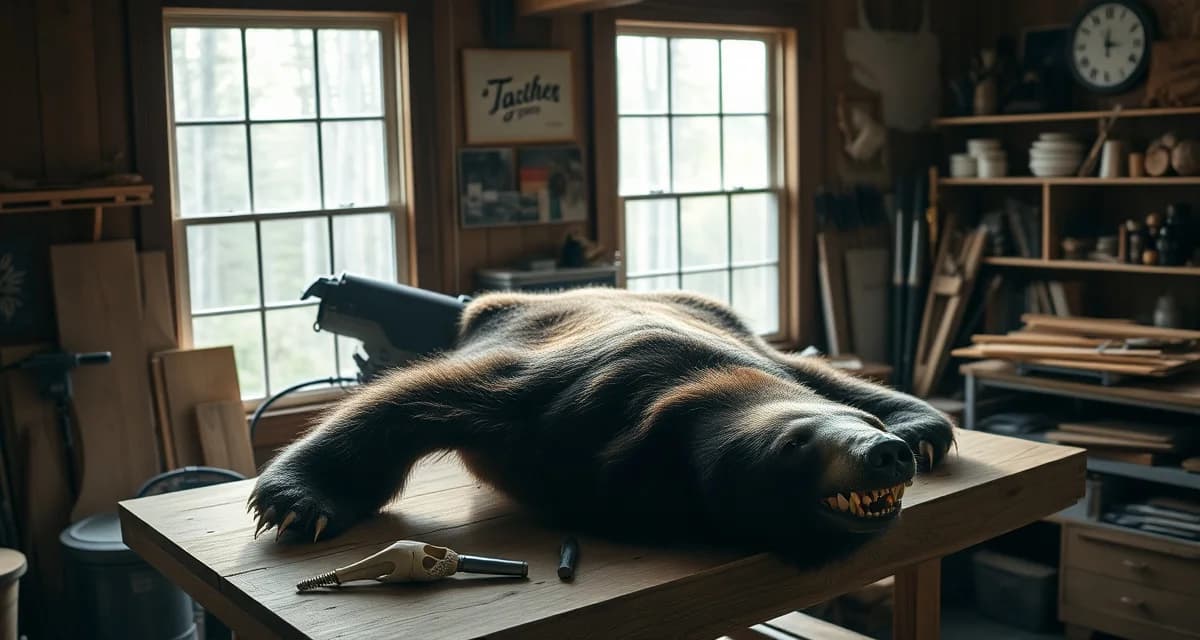
Bear Season Preparation for Maine Taxidermy Shops
Maine's black bear season is one of the best in the eastern United States. The combination of extensive wild forest, a healthy bear population, and multiple hunting methods (baiting, hounding, and spot-and-stalk) draws hunters from across the Northeast and beyond. For Maine taxidermists, bear season produces high-value mounts: full body life-size mounts and rug mounts that average $1,800-$2,500 each.
Before any of that work can begin, there's a mandatory step that doesn't exist in most other states: MDIFW bear skull sealing.
TL;DR
- Maine bear season generates high-value mounts: full-body life-size and rug mounts that average $1,800-$2,500 each.
- Bear tannery timelines run 12-16 weeks, longer than deer because bear hides are thick and heavy.
- Out-of-state bear hunters often drive 5-10 hours to hunt Maine, making portal communication especially important.
- Maine MDIFW requires skull sealing before any taxidermist can legally accept a bear specimen.
- Document seal number, seal date, and issuing officer on every bear intake before beginning any work.
- Pre-season bear intake preparation should include verifying your sealing documentation fields are complete and current.
Maine Black Bear Season Dates
General bear season: September 1 through November 30 (with some method-specific date restrictions)
Archery-only period: Early September through late September
Hound hunting: Specific dates designated by MDIFW
Maine's bear season runs three full months, creating a sustained intake window that differs from the compressed windows of deer or turkey. Bears arrive throughout September, October, and November, with the bait season and early archery period generating the bulk of high-quality capes.
MDIFW Skull Sealing: The Critical Compliance Step
Maine is one of a small number of states that requires mandatory skull sealing for black bear by state wildlife biologists before a taxidermist can legally possess the specimen for mounting.
What skull sealing means: After harvest, hunters must bring the bear skull to an MDIFW reporting station for biological sampling (tooth extraction for age determination) and official sealing. The skull receives a MDIFW seal that certifies the bear was legally harvested and has been registered with the department.
Why this matters for taxidermists: You cannot legally accept a Maine black bear for mounting without the sealed skull. If a hunter drops off a bear without the seal (because they haven't completed the sealing process yet) you're in possession of an unsealed bear, which is a state wildlife violation regardless of whether the bear was legally harvested.
At intake, verify that the skull seal is present before accepting the specimen. If it isn't, tell the hunter they need to complete the MDIFW sealing process first. This is non-negotiable.
Your Maine taxidermy shop management records should document the seal number for every bear received.
Intake Documentation for Maine Bear
Beyond the skull seal requirement, your intake records for bear must include:
- Customer name, address, and hunting license number
- Bear license number (Maine issues specific bear licenses)
- MDIFW skull seal number
- Date received
- Mount type (rug, full body, skull only, etc.)
Keep a copy of the seal documentation in the job file. If MDIFW conducts an inspection, your records need to connect each bear to its seal number.
Bear Mount Types and Timeline Expectations
Maine bear work tends toward high-value production:
Full body life-size mounts: The premium option. These require full body measurements at intake, total length, girth at shoulder and hips, nose-to-tail. Get these before the hide is processed if possible.
Rug mounts: The most common bear taxidermy request. Document the hide condition thoroughly at intake, bears coming in from bait stations are generally in better condition than late-season bears, and hair slip is a real concern with any bear hide.
European skull mount: A lower-cost alternative that's growing in popularity. The skull seal is already in place, which simplifies this mount type significantly.
Bear tannery timelines run 12-16 weeks typically, longer than deer because bear hides are thick and heavy. Factor this into your timeline estimates at intake.
Bear Tannery Shipping from Maine
Maine bears can be shipped to out-of-state tanneries with the proper documentation. Your seal number, taxidermist license information, and chain of custody records should accompany any shipment. Some tanneries that specialize in bear work are located in the Midwest and Mountain West. Confirm shipping requirements before your first bear tannery shipment.
For the bear taxidermy tracking workflow covering all stages from intake to completion, see the dedicated tracking guide.
Pricing and Value of Maine Bear Work
Maine bear rug mounts at $1,800-$2,500 represent some of the highest per-job revenue in a taxidermist's portfolio. Life-size bears can run $4,000-$8,000+ depending on pose complexity and size. These are jobs worth tracking carefully and managing with professional communication.
Out-of-state bear hunters are often driving 5-10 hours to hunt Maine. These customers need your portal. They won't be back in Maine until their mount is complete.
Related Articles
- Deer Season Preparation for Indiana Taxidermy Shops
- Deer Season Preparation for Iowa Taxidermy Shops
FAQ
How do Maine taxidermists prepare for bear season?
Begin preparation in August: verify your MDIFW taxidermist license is current, configure your intake form with skull seal number as a required field, contact tanneries to confirm they handle bear and have capacity, and review the MDIFW seal reporting station locations and process so you can explain it to hunters who don't know the requirement. Do not accept any bear without verifying the skull seal.
How do ME shops handle mandatory bear skull sealing at intake?
Require the skull seal number before accepting any Maine black bear for mounting. If a hunter arrives without a sealed skull, explain that MDIFW requires sealing before a taxidermist can legally possess the bear. Direct them to the nearest MDIFW reporting station and tell them you'll be happy to accept the bear once the sealing is complete. Document the seal number in your intake record for every bear.
What MDIFW documentation is required for Maine bear taxidermy?
Maine requires taxidermists to maintain records including the customer's name, address, and hunting license number, the bear license number, and the MDIFW skull seal number for every bear received. Your taxidermist license must be current before accepting any wildlife. MDIFW wardens can inspect records, and possession of an unsealed bear is a wildlife violation regardless of your licensing status.
How does this apply to solo taxidermy shops?
The principles in this guide apply to solo shops just as they do to larger operations, though the scale differs. A single-person shop may have lower absolute volume but faces the same documentation, compliance, and customer communication requirements. The practical advice here scales down to any shop size.
What is the most common mistake taxidermists make with bear season prep maine?
The most common mistake is treating bear season prep maine as an afterthought rather than building it into the standard workflow from the start. Shops that encounter problems in this area typically did not establish clear processes before season, which means every situation becomes a one-off decision rather than a standard response.
Try These Free Tools
Put these insights into practice with our free calculators and planners:
Sources
- National Taxidermists Association (NTA)
- US Fish & Wildlife Service
- Breakthrough Magazine
- State wildlife agencies
- Taxidermy Today
Get Started with MountChief
Bear taxidermy requires more documentation than almost any other species, and MountChief has bear-specific fields built in from the start. Try MountChief before bear season to make sure every intake is complete, compliant, and ready for any inspection.