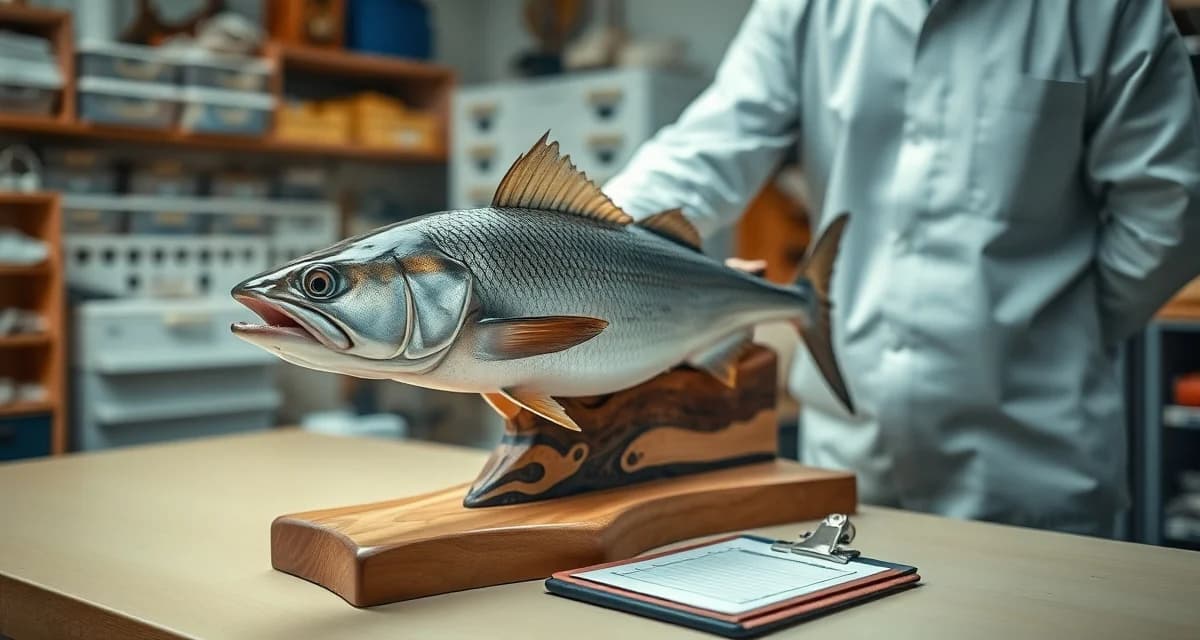
Fish Mount Job Tracking: Manage Replicas and Skin Mounts
Fish mounts are the second most common mount request at full-service taxidermy shops. They're also the most technically diverse, replicas and skin mounts use fundamentally different production workflows, and the intake data you need at the start depends entirely on which type the customer wants.
A fish replica needs precise measurements and quality photos. A skin mount needs the actual fish, and the intake process needs to document its condition carefully because you'll be working with the original specimen.
TL;DR
- Skin mounts take 2 to 4 months for most freshwater species.
- Or frustrated if they expect a 3-month fish to be done in 4 weeks.
- Fish replicas typically take 2 to 5 months.
- Setting realistic timelines at intake prevents the impatient calls that otherwise come at month 6 from a customer expecting completion at month 2.
- They're also the most technically diverse, replicas and skin mounts use fundamentally different production workflows, and the intake data you need at the start depends entirely on which type the customer wants.
- 15 to 20 years for skin mounts in humid conditions
The Replica vs. Skin Mount Decision
Most customers don't know the difference when they walk in. Part of your intake process is helping them decide.
Fish replicas:
- Uses the customer's photos and measurements, the actual fish goes back with them
- More durable finish, holds up in humid environments better than skin mounts
- 50+ year lifespan vs. 15 to 20 years for skin mounts in humid conditions
- Replica demand has grown 40% in saltwater markets over the last decade
- Typically costs more than a skin mount of the same species
Skin mounts:
- Uses the actual fish
- More traditional, many freshwater anglers prefer skin mounts
- Requires careful specimen preservation before intake (ice, not freeze-burn)
- Condition at intake matters significantly, damage is visible in the finished product
- Typically costs less than a comparable replica
For saltwater species (marlin, tarpon, mahi-mahi), replicas are almost universally recommended. For freshwater trophy species (largemouth, walleye, northern pike), many customers prefer skin mounts.
Fish-Specific Intake Requirements
Fish intake captures different data than mammal intake. MountChief's species-specific intake adapts automatically when you select a fish species.
For replicas:
- Length (nose to tail fork and total length)
- Maximum girth
- Reference photos from multiple angles, top, bottom, both sides, head detail
- Color reference notes (fresh fish colors fade quickly, photos taken at catch or shortly after are critical)
- Species (for proper form selection)
- Display preferences, open/closed mouth, pose, habitat panel
For skin mounts:
- Length and girth
- Condition assessment, any damage, hook holes, missing scales
- Photos documenting condition at intake
- Same display preferences as above
- Specimen storage notes (fresh, iced, previously frozen)
Tracking Fish Jobs Through Production
Fish mounts don't go through a tannery, production workflows differ significantly from mammal mounts.
Replica workflow:
- Intake, measurements and photos captured
- Form selection and order
- Production, painting and detailing to match reference photos
- Finishing and hardware
- Completion and customer notification
Skin mount workflow:
- Intake, specimen received and documented
- Skinning and preservation
- Form selection
- Mounting
- Finishing and drying
- Completion and customer notification
MountChief tracks each stage with production milestone updates. Customers see where their fish is in the process without calling.
Fish Mount Timelines
Replicas: 2 to 5 months from intake to completion, depending on shop backlog and form availability.
Skin mounts: 2 to 4 months for most freshwater species. Larger saltwater species may take longer.
Fish mounts typically have shorter timelines than deer shoulder mounts, customers who are used to deer timelines may be pleasantly surprised. Or frustrated if they expect a 3-month fish to be done in 4 weeks. Setting expectations at intake matters.
Multi-Species Shops: Fish Alongside Deer
If you handle both deer and fish, your shop has two distinct production tracks running simultaneously. Fish jobs are in finishing while deer capes are still at the tannery. Managing both in one system, rather than separate tracking methods for each, simplifies the whole operation.
MountChief tracks all species in one dashboard. One view shows where every active job is regardless of species.
Related Articles
- Fish Replica vs Skin Mount: Which is Better?
- Bear Taxidermy Job Tracking: Manage High-Risk High-Value Specimens
- Deer Taxidermy Job Tracking: Manage Whitetail Season Volume
- Predator Mount Job Tracking: Coyote, Bobcat, and Mountain Lion
FAQ
How do I track fish mount orders?
Digital job records with species-specific intake fields (length, girth, reference photos for replicas; condition documentation for skin mounts) and production stage tracking. Fish jobs don't go through a tannery, so the tracking workflow differs from deer, but milestone updates and customer portal visibility work the same way. Customers get a tracking link at intake and can follow their fish mount through production.
How long does a fish mount take to complete?
Fish replicas typically take 2 to 5 months. Skin mounts take 2 to 4 months for most freshwater species. Timelines vary based on shop backlog, form availability for replicas, and the complexity of the painting work. Setting realistic timelines at intake prevents the impatient calls that otherwise come at month 6 from a customer expecting completion at month 2.
What is the difference between a fish replica and a skin mount?
A fish replica uses precise measurements and reference photos, the customer keeps the actual fish. The taxidermist creates a reproduction painted to match the fish's coloration at time of catch. A skin mount uses the actual fish, preserved and mounted on a form. Replicas are more durable (especially in humid environments), more flexible on timing (no concern about specimen preservation quality), and increasingly preferred for saltwater species. Skin mounts use the original fish and remain preferred by many freshwater anglers for sentimental reasons.
How does this apply to solo taxidermy shops?
The principles in this guide apply to solo shops just as they do to larger operations, though the scale differs. A single-person shop may have lower absolute volume but faces the same documentation, compliance, and customer communication requirements. The practical advice here scales down to any shop size.
What is the most common mistake taxidermists make with fish mount tracking?
The most common mistake is treating fish mount tracking as an afterthought rather than building it into the standard workflow from the start. Shops that encounter problems in this area typically did not establish clear processes before season, which means every situation becomes a one-off decision rather than a standard response.
Try These Free Tools
Put these insights into practice with our free calculators and planners:
Sources
- National Taxidermists Association (NTA)
- US Fish & Wildlife Service
- Bass Anglers Sportsman Society (B.A.S.S.)
Get Started with MountChief
Fish and waterfowl jobs require the same organized intake and tracking as big-game work. MountChief handles every species type with the same efficient intake system, customer portal, and production tracking. Try MountChief to manage all your species types in one organized platform.