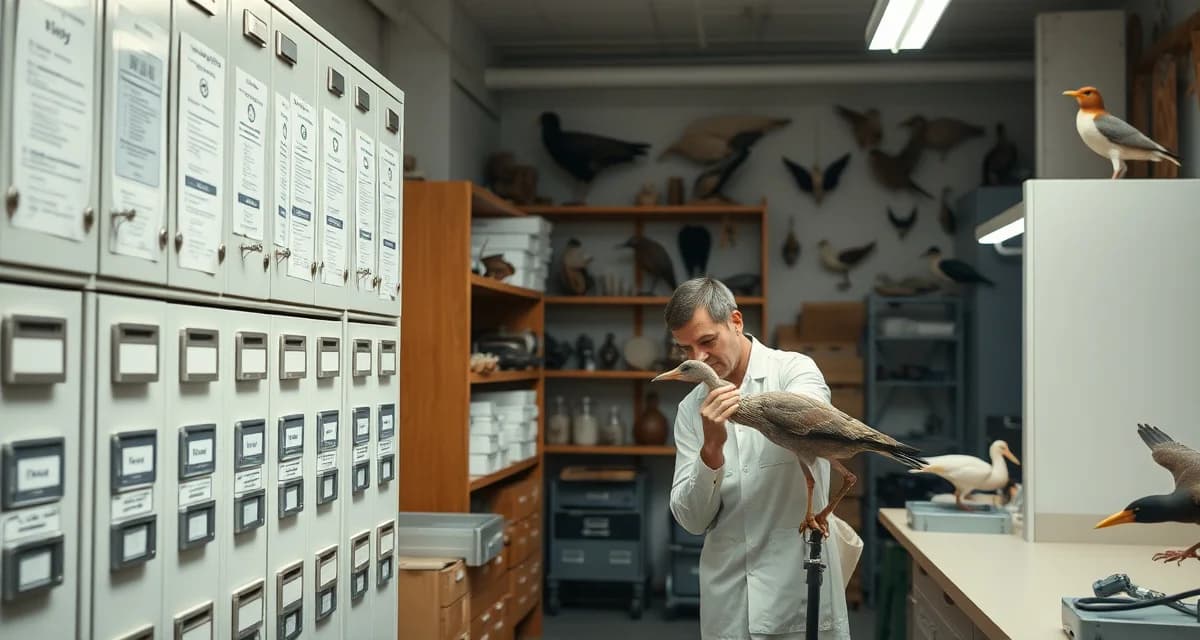
Bird Taxidermy Specialist: How Compliance Tracking Saved a Shop
Three compliance violations in two years is a pattern. It's the kind of pattern that ends with a federal inspection, a formal warning, and a permit at risk.
For a bird taxidermy specialist running a shop that handles migratory waterfowl, upland birds, and turkey mounts, those violations didn't come from any intent to cut corners. They came from the same problem that creates most taxidermy compliance gaps: intake done too fast, with required information captured inconsistently.
A hunter drops off a pair of mallards. It's a busy Saturday in November. The taxidermist captures the customer's contact information and mount preferences but skips the federal salvage permit verification. The birds go into production. Six months later, those birds are in a record. If a U.S. Fish and Wildlife Service agent pulls the records and finds no permit documentation for those mallards, that's a violation.
Three times in two years, that's exactly what happened.
TL;DR
- The Migratory Bird Treaty Act governs what taxidermists can accept, how they must document it, and what records they must keep.
- The hunter needs to have harvested the bird legally and be able to document it.
- During duck season, when a shop is also managing deer intakes and turkey work, the specific steps required for a migratory bird intake can get compressed.
- A fourth violation would have put the shop's federal taxidermist permit at serious risk.
- Without a federal permit, this shop (which does a substantial portion of its revenue in migratory bird work) couldn't legally operate in that segment.
- A federal taxidermist permit is the shop's license to operate in the migratory bird space.
The Risk of Migratory Bird Compliance Failures
Federal migratory bird regulations are not flexible. The Migratory Bird Treaty Act governs what taxidermists can accept, how they must document it, and what records they must keep. USFWS conducts inspections of federally permitted taxidermists. Sometimes announced, sometimes not.
The permit requirements aren't complicated. The taxidermist needs to be federally permitted. The hunter needs to have harvested the bird legally and be able to document it. The taxidermist must capture and retain that documentation.
What makes it a compliance risk is the intake moment. Bird intake happens fast. During duck season, when a shop is also managing deer intakes and turkey work, the specific steps required for a migratory bird intake can get compressed.
For this shop, the previous process was paper-based. The intake form had a section for permit information, but there was no enforcement mechanism. Nothing that prevented the form from being completed without that section filled out. When things got busy, that section got skipped.
Three Violations in Two Years
The shop had received three compliance violations from USFWS in two seasons before implementing MountChief. The violations were for incomplete documentation. Specifically, missing or incomplete federal permit information on migratory bird intake records.
Each violation came with a formal warning. A fourth violation would have put the shop's federal taxidermist permit at serious risk. Without a federal permit, this shop (which does a substantial portion of its revenue in migratory bird work) couldn't legally operate in that segment.
The owner knew the paper process was the problem. The question was how to fix it.
The Compliance Flag Solution
MountChief's intake system includes automated compliance flags for regulated species. When a migratory bird is entered at intake, the system requires specific fields to be completed before the intake can be finalized.
The federal salvage permit field is required. It can't be left blank. If the permit number isn't in the system, the intake ticket doesn't close. The bird doesn't get a QR tag. The job doesn't enter the production queue.
That hard stop is the key difference. With paper, there was nothing preventing a taxidermist from moving on without completing the permit field. A checkbox doesn't enforce itself. A mandatory field in software does.
The compliance flag does more than require the field. It also prompts the taxidermist to verify the hunter's information against the permit, an active verification step rather than a passive "fill this in" instruction.
Implementation and the First Season
The shop implemented MountChief before the start of the following waterfowl season. Training focused on the compliance-specific aspects of the intake process, understanding why the flags exist and what they're protecting against.
The first season under the new system, the shop processed more migratory bird intakes than the previous two seasons combined. Not a single intake was completed without proper permit documentation. The automated flag prevented any gaps before they could happen.
When USFWS conducted a records inspection that season, the shop's digital records were complete and organized. The inspection was straightforward. No violations, no warnings.
Zero Violations in Two Seasons
Since implementing MountChief, the shop has run two full seasons without a single compliance violation.
The owner described the change as "going from hoping the intake person remembered to check the permit box, to knowing it's impossible for them to skip it."
That reliability matters at a different level when you're talking about federal compliance. It's not just about avoiding fines. A federal taxidermist permit is the shop's license to operate in the migratory bird space. Protecting that permit with a system that makes compliance mistakes structurally impossible is worth a great deal more than any fine it might prevent.
What Would a Fourth Violation Have Meant
The shop owner is direct about what a fourth violation would have meant: "We would have been at serious risk of losing our federal permit. Without that, we can't take waterfowl. That's a significant part of our business. We'd have been looking at a hard choice about whether we can continue in this market segment at all."
Bird taxidermy compliance isn't complicated once the process is structured correctly. It's a problem of intake consistency, not intent. When you give a rushed intake process a single skippable step on a compliance requirement, it gets skipped. Automated flagging removes that possibility.
Frequently Asked Questions
How did automatic compliance flagging prevent permit violations for this bird shop?
MountChief requires mandatory permit information fields to be completed before a migratory bird intake can be finalized. If the field is empty, the intake won't close and the job won't enter the production queue. This hard stop prevents the "I'll fill it in later" shortcuts that created compliance gaps in the shop's previous paper process.
What was the shop's previous process for migratory bird permit tracking?
The previous system was paper-based with a section on the intake form for permit information. There was no enforcement mechanism. The form could be completed without filling in the permit section. During busy intake periods, that section was sometimes skipped, which created the documentation gaps that resulted in three USFWS compliance violations over two seasons.
What would a fourth compliance violation have meant for this shop's license?
The shop's federal taxidermist permit was at genuine risk. Three violations in two years had put the shop under heightened USFWS scrutiny. A fourth violation could have resulted in permit suspension or revocation. Without a federal taxidermist permit, the shop couldn't legally accept migratory birds. A segment that represents a significant share of their annual revenue.
How does this apply to solo taxidermy shops?
The principles in this guide apply to solo shops just as they do to larger operations, though the scale differs. A single-person shop may have lower absolute volume but faces the same documentation, compliance, and customer communication requirements. The practical advice here scales down to any shop size.
What is the most common mistake taxidermists make with bird shop case study?
The most common mistake is treating bird shop case study as an afterthought rather than building it into the standard workflow from the start. Shops that encounter problems in this area typically did not establish clear processes before season, which means every situation becomes a one-off decision rather than a standard response.
Related Articles
- How a 400-Mount Shop Gained Full Tannery Visibility with MountChief
- How a Midwest Taxidermy Shop Ended Specimen Mix-Ups with QR Tags
- Case Study: How AI Intake Cut a Shop's Processing Time from 22 to 3 Minutes
- Case Study: How Deposit Automation Eliminated Abandoned Mounts
Try These Free Tools
Put these insights into practice with our free calculators and planners:
Sources
- National Taxidermists Association (NTA)
- US Fish & Wildlife Service
- Ducks Unlimited
Get Started with MountChief
The results in this article are achievable in any shop that applies the same operational approach. MountChief provides the intake speed, tannery tracking, and customer communication tools that make this kind of improvement possible. Try MountChief to see what better systems do for your operation.