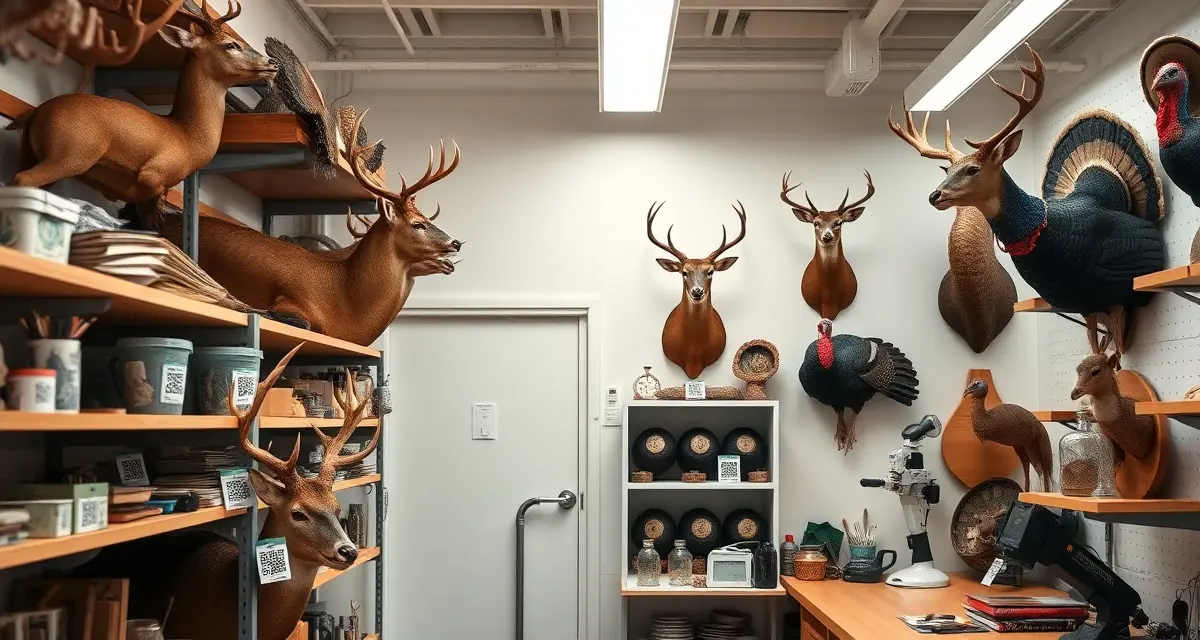
How a Midwest Taxidermy Shop Ended Specimen Mix-Ups with QR Tags
The call you never want to get: a customer picking up their finished mount, looking at it for ten seconds, and saying "that's not my deer."
Mark runs a deer and turkey shop in central Missouri, processing around 240 mounts per year. For three seasons running, he had at least one confirmed specimen mix-up per season. Two got caught at pickup. One didn't get caught until a customer put their mount on the wall next to their harvest photos and noticed the antler configuration was wrong.
"The third one was the worst. Guy posts his mount on Facebook. His buddy comments 'that's not your 8-pointer, yours had a kicker off the G2.' He was right. We'd somehow swapped two very similar capes from the same week in November."
The fix cost Mark around $1,800 in remounting work and lost materials. The customer relationship was salvageable, the customer had known Mark for years, but the damage was real.
TL;DR
- MountChief at $79/month is $948/year.
- MountChief at $79/month is $948/year. Mark's one incident, one confirmed mix-up before the software, was twice that just in direct costs. The prevention math is obvious.
- The fix cost Mark around $1,800 in remounting work and lost materials.
- His buddy comments 'that's not your 8-pointer, yours had a kicker off the G2.' He was right.
- They're a predictable consequence of processing 200+ similar specimens through a multi-stage workflow using a paper-based identification system.
- Some years you'll have five or six 8-point bucks harvested the same weekend in the same county.
Why Mix-Ups Happen
Mix-ups aren't a sign of carelessness. They're a predictable consequence of processing 200+ similar specimens through a multi-stage workflow using a paper-based identification system.
Here's the typical chain of events:
- Customer drops off a whitetail cape. Paper tag is stapled to the cape and matches the paper intake form.
- You skin and salt the cape. The paper tag survives.
- You prep the cape for tannery. The paper tag starts to deteriorate.
- The cape goes through borax treatment. The paper tag is now barely legible.
- The cape ships to the tannery in a box with 40 other capes.
- The tannery processes the hide with chemicals and moisture. The paper tag doesn't make it.
- The cape comes back from the tannery with no tag or a completely degraded tag.
At this point, you're matching tanned capes back to intake records using size, antler configuration, and handwriting on the cape itself. If two capes are similar and came in around the same time, the margin for error is real.
For most of deer season, you're processing whitetail bucks, which means dozens of similar animals coming in within a few weeks of each other. Some years you'll have five or six 8-point bucks harvested the same weekend in the same county. The odds of a mix-up aren't zero.
What Mark Was Using Before
Mark's system had evolved over 15 years into a combination of paper intake forms, plastic cable tags (an improvement over paper but still not permanent), and handwriting the customer's last name directly on the cape with a laundry marker.
The laundry marker was his backup. It helped, but:
- The marker fades during tannery chemical processing
- Some hides come back with the writing partially obscured
- If you've got two capes from the Johnson family in the same season, the backup system fails
He'd tried adding a second identifier, the last four digits of the phone number written alongside the name, but that added time to intake and wasn't foolproof either.
Finding a Better System
Mark started evaluating software options specifically for the QR tracking feature. His requirements were simple: a tag that could survive the tannery, and a system that could match every returned cape to its record with certainty.
He looked at three options:
DIY QR labels. He could buy waterproof QR labels and manage his own scanning system. The problem was the backend, he'd need to build a system to track what each QR code meant and update stages manually. The implementation complexity was too high.
Where's My Mount. Customer portal product, no shop-side tracking. Didn't solve the tannery problem.
MountChief. Purpose-built QR tags rated for tannery chemicals, connected to a full job tracking system. The combination of the physical tag and the software was what he needed.
"The QR tags are the key thing. They're built to survive tannery chemistry. That's not an accident, that's a design decision. The software is useful, but if the tag doesn't survive the tannery, nothing else matters."
Implementation
Mark set up MountChief in early September, before deer season started. He spent about two days on initial configuration:
- Imported his existing customer list (name, phone, email)
- Set up his production stages
- Configured automated SMS notifications for tannery transitions
- Ordered a supply of QR tags to have on hand for season
His intake process with QR tags:
- Customer arrives with specimen
- AI photo intake: photograph tag and specimen, AI fills intake form
- Assign QR tag from the job record (system prints or generates the QR for a preprinted tag)
- Physically attach QR tag to the specimen using heavy-duty twist-tie cable through the ear or around the leg
- Apply laundry marker backup on the cape, not eliminated, just reduced from primary to secondary
The QR tags go in a specific place on every specimen: left ear on deer and elk, left leg on turkey, dorsal fin base on fish. Consistent placement means you know where to look when scanning.
First Tannery Load
January, first tannery load of the season. Mark had 74 specimens ready.
He scanned each one with the MountChief app as it went into the box. The app added it to the tannery shipment batch. He photographed each layer of capes in the box as he packed. He sealed the box with the packing list (generated by MountChief showing every QR tag ID and corresponding customer) inside and sent it off.
"That packing list alone was different. Before, I'd handwrite a list of names. Now I have a printed list with QR tag IDs, species, customer name, intake date. It's an actual document."
Tannery Return
Eight weeks later, the hides came back. Mark scanned each QR tag as it came out of the box. Matches: confirmed. Every cape matched to its record in seconds.
One cape had a QR tag that was partially damaged, the epoxy was still intact but the printed code was unreadable from one angle. He scanned it from a sharper angle and got a partial read, then confirmed the match using the intake photos. Total time for that one: three minutes instead of three seconds, but still resolved correctly.
"Before, that would have been one of the uncertain matches that I'd try to figure out by comparing the cape to my mental image of the customer. Now it's: try another angle, look at the intake photos, confirmed. I knew whose cape it was."
No mix-ups that season. Or the next.
The Economics of Prevention
Mark's remounting incident cost him approximately $1,800, materials, labor time, plus the Facebook drama that cost him an unknown number of referrals.
"I've had two seasons now with zero mix-ups. Before that, one or two per season. Even if I value my remounting labor at nothing and just count materials, I've saved what MountChief costs me for an entire year. And I value my labor higher than nothing."
MountChief at $79/month is $948/year. Mark's one incident, one confirmed mix-up before the software, was twice that just in direct costs. The prevention math is obvious.
What Changed Beyond Mix-Up Prevention
Once the QR system was in place, Mark noticed secondary benefits he hadn't anticipated:
Faster reconciliation. Sorting returned hides from the tannery used to take most of a day. Now it takes under an hour.
Better customer conversations. Because every specimen is tracked to a specific stage, he could tell customers exactly where their cape was in the process. "Your cape came back from the tannery on March 8. You're in my staging area now" is more credible than "should be back from the tannery soon."
Staff confidence. His part-time assistant during peak season was more comfortable handling returns because the QR system removed the ambiguity. She didn't have to make judgment calls on similar-looking capes.
Zero disputes about condition. The intake photos, timestamped and attached to every job record, settled two potential disputes during the first season. In both cases, the condition issue was present at intake. The photos proved it.
Related Articles
- How Compliance Tracking Saved a Texas Taxidermist from a Federal Investigation
- Case Study: How Deposit Automation Eliminated Abandoned Mounts
- Case Study: First-Season Software Adoption Results from a Wisconsin Shop
- Case Study: How Tannery Tracking Eliminated 3 Lost Hides Per Season
FAQ
Are QR tags really different from regular waterproof labels?
Yes. Standard waterproof labels resist moisture but not prolonged chemical exposure. Tannery processing uses chromium salts, formic acid, or other chemical agents depending on the method. MountChief's QR tags use an encapsulated design that's been specifically tested for this environment. The code remains scannable after full tannery processing. A standard waterproof label from an office supply store typically won't survive.
What if a QR tag comes off the specimen at the tannery?
It happens rarely but it's possible. This is why the intake photo backup exists. Every job in MountChief has timestamped intake photos including the full specimen, antler or feature close-ups, and any identifying characteristics. If a cape comes back with no tag, you use the photos to match it to the right job. It's more work than a scan, but you can still confirm the match with certainty. This is also why consistent tag placement (same location on every specimen) matters, if a tag is missing, you know immediately on return.
Do all taxidermists worry about specimen mix-ups, or is it mainly high-volume shops?
Mix-ups can happen at any volume, but the risk increases with volume and with the proportion of similar species in your intake. A shop doing mostly European skull mounts has lower risk because skulls are more distinctive. A shop doing 200 whitetail shoulder mounts per season has significantly higher risk. If your peak intake includes 15-20 similar whitetails per weekend across three or four weekends, the conditions for a mix-up exist even at moderate volume.
How does this apply to solo taxidermy shops?
The principles in this guide apply to solo shops just as they do to larger operations, though the scale differs. A single-person shop may have lower absolute volume but faces the same documentation, compliance, and customer communication requirements. The practical advice here scales down to any shop size.
What is the most common mistake taxidermists make with midwest shop specimen mix up case study?
The most common mistake is treating midwest shop specimen mix up case study as an afterthought rather than building it into the standard workflow from the start. Shops that encounter problems in this area typically did not establish clear processes before season, which means every situation becomes a one-off decision rather than a standard response.
Try These Free Tools
Put these insights into practice with our free calculators and planners:
Sources
- National Taxidermists Association (NTA)
- US Fish & Wildlife Service
Get Started with MountChief
The results in this article are achievable in any shop that applies the same operational approach. MountChief provides the intake speed, tannery tracking, and customer communication tools that make this kind of improvement possible. Try MountChief to see what better systems do for your operation.