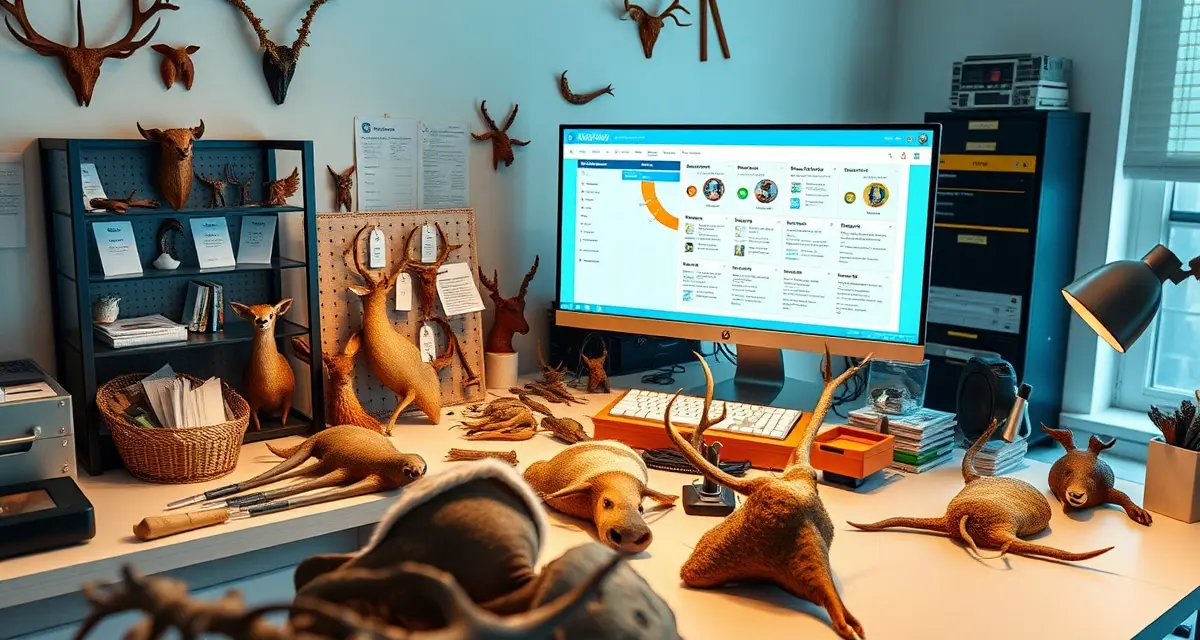
How Technology Makes Wildlife Compliance Easier for Taxidermy Shops
Automatic species flagging at intake prevents the human error that underlies most wildlife violations. That's not a claim about software marketing, it's the practical reality of how taxidermy compliance failures happen: a taxidermist, busy during peak intake, accepts a specimen without checking the tags, verifying the license, or noting the harvest state. It's an honest mistake with serious consequences.
Paper-based compliance systems require human memory at every step. Digital systems can enforce the check automatically. If your intake form doesn't have a field for the hunter's license number, you can skip it. If your software requires it before the record saves, you can't.
TL;DR
- Incomplete intake records happen when you're taking in deer number 14 of the day and the hunter is in a hurry.
- Paper shops spend 20-40 minutes reconstructing records that digital shops surface in seconds.
- Paper-based compliance systems require human memory at every step.
- If your intake form doesn't have a field for the hunter's license number, you can skip it.
- A shop in a border county taking deer from a neighboring state may have different record requirements for those animals.
- Software built for taxidermy compliance can require specific fields before an intake record saves.
Where Compliance Gaps Actually Occur
Most taxidermy compliance violations don't come from intentional wrongdoing. They come from three predictable failure points: incomplete intake records, lost paperwork, and human misidentification of species or zone restrictions.
Incomplete intake records happen when you're taking in deer number 14 of the day and the hunter is in a hurry. You get the name and the deposit and the cape gets a tag. The harvest county, the license number, the harvest date, all of that ends up missing or filled in later from memory.
Lost paperwork happens when paper tags go through the tannery. Chemical environments destroy ink and adhesive. A tag that leaves your shop legibly labeled returns as a smeared mess or doesn't return at all.
Misidentification is most common with migratory bird species and across state lines. A shop in a border county taking deer from a neighboring state may have different record requirements for those animals. Missing that distinction creates a compliance exposure.
How Technology Addresses Each Gap
Mandatory field enforcement. Software built for taxidermy compliance can require specific fields before an intake record saves. License number, harvest state, harvest date, species confirmation, these become required data points rather than optional ones. You can't accidentally skip them.
QR-based chain of custody. When every specimen gets a QR tag at intake, the digital record travels with it regardless of what happens to the paper. Tannery-resistant QR tags survive chemical submersion and temperature cycling that destroy handwritten labels. Scanning the tag at any point in the process, from your shop to the tannery and back, creates a timestamped location log.
Automatic species flagging. Modern taxidermy management platforms can flag species that require additional documentation. Enter "turkey" as the species and the system prompts for the federal tag number. Enter an elk from a CWD-positive county and the system can flag the CWD documentation requirement. The flag doesn't do the compliance work for you, but it ensures you don't skip it by accident.
Digital record archiving. Paper records get destroyed by floods, fires, and the tannery chemical environment. Digital records archived in the cloud survive all of those events. When a USFWS or state wildlife officer conducts an inspection, you can pull any record instantly rather than searching through filing cabinets. Digital records also have timestamps that paper records lack. You can prove exactly when an animal was received.
For a complete overview of what these tools do, see wildlife compliance software for taxidermy and the full taxidermy shop management software feature breakdown.
The Migratory Bird Problem
Turkey, duck, geese, doves, and dozens of other species are classified as migratory birds under federal law, making federal taxidermist permit requirements mandatory. This is the area where most state-licensed taxidermists have the highest compliance risk, because the federal layer is separate from the state licensing they already manage.
A digital intake system that prompts for federal tag information on any migratory bird species closes this gap automatically. The question is asked at intake, before the work begins, when the hunter still has the tag in hand.
What Happens During a Wildlife Inspection
When a state wildlife officer or USFWS agent conducts a compliance inspection at your shop, they're looking for your records for every specimen you currently have in possession. They want to verify:
- You can account for every specimen on your premises
- Each specimen has a corresponding intake record with the required information
- Your intake records match the licensing information for the hunter who brought it in
Shops using digital record systems report that these inspections go significantly faster. You can search a database by species, by intake date, or by hunter name. Paper shops spend 20-40 minutes reconstructing records that digital shops surface in seconds.
Digital records also protect you in a dispute. If a hunter claims they brought a deer in on a certain date with certain specifications, you have a timestamped record with the exact information they provided at intake.
Implementation Without Disruption
You don't need to overhaul your entire operation to get the compliance benefits of digital record-keeping. The minimum viable compliance technology stack is:
- Digital intake form with required fields for the species-specific regulatory data
- QR tags on every specimen from intake through completion
- Cloud-backed record storage that survives shop-level disasters
You can add the customer portal, AI intake, and automated communications later. But the compliance layer is the one that protects your license, and it's also the simplest to implement.
Frequently Asked Questions
How does taxidermy software help with wildlife compliance?
Taxidermy software helps with wildlife compliance by making it harder to skip required intake fields, automatically flagging species that carry additional documentation requirements, and creating timestamped digital records that survive the physical conditions that destroy paper. The most direct benefit is mandatory field enforcement: if your license number field is required, it gets filled in at every intake. That single change eliminates the most common gap in taxidermy compliance records.
What technology exists for taxidermy compliance record-keeping?
The primary technologies for taxidermy compliance record-keeping include digital intake platforms with mandatory field enforcement, QR-coded specimen tags that create a chain-of-custody log, cloud-archived digital records accessible during inspections, and species-specific alert systems that flag federal or state documentation requirements. These tools work together to replace the paper folder system that most shops still use, which is vulnerable to loss, damage, and human skipping of required fields.
Can software prevent wildlife violations at my taxidermy shop?
Software can prevent the most common type of wildlife violation: incomplete or missing intake records due to human error during busy intake periods. By requiring license numbers, harvest information, and species confirmation before records save, software closes the gap that paper forms leave open. Software cannot prevent intentional violations, but it does create an audit trail that demonstrates good-faith compliance practices, which matters if a question ever arises about a specific specimen in your possession.
How does this apply to solo taxidermy shops?
The principles in this guide apply to solo shops just as they do to larger operations, though the scale differs. A single-person shop may have lower absolute volume but faces the same documentation, compliance, and customer communication requirements. The practical advice here scales down to any shop size.
What is the most common mistake taxidermists make with taxidermy shop compliance tech integration?
The most common mistake is treating taxidermy shop compliance tech integration as an afterthought rather than building it into the standard workflow from the start. Shops that encounter problems in this area typically did not establish clear processes before season, which means every situation becomes a one-off decision rather than a standard response.
Related Articles
- Complete Wildlife Compliance Guide for Taxidermy Shop Owners
- How to Prepare for a Wildlife Compliance Inspection
Try These Free Tools
Put these insights into practice with our free calculators and planners:
Sources
- National Taxidermists Association (NTA)
- US Fish & Wildlife Service
- Small Business Administration (SBA)
Get Started with MountChief
Wildlife compliance documentation protects your business and your license. MountChief builds required fields for every species into the intake workflow and keeps all records organized for inspection. Try MountChief to make compliance documentation part of every intake automatically.