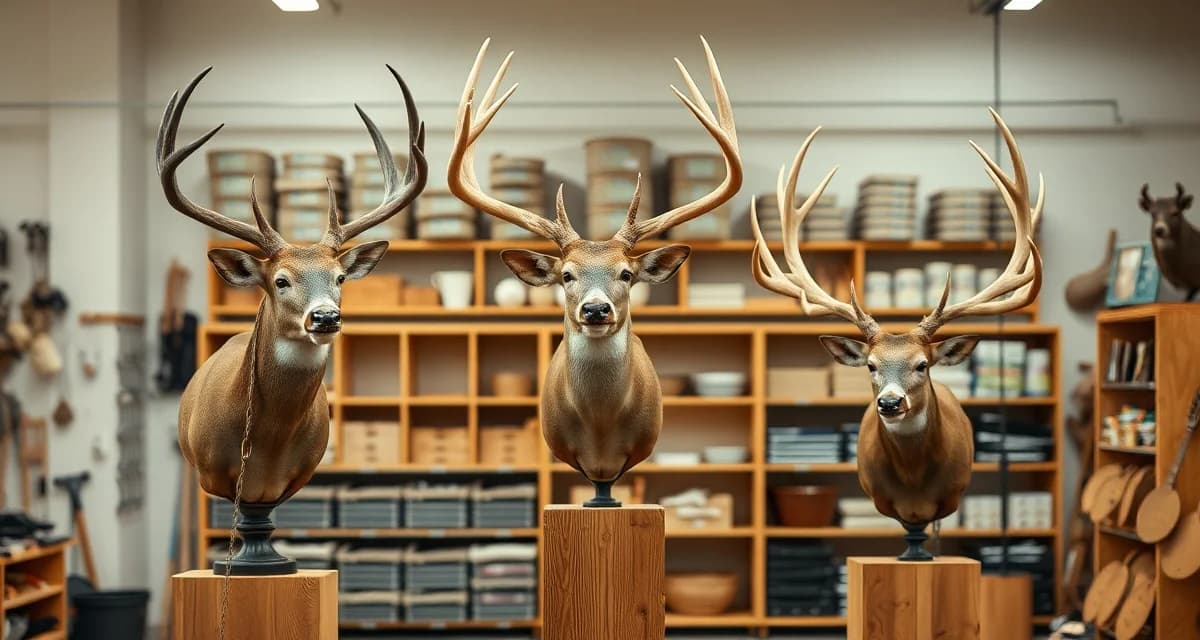
What Is the Difference Between Commercial and Sport Taxidermy?
Sport taxidermy and commercial taxidermy describe two different types of taxidermy operations with different customers, different legal requirements, and different permit structures.
Sport taxidermy - also called custom or trophy taxidermy - mounts personally harvested specimens for individual hunters. The customer brings in a deer, elk, turkey, fish, or other species they legally harvested, and the taxidermist mounts it for personal display. This is what the majority of the roughly 25,000 active taxidermists in the United States do. Most sport taxidermists never pursue commercial work though it's more lucrative per piece.
Commercial taxidermy creates displays for businesses and institutions: museums, retail stores, sporting goods chains, restaurants, outfitters, and similar buyers. Commercial pieces may be made from purchased specimens (within legal limits) or from surplus donated specimens rather than individually harvested animals. A sporting goods store's wolf display or a museum's African lion diorama is commercial work.
TL;DR
- Commercial taxidermy produces work for resale, museums, or commercial clients rather than individual hunters.
- Sport taxidermy preserves personal trophies for individual customers and is the foundation of most retail shops.
- Commercial work typically involves higher volume, standardized specs, and different pricing structures than sport work.
- Licensing requirements and wildlife regulations apply differently depending on whether work is commercial or sport.
- Some shops do both; separating the record-keeping for each type of work is important for compliance.
Why the Distinction Matters
Commercial taxidermy has different CITES and permit requirements than sport taxidermy. This is the critical practical difference that affects your operations.
When you're mounting a personal trophy for a hunter, the legal framework assumes the hunter obtained the animal lawfully. Your job is to document that the hunter had the appropriate license and tag.
When you're creating commercial displays - especially involving non-native or protected species - you may need to document the species source, obtain import permits under CITES, and in some cases register as a commercial dealer in wildlife parts. Selling a finished mount to a business is different legally from returning a finished mount to the original hunter.
[Wildlife compliance software for taxidermy](https://mountchief.com/wildlife-compliance-software-taxidermy) handles the record-keeping requirements for sport taxidermy. Commercial operations with CITES-regulated species need additional documentation layers.
Frequently Asked Questions
Do sport taxidermists need different permits than commercial taxidermists?
Yes, typically. Sport taxidermists generally need a state taxidermist license and a federal taxidermist permit for migratory bird species. Commercial taxidermists who create displays for sale, work with legally purchased specimens, or handle species that require CITES documentation may need additional permits - including commercial wildlife dealer registrations, CITES permits for controlled species, and in some cases federal import or export authorizations. The exact requirements depend on the species involved and whether specimens cross state or international lines. If you're considering expanding into commercial work, consult with your state wildlife agency before accepting commercial orders.
Can a sport taxidermist sell finished mounts to businesses?
Selling a finished mount is different from returning a mount to the hunter who provided the specimen. For most common North American game species - deer, elk, turkey, fish - selling a finished mount is generally permissible with proper documentation. However, selling mounts involving migratory birds, endangered or threatened species, or species regulated under CITES can create significant legal complications regardless of how the original specimen was obtained. Before selling any mount to a business, research the legal requirements for that specific species. When in doubt, consult your state wildlife agency or an attorney familiar with wildlife law.
What permits does a commercial taxidermy operation need?
A commercial taxidermy operation typically needs a state commercial taxidermist or wildlife dealer permit (requirements vary by state), a federal taxidermist permit for any migratory bird species, and CITES documentation for species listed under CITES Appendices. If the operation involves importing trophies or specimens from other countries, USDA APHIS import permits and USFWS import declarations are required. Some states require commercial operations to maintain separate records for personally-harvested versus purchased specimens. The permit structure for commercial taxidermy is genuinely complex, and working with a wildlife law attorney before establishing a commercial operation is worth the cost.
Does the commercial versus sport distinction affect wildlife documentation requirements?
Yes. Commercial taxidermy work, especially work involving specimens for resale or public display, may trigger different documentation requirements under federal and state wildlife law. Work done for commercial clients rather than individual hunters may require additional permits or documentation for certain species. Consult your state wildlife agency for the specific requirements in your jurisdiction.
Can a solo taxidermist do commercial work on the side?
Yes, many solo shops take on commercial projects alongside their sport taxidermy work. The key is maintaining separate records for commercial and sport work so documentation requirements for each are clearly met. Commercial clients often have specific requirements for provenance documentation that go beyond standard sport taxidermy intake records.
Is pricing different for commercial versus sport taxidermy?
Typically yes. Commercial work is often priced on a per-unit or contract basis rather than the individual job pricing used for sport taxidermy. Museums, outfitters, and commercial clients may negotiate volume pricing or long-term agreements. Sport taxidermy pricing is more standardized by species and mount type.
Related Articles
- What Happens to a Bear Skull in Taxidermy?
- What is the Best Taxidermy Software in 2026?
- Can I Sell Taxidermy?
Try These Free Tools
Put these insights into practice with our free calculators and planners:
Sources
- National Taxidermists Association (NTA)
- US Fish & Wildlife Service
- Breakthrough Magazine
- State wildlife agencies
Get Started with MountChief
Whether your shop does sport taxidermy, commercial work, or both, MountChief gives you the intake documentation and record-keeping that keeps every job organized and compliant. Try MountChief to keep your operations running cleanly regardless of job type.