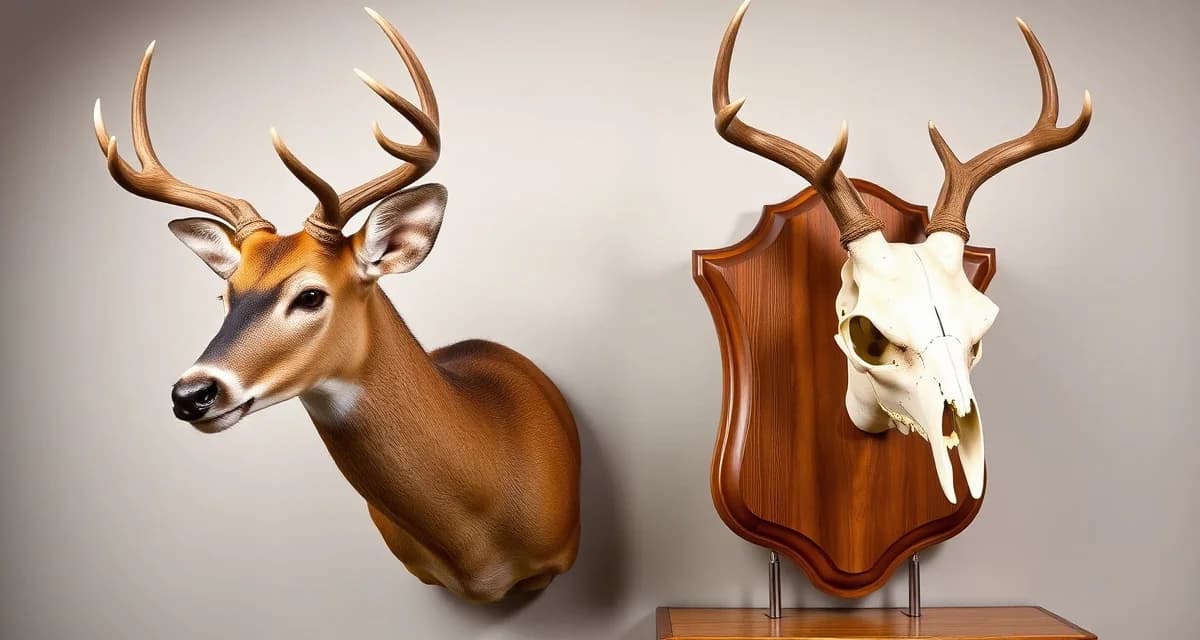
What is the Difference Between a Shoulder Mount and European Mount?
A shoulder mount preserves the entire head, neck, and shoulder area of a deer or other big game animal, including the full tanned hide, glass eyes, and detailed face work. A European mount is the cleaned and whitened skull only, typically displayed on a plaque or panel.
European mount demand has grown 40% in a decade, driven by modern minimalist preferences. European mounts cost 60-70% less than shoulder mounts, making them a more accessible option for hunters who want a meaningful wall display without the full investment.
TL;DR
- A shoulder mount preserves the full head and cape in a lifelike pose, typically taking 8-14 months.
- A European mount is the cleaned skull and antlers only, typically completed in 3-8 weeks.
- European mounts cost roughly $75-$200 at most shops, compared to $450-$950 for a shoulder mount.
- Shoulder mounts require tannery processing; European mounts do not, which is why they are faster.
- Both are permanent, durable displays when done correctly.
- The choice often comes down to budget, space, and personal preference for the style of display.
Shoulder Mount: What It Is
A shoulder mount involves:
- The full tanned cape (hide) from the face through the shoulder
- A foam form that gives the mount its shape and pose
- Glass eyes for a lifelike appearance
- Detailed facial finish work on the eyes, nose, and lips
The finished mount shows the animal's head and chest in a chosen pose, typically looking forward, turned left or right, or at an upward angle. The antlers are attached above the form and cape.
Shoulder mounts are the most popular deer taxidermy option in the US. They display the full texture, color, and character of the animal's face and coat.
Cost: $400-$850 nationally, depending on region, form size, and taxidermist skill level.
Turnaround: 6-18 months at most professional shops.
Wall space needed: A standard deer shoulder mount requires a mounting panel roughly 18-24 inches wide and 24-30 inches tall. The antlers extend further.
European Mount: What It Is
A European mount involves:
- Cleaning all soft tissue from the deer skull (beetles, maceration, or other methods)
- Whitening the skull with hydrogen peroxide
- Displaying the cleaned skull, typically mounted on a wood plaque, antler base, or metal bracket
The finished piece shows the deer's skull and full antler rack in a clean, minimalist display. No hide, no glass eyes, no form. Just the natural bone of the animal cleaned and preserved.
European mounts have grown particularly popular among hunters with modern farmhouse or minimalist home decor. They're also popular for entry-level hunters who don't want to commit to the cost of a shoulder mount, or for deer that are meaningful to the hunter but might not "score" high enough to justify a shoulder mount price.
Cost: $150-$250 for a professional European mount. Add $25-$75 for custom bases, engraved tags, or antler restoration.
Turnaround: 2-4 weeks in most shops with a dermestid beetle colony or maceration setup.
Wall space needed: Considerably smaller than a shoulder mount. A deer European mount can be displayed on a plaque as small as 12 x 16 inches.
Side-by-Side Comparison
| Feature | Shoulder Mount | European Mount |
|---------|----------------|----------------|
| Shows | Full head and neck with hide | Skull and antlers only |
| Cost | $400-$850 | $150-$250 |
| Turnaround | 6-18 months | 2-4 weeks |
| Tannery required | Yes | No |
| Wall space | Large | Compact |
| Aesthetic | Traditional/detailed | Modern/minimalist |
| Margin for taxidermist | 25-35% | 45-60% |
Which Should You Choose?
Choose a shoulder mount if:
- The deer has exceptional color, character, or facial detail worth displaying
- You want the traditional full trophy representation
- You have the wall space for a larger display
- You're willing to wait 12+ months for the finished piece
Choose a European mount if:
- You prefer a cleaner, minimalist display
- You want something done quickly (weeks, not months)
- Budget is a consideration
- The deer is meaningful to you but might not justify a full shoulder mount cost
- You have limited wall space
You can also do both on the same deer. Some hunters have the shoulder mount done on their best buck and a European mount on every other deer they harvest. The taxidermy pricing calculator can help you compare costs.
For tracking either type of mount through production, the deer taxidermy tracking system shows you current job status at any time.
Frequently Asked Questions
How much does a European mount cost vs a shoulder mount?
European mounts typically cost $150-$250. Shoulder mounts average $400-$850 depending on region and taxidermist. You can expect to pay 60-70% less for a European mount than a comparable shoulder mount at the same shop. The cost difference reflects the significantly different production process: European mounts require no tanning and much less production time.
How long does a European mount take vs a shoulder mount?
A European mount is typically done in 2-4 weeks at shops with a beetle colony or maceration setup. Shoulder mounts take 6-18 months at most professional shops because the cape must go through a commercial tannery (4-12 weeks) before production can begin, and the production queue adds additional wait time. If you want something on your wall this season, a European mount is the practical choice.
Which is better for a wall, a shoulder mount or a European mount?
It depends on your space, your aesthetic preference, and how you want to remember the animal. Shoulder mounts are the traditional choice and display the full character of the animal's face and coat. European mounts are compact, modern-looking, and fit almost anywhere. Many serious hunters display a European mount in a hallway or study and reserve shoulder mounts for their main trophy room. Both are legitimate, professional ways to preserve a hunting memory.
Which mount type holds up better long-term?
Both a well-done shoulder mount and a properly cleaned European mount will last decades without significant deterioration if kept in normal indoor conditions. Shoulder mounts are susceptible to fading if exposed to direct sunlight or high humidity. European mounts can yellow over time without UV protection but are otherwise very durable. Neither is definitively more durable; maintenance matters more than mount type.
Can I get both a shoulder mount and a European mount from the same deer?
Not from the same cape and skull simultaneously, since a shoulder mount requires the skull as a form anchor and the European mount is the skull. Some hunters cape two deer and have a shoulder mount from one and a European from another. It is not possible to produce both mount types from a single specimen without significant compromise to one or the other.
Is there a middle option between a full shoulder mount and a basic European mount?
Yes. A pedestal European mount, a painted European mount, or a European mount with a decorative habitat base are popular middle options that provide more visual presence than a plain skull on a wall without the cost of a full shoulder mount. Many taxidermists offer several European mount finish options at different price points.
Related Articles
- What Is the Difference Between Commercial and Sport Taxidermy?
- What Is the Difference Between a Tannery and a Taxidermist?
Try These Free Tools
Put these insights into practice with our free calculators and planners:
Sources
- National Taxidermists Association (NTA)
- Breakthrough Magazine
- Taxidermy Today
Get Started with MountChief
Helping hunters choose the right mount type for their budget and display space starts at intake. MountChief makes it easy to document the customer's choice, price, and deposit for any mount type from the first conversation. Try MountChief to give every customer a professional intake experience.