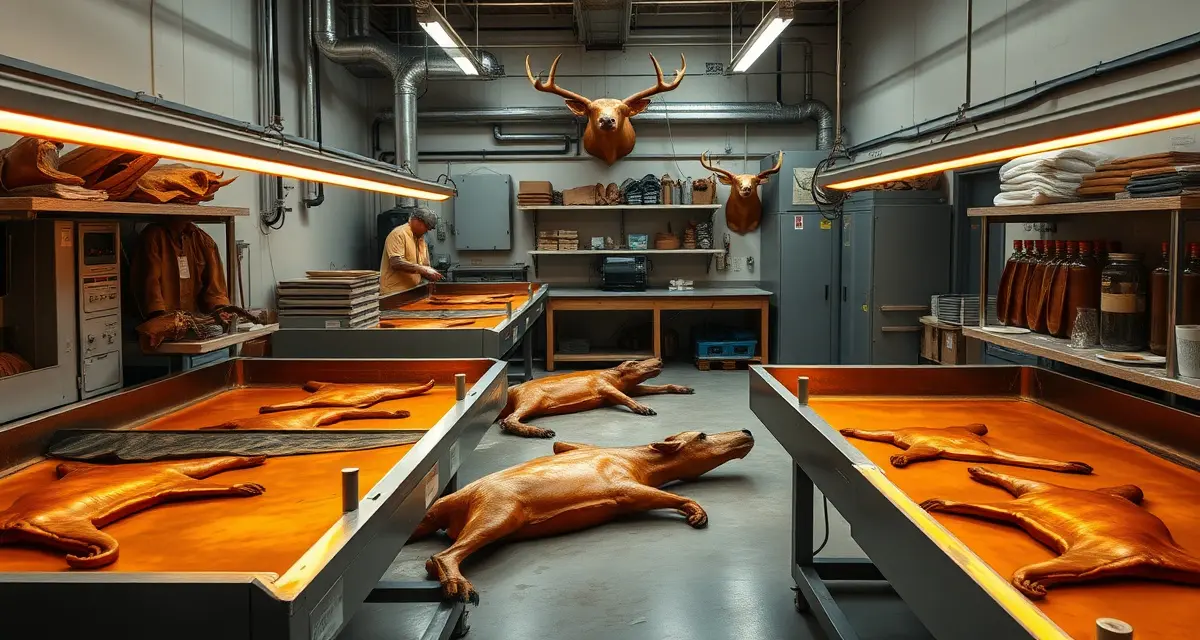
How Does Taxidermy Tannery Processing Work?
The short answer: A tannery transforms raw animal hide into a stable, preserved skin that won't rot, shrink unpredictably, or decompose. For deer shoulder mounts, the taxidermist ships the raw cape to a professional tannery, where it spends 8-12 weeks going through a series of chemical processes before being returned for mounting.
TL;DR
- A tannery uses chemical processes to convert raw animal hides into stable, preserved leather or fur.
- The basic steps are fleshing, pickling (acidic bath), tanning (chromium, vegetable, or synthetic chemistry), and neutralizing.
- Professional tanneries process hundreds or thousands of hides simultaneously, which is why turnaround takes 8-12 weeks.
- The quality of the tan affects the mount quality directly: a supple, well-preserved hide mounts better.
- Most taxidermists ship to external tanneries rather than tanning in-house.
Why Taxidermists Use Tanneries
The hide of a freshly harvested deer is essentially organic material. Without preservation, it would decompose. Early taxidermists preserved hides using a variety of methods, salt, borax, arsenical soap, but these processes produced brittle or chemically unstable skins that deteriorated over decades.
Modern tannery processing creates a chemically stable hide that will remain pliable, resist decomposition, and hold its properties for many decades when properly cared for. A well-tanned, well-mounted deer shoulder mount should last 50-100+ years without deterioration.
Most taxidermists don't tan hides themselves because the process requires specialized equipment, chemicals, water processing facilities, and regulatory compliance. Professional tanneries that serve taxidermists process hundreds or thousands of hides using industrial-scale equipment and established chemical protocols.
What Happens to a Hide at the Tannery
The process varies somewhat by tannery and by species, but follows a general progression:
1. Receiving and sorting
Hides arrive from multiple taxidermists, sorted by species, size, and processing type. Each hide is logged (a good tannery maintains their own records matching hides to the source taxidermist).
2. Fleshing
Any remaining flesh and fat is removed from the hide's inner surface. Some taxidermists send hides that are already well-fleshed; others leave more for the tannery to complete.
3. Salt curing or pickling
The hide is treated with a salt solution (pickling) that begins stabilizing the skin against decomposition. Pickling also opens the hide's pores for better chemical penetration in later steps.
4. Degreasing
Oils and fats are removed from the hide's fiber structure. This is especially important for fatty species (black bear, waterfowl, some fish). Incomplete degreasing leads to oil migration through the finished mount, causing discoloration and odor years later.
5. Tanning
The actual tanning step: the hide is treated with tanning agents that bond to the collagen fiber structure of the skin, making it chemically stable. Chromium sulfate (chrome tanning) is common for taxidermy hides, it's fast, produces a soft, pliable result, and is stable for decades. Vegetable tanning (using plant-derived compounds) is slower but also used for some applications.
6. Neutralization
After tanning, the hide is neutralized to remove excess chemicals and bring it to a stable pH.
7. Softening and finishing
The hide is worked while damp to soften the fibers, then dried in a controlled way to prevent hardening. A properly finished tanned cape should be soft and pliable when it arrives back at your taxidermist's shop.
8. Quality check and shipping
The tannery inspects finished hides and ships them back to the originating taxidermist.
Why It Takes 8-12 Weeks
Tanning isn't fast. The chemical processes need time for full penetration through thick hide. Large-bodied species like elk take longer than deer because the hide is thicker throughout. Bear hides are among the most time-intensive because of their thick, fatty skin.
Tanneries also process hides in batches, your taxidermist's entire shipment may not start processing immediately on arrival, particularly at a busy tannery during peak deer season when they're receiving loads from dozens of shops simultaneously.
The 8-12 week range is a realistic average for mid-quality chrome tanning of deer hides. Premium tanning processes or large-batch backlogs can extend this.
How Tannery Tracking Works in Modern Shops
With paper-based systems, taxidermists sent hides to the tannery and made a handwritten note of the date. Matching returned hides to the right customer record depended on paper tags surviving the chemical process, which they often didn't.
MountChief's tannery tracking handles this with QR tags that are designed to survive tannery chemicals. When a hide ships, each specimen is scanned and added to a named tannery shipment batch. When hides return, each QR is scanned and automatically matched to the original job record. Customers receive automated notifications when their hide ships and when it returns.
Related Articles
- How Does AI Intake Work for Taxidermy Shops?
- How Long Does Taxidermy Take? Complete Timeline Guide
- How Much Does Bailee's Insurance Cost for a Taxidermy Shop?
FAQ
Can I tan a hide myself instead of paying a tannery?
You can. Home tanning methods using commercial hide paste products (like McKenzie's Hide Paste) or traditional methods exist and are used by some taxidermists. Home tanning is more practical for flat hides (bear rugs, etc.) than for shoulder mount capes where precise results matter. The results are generally not as consistent as professional tannery processing, which is why most shops doing significant volume use professional tanneries.
Does the tannery keep my specific hide separate from other hides?
Most tanneries batch-process hides of similar species and size together. Your hide is chemically processed alongside other hides in the same batch. Your taxidermist's identification tag (or QR tag) keeps your hide identified within the batch. This is why identification tag durability matters, a tag that doesn't survive the chemical bath creates reconciliation challenges when the batch returns.
What happens if a hide is damaged at the tannery?
It does occasionally happen, a hide is over-processed, damaged during mechanical handling, or returned with significant quality issues. Professional tanneries typically have remediation processes for damage that occurs on their end. Your taxidermist handles the communication with the tannery; from your perspective, a damaged hide means a delay and potentially replacement of the hide if it's beyond repair. This is uncommon at established tanneries but not unheard of.
What is the difference between chrome tanning and vegetable tanning for taxidermy capes?
Chrome tanning uses chromium salts and produces a soft, pliable hide quickly, typically in days. Vegetable tanning uses plant-derived tannins and takes longer but produces a different feel and finish. For taxidermy purposes, most professional tanneries use chrome or synthetic tanning methods that produce consistently supple, workable hides. Some specialty tanneries offer vegetable-tanned hides for specific applications.
Why do tannery timelines vary so much between shops?
Tannery turnaround depends on the tannery's current volume, their specific processing schedule, and how far back in the queue your shipment is when it arrives. Tanneries that take in large seasonal volumes from many taxidermists run longer queues during peak periods. Taxidermists with established tannery relationships who ship early in the season often get faster returns.
Can a hide be damaged at the tannery?
Yes, though reputable tanneries have low damage rates. Hides can be damaged by improper fleshing before shipment, chemistry issues, or mechanical handling during processing. Documenting the condition of capes before shipping protects the taxidermist if damage occurs. MountChief's tannery tracking log can include notes about each shipment's condition at time of dispatch.
Try These Free Tools
Put these insights into practice with our free calculators and planners:
Sources
- National Taxidermists Association (NTA)
- Leather and Hide Council of America
- Breakthrough Magazine
- American Institute for Conservation
Get Started with MountChief
Understanding how the tannery step works helps you explain timelines to customers and manage your own production planning. MountChief's tannery tracking keeps every shipment visible so you always know where your hides are in the process. Try MountChief to take control of the tannery portion of your workflow.