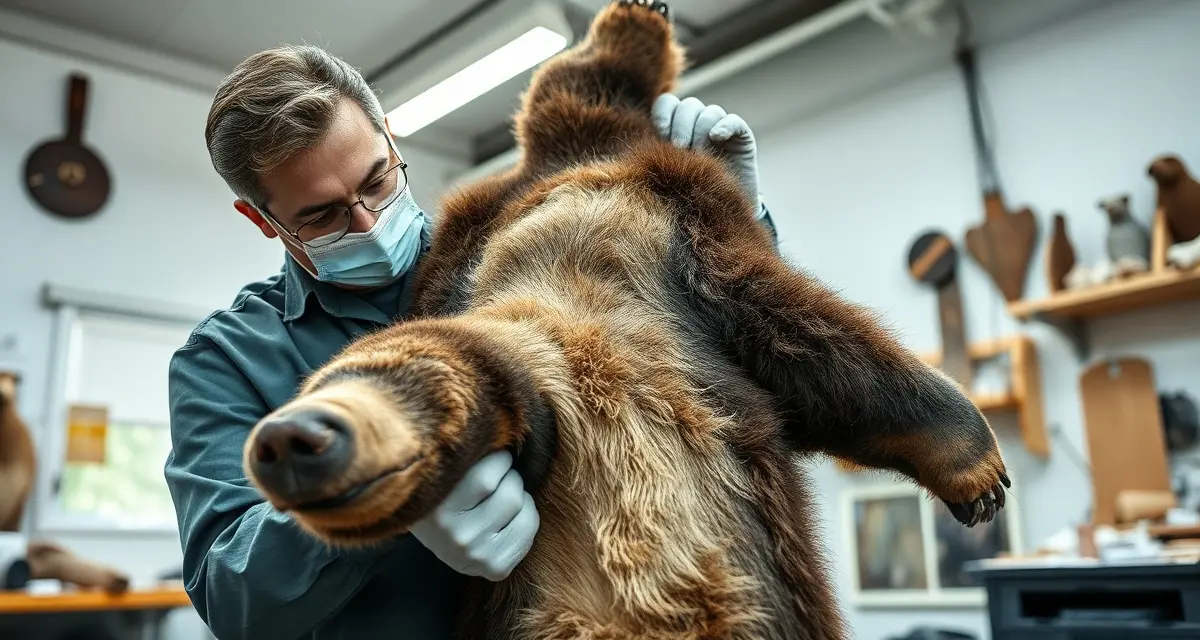
What Should a Hunter Do with a Bear Before the Taxidermist?
Bear hide deterioration begins within hours in warm weather requiring rapid skinning. That's not an exaggeration, bear hides are thick and the fat layer beneath them insulates heat, creating conditions that can ruin a trophy in a surprisingly short time.
Bear hunting seasons often fall in spring or fall, and weather conditions vary enormously. A spring black bear taken in May in warm temperatures needs to be skinned and cooled immediately. A fall black bear taken in October has more time. But not unlimited time.
Here's what to do before you deliver the bear to your taxidermist.
TL;DR
- Skin the bear as soon as possible after harvest to begin cooling the hide.
- Do not leave a bear hide in direct sun or on a warm carcass for more than an hour in warm weather.
- Salt the flesh side heavily if you cannot get to a freezer within 24 hours.
- Skull seal by a wildlife officer is required in most states before the taxidermist can accept the specimen.
- Do not cut the face or ear openings; leave all field preparation to the taxidermist.
- Document the exact harvest location and date for wildlife compliance records.
Skull Sealing Comes First in Most States
Before a taxidermist can legally take possession of a bear in most states, the bear skull must be sealed by a state wildlife officer. This is a legal requirement, not optional.
Bear skulls require wildlife officer sealing in most states before taxidermist possession.
What skull sealing means: A wildlife officer physically examines the skull and attaches an official seal (a tag or mark) confirming the bear was legally harvested. This seal must be in place before you transfer the skull to your taxidermist.
Contact your state wildlife agency before you go on your bear hunt to understand the sealing requirement in the state where you're hunting. The timing and process varies:
- Some states require sealing within 24 to 48 hours of harvest
- Some allow sealing at the local wildlife office at your convenience
- Some require a wildlife officer to come to your location
Plan for this requirement. A bear skull that hasn't been sealed cannot legally go to a taxidermist in most states.
Skinning the Bear
Bears need to be skinned within 24 hours of harvest, sooner in warm conditions. Unlike deer, where you have some flexibility, the bear's thick fat layer retains heat and bacteria proliferate rapidly.
Basic bear skinning process:
- Field skin the bear as soon as practical after harvest
- Remove the hide from the carcass completely
- If you want a rug, the skull stays with the hide (after sealing)
- Turn the ears by cutting up through the inside from the cartilage to expose them for fleshing
- Apply non-iodized salt liberally to the entire flesh side of the hide, get into all the crevices around the ears, lips, and paws
If you're not experienced with bear skinning, especially around the paws and claws, consider getting help from a hunting guide, experienced friend, or dropping the bear at a taxidermist who will skin it for you (confirm this service is available before hunting).
Bear Fat: The Hidden Problem
Bear fat is dense and insulating. Even a properly skinned and rolled bear hide can retain enough fat to cause spoilage if it's not fleshed promptly.
Most taxidermists will do the detail fleshing needed to prepare the hide for the tannery. But the hunter's job is to:
- Get the hide off the bear as fast as possible
- Salt it heavily
- Prevent it from sitting in a hot environment
Some bears, particularly fall bears that have been feeding on berries and building winter fat stores, have extraordinarily thick fat layers. These hides may require interim fleshing in the field if you're hours from a taxidermist.
Getting the Hide to the Taxidermist
If you've properly salted the hide, it can be stored for a few days before delivery to the taxidermist. A salt-cured bear hide in a cool environment isn't an emergency, but it shouldn't sit indefinitely.
Before leaving for your bear hunt, call your taxidermist. Confirm:
- That they accept bear work (not all taxidermists do)
- Their preferred hide condition (some prefer salted, some prefer frozen)
- Whether they can handle the skull sealing coordination
- Their current scheduling and timeline
Getting this conversation out of the way before the hunt means you have a clear plan on harvest day rather than making calls when you're exhausted and time-pressured.
Storing a Bear Hide Before the Taxidermist
Salted: Let the salted hide drain on a clean surface (hair side down) for 4 to 6 hours. Apply a second salt application. Store in a cool, dry location. Can be held for several days to a couple of weeks this way.
Frozen: After initial salting, fold flesh-side out, double-bag removing all air, and freeze. A properly frozen bear hide can be stored for many months.
Frequently Asked Questions
How do I skin a bear for mounting in the field?
Skin the bear within 24 hours of harvest, sooner in warm weather. Make a cut down the belly and work the hide off the legs and body. Leave the skull attached to the hide for rug mounts. Turn the ears and paws as far as practical to expose the flesh side. Apply non-iodized salt generously to the entire flesh side, getting into ears, lips, and paws. Contact your state wildlife agency about skull sealing requirements before the hunt so you know the process when harvest day comes.
When must a bear skull be sealed by wildlife officers?
Most states require skull sealing before the taxidermist can take legal possession of the skull. Timing requirements vary by state, some require sealing within 24 to 72 hours of harvest, others allow you to schedule a sealing appointment at your convenience. Contact the wildlife agency in the state where you're hunting before your trip to understand their specific requirement and process.
How do I store a bear hide before taking it to the taxidermist?
After skinning, apply non-iodized salt heavily to the entire flesh side. Let the salted hide drain for several hours. You can then either store it salted in a cool, dry location (for a few days to two weeks), or freeze it after folding flesh-side out in a double bag with all air removed. Contact your taxidermist before your hunt to confirm their preferred condition for delivery.
Should a hunter salt a bear hide or freeze it?
If you can get the hide to a freezer within 24 hours, freezing is preferable to salting. Proper freezing preserves the hide better and does not risk salt burns or uneven application. If you are in the field and cannot reach a freezer, salt the flesh side heavily and evenly, fold flesh-to-flesh, and get it to a taxidermist as soon as possible. Unsalted or improperly salted bear hides in warm conditions deteriorate within hours.
How should a hunter handle the skull for the required wildlife seal?
In states requiring skull sealing, the bear skull should be presented to a wildlife check station or officer with the skull seal documentation from the hunting license. Do not separate the skull from the hide until the seal has been applied. Bring both the hide and the skull to the check station together. Your taxidermist needs the seal number in their intake record.
What field care mistakes are most damaging to bear hides?
The most damaging mistakes are leaving the bear on the ground in direct sun without skinning, failing to cool the hide immediately after skinning, and improper salting that leaves flesh-side areas unsalted. Any of these can cause significant hair slippage within hours in warm weather. Bear hides are large and retain heat, making them more vulnerable to slippage than smaller species.
Related Articles
- What Should a Hunter Do with an Elk Cape in the Field?
- Can I Do a European Mount Myself or Should I Use a Taxidermist?
- How Far in Advance Should I Book Taxidermy Before Season?
- How Far in Advance Should I Book My Taxidermist?
Try These Free Tools
Put these insights into practice with our free calculators and planners:
Sources
- National Taxidermists Association (NTA)
- Rocky Mountain Elk Foundation
- Breakthrough Magazine
Get Started with MountChief
Bears require fast field care and proper documentation before they ever reach your shop. MountChief's intake system captures skull seal documentation and cape condition notes from the moment the hunter walks in, giving you a complete record of every bear job. Try MountChief to start every bear intake with the documentation it requires.