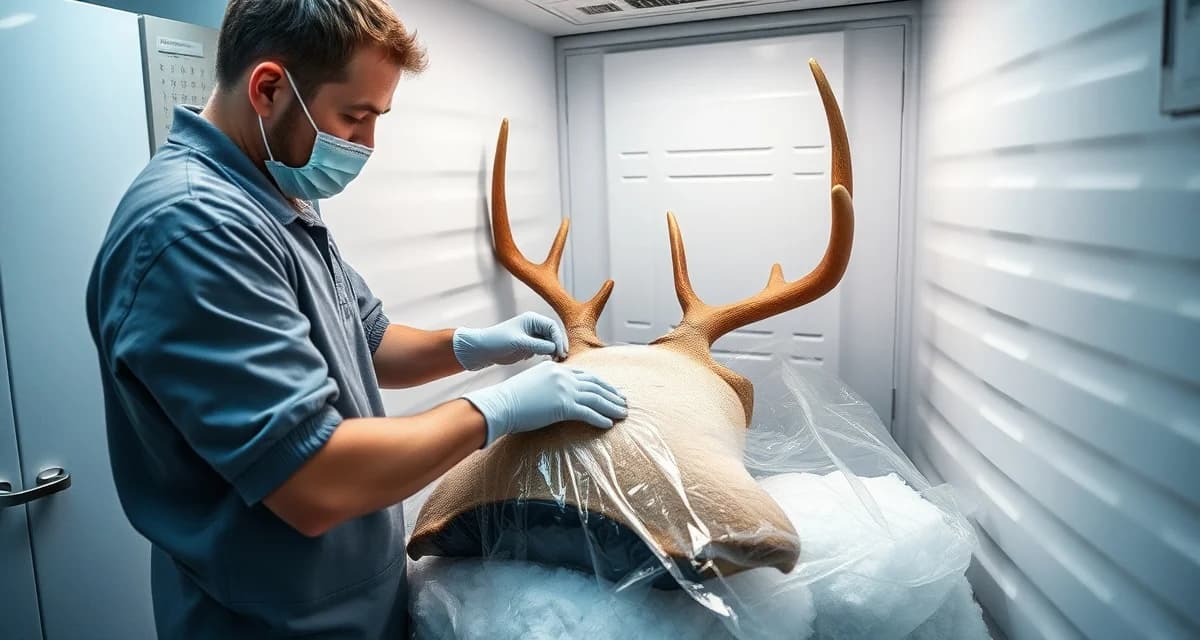
How Should a Deer Cape Be Prepared for Winter Storage?
A properly frozen deer cape can last indefinitely without any quality degradation. The key is getting the storage right from the start, because poor initial preparation causes the problems that show up months later on the fleshing bench.
Air in the freezer bag is the main threat to long-term cape quality. Air in the bag causes freezer burn that starts degrading cape quality within three months. Freezer burn doesn't just affect the outside surface - in a deer cape, it can dry out the skin and cause cracking that compromises the hide in the face and neck areas where the detail work happens.
TL;DR
- Winter deer capes from cold-weather harvests can safely hang for longer before freezing, but should still be frozen promptly.
- Even in cold weather, the internal body heat of a freshly killed deer can cause slippage if the cape is not removed quickly.
- Wrap the capped hide tightly before freezing to prevent freezer burn.
- Salt is rarely necessary for winter capes in subfreezing temperatures but is always a backup option.
- Document cape condition at intake regardless of season, as winter capes can still arrive with damage.
The Correct Process
- Flesh the cape as thoroughly as possible before freezing. Excess fat and meat on the skin side creates freezer burn risk and also harbors bacteria that can continue working even at freezer temperatures if the cape isn't uniformly frozen.
- Fold the cape flesh-side in, rolling it into a compact bundle to minimize surface area exposed to air contact.
- Place the cape into a heavy-duty zip-lock freezer bag. Press out as much air as possible before sealing. If you have a vacuum sealer, use it - vacuum-sealed capes freeze significantly better than manually-bagged ones.
- Place the first bag into a second bag. Double-bagging is not optional for long-term storage. A single bag puncture or seal failure in a full freezer can go unnoticed for weeks and result in a ruined cape.
- Seal the second bag and label the outside clearly.
Labeling Prevents the Mix-ups That Cost You
Labeling at freezing prevents identity confusion - the first step to mix-up prevention. A label with the customer's name, the harvest date, and a job number ties the physical specimen to your intake record from the moment it enters your freezer.
When capes go into the freezer unlabeled or with incomplete labels, mix-ups become possible. As your freezer fills during gun season, it gets harder to identify unlabeled capes by inspection alone. White-tailed deer capes look similar. Size differences can be subtle. A clear label on the outside of the bag costs you nothing and prevents problems that can cost you a customer and a lawsuit.
If you're using MountChief's specimen tracking, print your QR tag label at intake and attach it to the outside of the freezer bag. Any time you need to confirm which cape belongs to which job, scan the tag and your digital job record comes up immediately.
Temperature Requirements
Your freezer needs to maintain 0°F (-18°C) or below for proper cape storage. Many household freezers run at 10-15°F, which is acceptable for short-term storage but inadequate for capes stored through the off-season into summer.
Chest freezers are more efficient at holding temperature than upright freezers because cold air doesn't fall out when you open the lid. If you're storing capes for six months or more, a dedicated chest freezer set to its coldest setting is the right tool.
Frequently Asked Questions
How do I freeze a deer cape for long-term storage?
Flesh the cape well to remove fat and meat, fold it flesh-side in, and place it in a heavy-duty freezer bag with as much air removed as possible. Vacuum-sealed bags are ideal. Double-bag the cape with a second bag and label the outside clearly with the customer's name, harvest date, and job number. Freeze at 0°F or below. A properly vacuum-sealed cape stored at 0°F can be held for two or more years without quality loss. Avoid repeatedly thawing and refreezing, as each cycle causes additional degradation to the skin fibers.
How long can a deer cape be stored before mounting?
A properly prepared and frozen deer cape can be stored indefinitely without quality loss if frozen at 0°F or below in a vacuum-sealed, double-bagged container. In practice, most capes from a deer season are mounted within 6-18 months. Capes stored beyond two years are generally fine if the initial preparation and storage conditions were correct. The limiting factor is almost always the quality of the initial preparation - a cape with residual fat, inadequate air removal, or inconsistent freezer temperature degrades faster than one properly prepared at intake.
What temperature should I freeze a deer cape at?
Freeze at 0°F (-18°C) or below. Temperatures of 10-15°F will work for short-term storage of a few months but are not adequate for capes held through the off-season. A dedicated chest freezer set to its coldest setting is the most reliable option for long-term storage. Monitor your freezer temperature periodically - a freezer thermometer costs a few dollars and lets you confirm your unit is maintaining proper temperature, especially as the freezer fills up during gun season when door openings become more frequent.
Can I leave a deer cape hanging in cold weather without freezing it?
Yes, with caution. In temperatures consistently below 35 degrees Fahrenheit, a capped hide can remain viable for several days without freezing. However, temperature fluctuations, warm days followed by cold nights, can accelerate decomposition even in winter conditions. For maximum quality, freeze the cape as soon as you can.
Do winter capes need less salt than summer capes?
Yes. Salt is primarily used to inhibit bacterial activity, which slows dramatically in cold temperatures. A well-cooled winter cape in consistently cold conditions may not need salting at all. If temperatures are unpredictable or you cannot freeze the cape promptly, applying a light salt is still a sensible precaution.
How long can a winter deer cape be frozen before quality degrades?
A properly wrapped winter deer cape can be frozen for 12-18 months without significant quality loss. The key variables are packaging quality and freezer consistency. Capes kept in chest freezers at constant temperature hold better than those in frost-free upright freezers that cycle temperature.
Related Articles
- What Should a First-Year Taxidermy Shop Expect During Deer Season?
- Tips for the First Day of Deer Season at Your Taxidermy Shop
- What Records Must Colorado Taxidermists Keep for Deer and Elk?
- What Records Must Florida Taxidermists Keep for Deer?
Try These Free Tools
Put these insights into practice with our free calculators and planners:
Sources
- National Taxidermists Association (NTA)
- Breakthrough Magazine
- Taxidermy Today
Get Started with MountChief
Helping hunters understand proper cape care in all seasons improves the quality of every specimen you receive. MountChief lets you send seasonal care guidelines to customers at intake or in pre-season communication. Try MountChief to make customer education part of your standard practice.