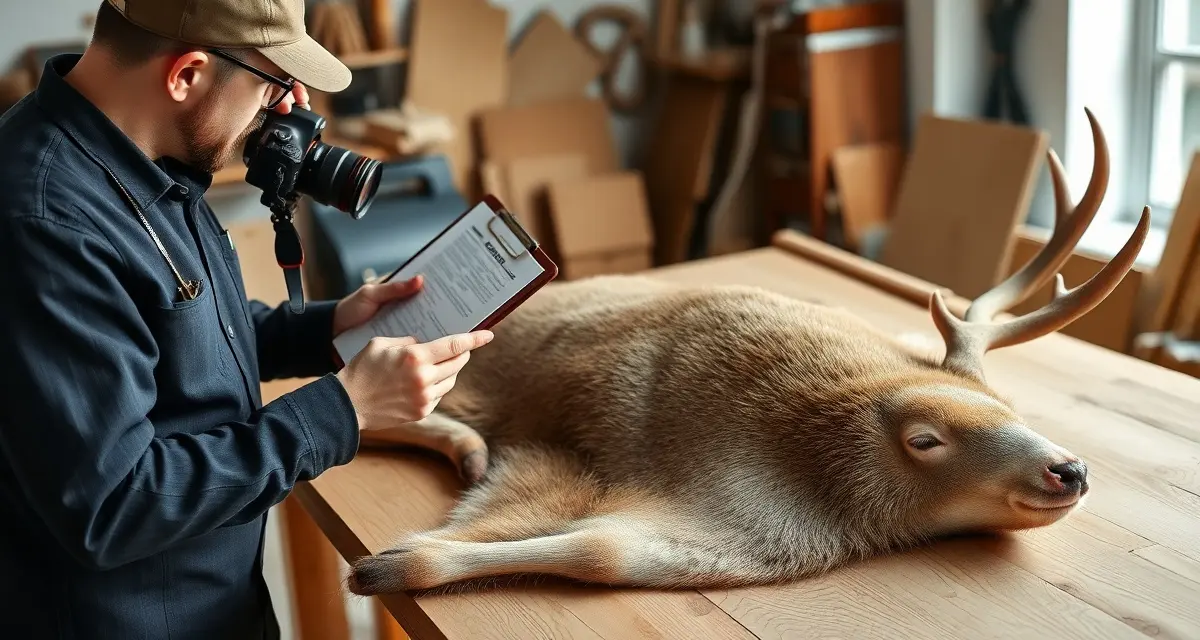
Taxidermy Deer Cape Condition Assessment Guide
Condition documentation at intake resolves 80% of post-production damage disputes. When you have a dated, signed condition assessment with photographs taken at intake, you have a factual record that neither you nor the customer can dispute.
Standardized condition ratings create defensible records in insurance and legal situations, not just informal notes, but a consistent system that produces comparable assessments across all the deer you accept. This guide gives you that system.
TL;DR
- Condition documentation at intake resolves 80% of post-production damage disputes.
- Condition 5 (excellent) cape gets your full confidence statement.
- Condition 2 (poor) cape needs a direct conversation about what's achievable and what the customer is authorizing you to attempt.
- Take a minimum of 6 photos for any cape: left side full view, right side full view, head/face front view, and close-ups of any areas of concern.
- Options to offer: Proceed with written authorization and documented expectations, European skull mount (which doesn't require the cape), or declining the cape with a refund of deposit if no work has been done.
- With a signed intake form documenting a "Condition 3, moderate field care issues, 6cm slippage patch on left cheek, photos attached," you have a record they signed off on.
Why Standardized Condition Ratings Matter
Without a written condition rating and photos, a customer who claims their deer "looked perfect when I dropped it off" has a story that's as credible as yours. With a signed intake form documenting a "Condition 3, moderate field care issues, 6cm slippage patch on left cheek, photos attached," you have a record they signed off on.
The condition assessment also affects how you talk to the customer about expectations at intake. A Condition 5 (excellent) cape gets your full confidence statement. A Condition 2 (poor) cape needs a direct conversation about what's achievable and what the customer is authorizing you to attempt.
The 5-Point Cape Condition Rating System
Condition 5, Excellent
What it looks like:
- Skinned within 2-4 hours of harvest in cool temperatures
- Properly cooled or frozen immediately after skinning
- No detectable hair slippage anywhere on the cape
- Minimal field damage (small quartering shot damage, if any)
- Clean, well-preserved skin with no odor issues
What to tell the customer: "Your cape is in excellent condition. We'll proceed with the mount as planned."
Documentation: Photo from both sides, front face shot, close-up of any minor damage.
Condition 4, Good
What it looks like:
- Skinned within 4-8 hours, moderate temperature exposure
- Frozen within a reasonable window after skinning
- Minor slippage potential in isolated areas (eyes, nose, check carefully)
- No large damaged areas
What to tell the customer: "Your cape is in good shape. We'll note the isolated areas of concern and proceed. If any issues develop at the tannery, we'll contact you before proceeding."
Documentation: Photos of the full cape plus close-ups of any area of concern, with written description.
Condition 3, Fair
What it looks like:
- Skinned 8-16 hours after harvest, higher temperature exposure
- Some slippage visible, isolated patches, typically under 5cm in diameter
- Possible heat damage around head (first area to show signs)
- Notable field odor or early decomposition signs on skin side
What to tell the customer: "Your cape has some condition issues I need to walk you through. [Show the slippage areas.] These areas are concerning. The tannery process may or may not improve them. I can proceed with your authorization, but I want to be clear about what I'm seeing now."
Get written authorization to proceed with full documentation of what the customer acknowledged.
Condition 2, Poor
What it looks like:
- Extended heat exposure before skinning (16-24+ hours)
- Significant slippage in multiple areas, often on the face, around the ears, or across the back
- Skin is beginning to break down
- Strong odor from the skin side
What to tell the customer: "I have to be honest with you, this cape has significant condition issues. [Show all affected areas.] There are large slippage patches that will affect the finished mount. I can try to work with what we have, but there's a meaningful chance this cape can't produce the quality mount you're hoping for. Do you want to proceed with the understanding that the result may be significantly impacted by these issues?"
Options to offer: Proceed with written authorization and documented expectations, European skull mount (which doesn't require the cape), or declining the cape with a refund of deposit if no work has been done.
Get written, detailed authorization if proceeding.
Condition 1, Unacceptable
What it looks like:
- More than 30-40% of the hide showing active slippage
- Major decomposition of the skin
- The cape physically cannot produce a quality mount
What to tell the customer: "I'm not able to produce a quality mount with this cape. The hair slippage is too extensive. I'd recommend considering a European skull mount if you want to memorialize the harvest. I'll refund your deposit if you'd prefer not to proceed."
Documentation: Extensive photography and written description of the condition. Your refusal to proceed should be documented in writing.
Documentation Checklist for Every Intake
Regardless of condition rating, capture:
Photographs:
- Full left side of cape
- Full right side of cape
- Face and head area (the most common location for slippage)
- Any specific areas of concern (bullet damage, cuts, thin hair areas, existing slippage)
- Both ear backs
- Skin side if there are notable condition issues
Written notes:
- Condition rating (1-5)
- Description of specific areas of concern with location and approximate size
- Any existing cuts or field damage
- Ear condition (tips, cartilage, inside)
- Odor description if relevant
- Any customer-provided information about field care
Customer acknowledgment:
- The customer should sign or initial the condition section of the intake form
- For Condition 3 or below: specific written authorization to proceed should be obtained
Common Problem Areas to Check First
Eyes and nose: Heat damage and slippage appear here first. Run your hand against the grain. If hair releases easily, that's slippage.
Ears: Check the ear tips and behind the ear. Thin skin, high heat retention, prone to early slippage.
Neck base: Particularly on deer that weren't field-dressed immediately. Heat concentrates in this area.
Cape edges: Where the cape was cut, especially if the hunter did the skinning. Check for irregular cuts that might limit how much hide is available for mounting.
Integrating Condition Assessment into Your Intake Form Guide
The standard taxidermy intake form should include:
- Condition rating field (1-5)
- Specific condition notes field (free text)
- Photo documentation checkbox with photo count
- Customer authorization signature line for Condition 3 and below
If you're using MountChief's digital intake, the condition rating field is built in with a notes field and the ability to attach intake photos directly to the record. These photos are stored permanently with the job record and can be produced in seconds during any dispute or inspection.
Frequently Asked Questions
What cape condition ratings should I use at intake?
A 5-point system is the most practical: 5 (Excellent), 4 (Good), 3 (Fair, notable concerns, written authorization recommended), 2 (Poor, significant damage, detailed authorization required), 1 (Unacceptable, cannot produce quality mount). This system creates a shared vocabulary between you and the customer, a consistent record across all your intakes, and a defensible scale that's clear to anyone reviewing the record later, including in a dispute or legal situation.
How do I document pre-existing damage to a deer cape?
Use a combination of photography and written description. Photograph every area of concern from close range with a reference object (a ruler or your hand) in frame to establish scale. Write a specific description: location ("left cheek, 4cm below left eye"), size ("approximately 5cm diameter patch"), severity ("complete hair slippage, skin exposed"), and condition context ("consistent with heat exposure"). Both the photo and the written description are important, photos show what's there, written descriptions explain what it means. Have the customer sign the description at intake.
What photos should I take to document deer cape condition?
Take a minimum of 6 photos for any cape: left side full view, right side full view, head/face front view, and close-ups of any areas of concern. For capes with notable condition issues, add: skin-side photos of the affected areas, photos of the ear backs, and any cuts or field damage sites. Label each photo with a consistent naming system when storing digitally (e.g., "CustomerName_Species_Date_Location"). Intake photos stored in your management system with the job record are retrievable in seconds if a dispute arises months or years later.
How does this apply to solo taxidermy shops?
The principles in this guide apply to solo shops just as they do to larger operations, though the scale differs. A single-person shop may have lower absolute volume but faces the same documentation, compliance, and customer communication requirements. The practical advice here scales down to any shop size.
What is the most common mistake taxidermists make with taxidermy shop deer cape condition guide?
The most common mistake is treating taxidermy shop deer cape condition guide as an afterthought rather than building it into the standard workflow from the start. Shops that encounter problems in this area typically did not establish clear processes before season, which means every situation becomes a one-off decision rather than a standard response.
Related Articles
Try These Free Tools
Put these insights into practice with our free calculators and planners:
Sources
- National Taxidermists Association (NTA)
- US Fish & Wildlife Service
- Breakthrough Magazine
- State wildlife agencies
- Small Business Administration (SBA)
Get Started with MountChief
Disorganized intake and forgotten follow-ups are the fastest way to lose repeat customers. MountChief structures every step of your taxidermy workflow so nothing gets missed.