How to Prevent Specimen Mix-Ups at Your Taxidermy Shop
One specimen mix-up can result in a $1,000 to $5,000 claim and permanent customer loss. And the word spreads. A hunter who got back the wrong deer tells every person in his hunting camp. That story costs you more than the settlement.
Paper tags are the root cause of most specimen mix-ups in taxidermy shops. They fall off. They get wet. They become illegible. And in the tannery, where they face a chemical bath that would dissolve most labels, they last 24 to 48 hours at best.
Here's exactly how to eliminate specimen mix-ups.
TL;DR
- And in the tannery, where they face a chemical bath that would dissolve most labels, they last 24 to 48 hours at best.
- If something's wrong, fix it now, not in 6 weeks when the hide comes out for tannery.
- Standard paper QR tags cannot, they fail in 24 to 48 hours.
- One specimen mix-up can result in a $1,000 to $5,000 claim and permanent customer loss.
- The tannery receives 40 hides and some are difficult to match.
- You can tell the tannery: "We shipped these 40 specific hides on November 15.
Why Mix-Ups Happen
Mix-ups almost never result from negligence or carelessness. They result from system failure at specific vulnerability points:
Point 1: Cold storage. A freshly tagged deer cape gets placed next to another cape with a similar paper tag. The tags shift, fall, or get wet. Identification becomes uncertain.
Point 2: Tannery batch packing. You pull 40 capes for tannery shipment. Each one has a tag. But by the time they're packed, some tags have slipped inside the rolled capes. The tannery receives 40 hides and some are difficult to match.
Point 3: Tannery processing. The chemical bath destroys standard tags entirely. The tannery either re-tags with their own system (if you're lucky), or returns hides with best-guess identification.
Point 4: Tannery return. 40 processed hides come back. Several look similar. If tags are missing, re-matching becomes guesswork.
Point 5: Production floor. Capes waiting for mounting are stacked or stored. Without reliable tags, the taxidermist working on a mount may not easily verify which customer it belongs to.
Any one of these failure points can create a mix-up. A reliable system has to survive all of them.
The QR Tag Solution
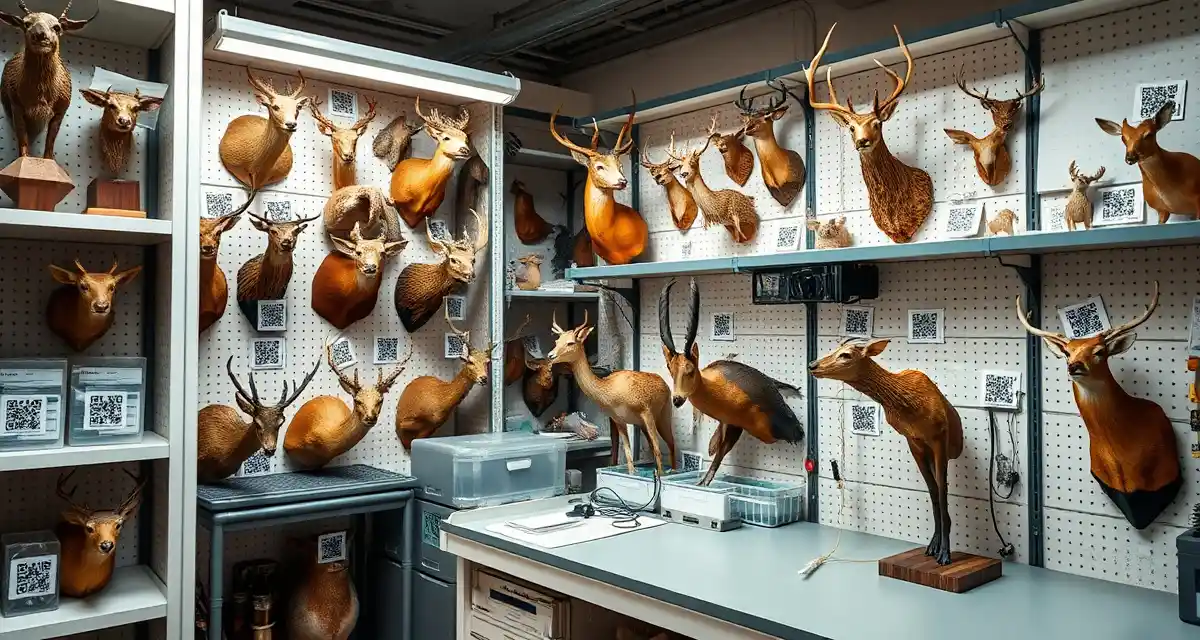
QR tags engineered for tannery environments solve the core problem. They're not paper. They don't dissolve in chemical baths. They stay attached to the hide through the entire tannery process.
Each QR tag links to the full digital job record in MountChief. Any taxidermist, at any point in the process, can scan the tag and see: customer name, phone number, species, mount style, intake date, photos, and any special instructions.
The key requirements for effective QR tags:
- Chemical resistance, must survive the tanning process
- Physical durability, must stay attached to the hide during handling
- Link reliability, must link to a digital record that's immediately accessible on a phone
Step-by-Step: Building a Mix-Up-Free System
Step 1: Tag at intake, before anything else
The QR tag goes on the specimen before the customer leaves. Not later. Not after you've put it in cold storage. At intake, before you do anything else.
This is the most important rule. Once a specimen enters your shop without a tag, the clock starts on potential mix-up.
Step 2: Verify tag presence before cold storage
Before a specimen goes into your freezer or cold storage, scan the QR tag. This confirms the tag is readable and linked to the correct record. If something's wrong, fix it now, not in 6 weeks when the hide comes out for tannery.
Step 3: Scan every hide before tannery shipment
When you pull hides for the tannery, scan each QR tag before it goes in the box. This creates a tannery shipment manifest, a documented list of every hide in the shipment.
If a hide comes back from the tannery without a readable tag, you have a manifest to reference. You know exactly which hides were in that shipment.
Step 4: Scan every hide on tannery return
When hides come back from the tannery, scan each one to confirm receipt and match against the shipment manifest. Any discrepancy, a hide that didn't come back, a hide you can't match, is immediately flagged.
This is where the chain of custody documentation pays off. You can tell the tannery: "We shipped these 40 specific hides on November 15. We received 39. Here's the manifest. What happened to hide #XYZ?"
Step 5: Verify on the production floor
When a taxidermist picks up a hide to begin mounting, scan the QR tag to confirm the identity before any work begins. This is the final check, the last moment where a mix-up can be caught before real work is done on the wrong animal.
What to Do If a Mix-Up Still Occurs
Even good systems have failure modes. If you discover a potential mix-up:
- Stop work immediately on both specimens in question
- Pull the intake records for both, photos, customer contact, mount specifications
- Cross-reference physical identifiers, antler score, hide size, condition notes from intake
- Contact both customers honestly and immediately
- Document everything, the discovery, the evidence, the resolution
The customer who hears from you proactively, with a plan, has a very different reaction than the customer who discovers the error at pickup.
Related Articles
- QR Tag Setup Guide for Taxidermy Shops: From Printer to Tagged Specimen
- Specimen Documentation Hub for Taxidermy Shops
- Tips for the First Day of Deer Season at Your Taxidermy Shop
- What Causes Elk Cape Slippage and How to Prevent It?
FAQ
How do specimen mix-ups happen in taxidermy shops?
Mix-ups most commonly occur at tannery handoff points, when paper tags fail in chemical baths and hides lose reliable identification. Cold storage mix-ups happen when similar-looking specimens are stored together with tags that aren't securely attached. Production floor mix-ups happen when capes are moved without verifiable identification. Each failure point requires a system that doesn't depend on paper tags.
Can QR code tags really survive tannery chemicals?
QR tags specifically engineered for tannery environments can, yes. Standard paper QR tags cannot, they fail in 24 to 48 hours. The QR tags used in MountChief are designed specifically for the chemical and physical conditions of tannery processing. Standard office-supply labels or inkjet-printed paper tags are not suitable.
What is the legal liability for mixing up a taxidermy specimen?
Taxidermists have legal obligation to return the correct specimen to each customer. A mix-up that results in the wrong mount being delivered, or a customer's specimen being mounted for someone else, can result in civil liability for the replacement value of the mount, the emotional distress damages (particularly for trophy or sentimental specimens), and potentially punitive damages in cases where negligence is evident. Industry claims for mix-ups average $1,000 to $5,000. High-value specimens (record-class deer, rare species) can create much larger exposure.
How does this apply to solo taxidermy shops?
The principles in this guide apply to solo shops just as they do to larger operations, though the scale differs. A single-person shop may have lower absolute volume but faces the same documentation, compliance, and customer communication requirements. The practical advice here scales down to any shop size.
What is the most common mistake taxidermists make with how to prevent specimen mix ups?
The most common mistake is treating how to prevent specimen mix ups as an afterthought rather than building it into the standard workflow from the start. Shops that encounter problems in this area typically did not establish clear processes before season, which means every situation becomes a one-off decision rather than a standard response.
Try These Free Tools
Put these insights into practice with our free calculators and planners:
Sources
- National Taxidermists Association (NTA)
- US Fish & Wildlife Service
Get Started with MountChief
The results in this article are achievable in any shop that applies the same operational approach. MountChief provides the intake speed, tannery tracking, and customer communication tools that make this kind of improvement possible. Try MountChief to see what better systems do for your operation.