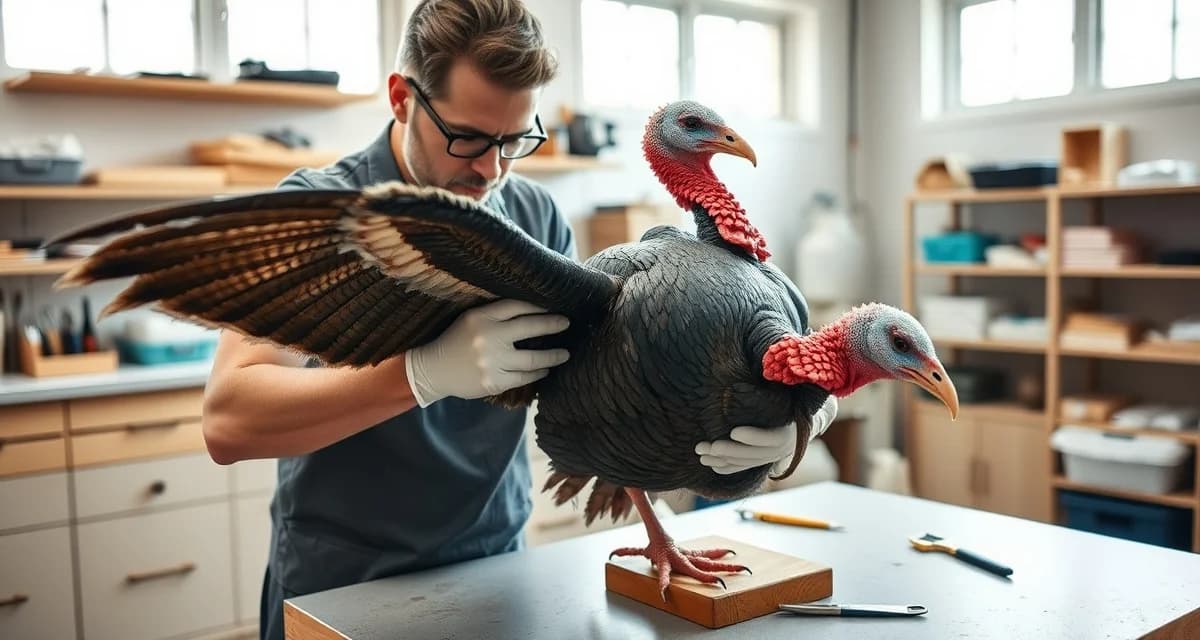
Spring Turkey Season Management Guide for Taxidermy Shops
Spring turkey season is unlike any other intake window in the taxidermist's year. It's compressed, predictable in timing but chaotic in volume, and the specimens themselves have handling requirements that are different enough from deer to trip up shops that treat everything the same.
About 80% of spring intake arrives in the first two weeks of May. If you're not ready before that wave hits, you'll spend the rest of the season digging out. Shops without structured spring workflows see three times the specimen damage rate compared to those with clear intake and handling protocols.
This guide covers everything from pre-season preparation through summer completion and customer communication.
TL;DR
- Many shops require a 50% deposit at intake for all mount types.
- About 80% of spring intake arrives in the first two weeks of May.
- If you take 40 turkey mounts in a spring, expect 30 of them to arrive in a 10-day window.
- Most states give taxidermists the right to sell or dispose of abandoned specimens after 60 to 90 days of non-contact following completion.
- It costs less ($100 to $175 typically) and is completed in four to eight weeks.
- It costs more ($400 to $800+), takes six to eight months, and typically requires the skin to be commercially tanned.
Understanding Spring Turkey Season Dynamics
The Compressed Intake Window
Most states run spring turkey season for four to six weeks, but hunter success isn't evenly distributed. Early-season success rates spike when turkeys are actively gobbling, and that tends to cluster in the first two to three weeks. Pair that with the fact that many hunters wait until the end of the season to bring in birds (hoping to get a bigger tom, or just procrastinating), and you end up with a two-week surge right around the season close.
If you take 40 turkey mounts in a spring, expect 30 of them to arrive in a 10-day window. Plan for that, not for a steady drip across six weeks.
Multiple Mount Types in One Species
Turkey mounts come in more variations than deer mounts. A customer bringing in a spring gobbler might want any of these:
- Fan mount - tail fan displayed flat on a backing panel
- Fan and beard mount - fan plus the beard mounted together on a panel
- Strutting full-body - the premium option, full bird in full strut with fanned tail
- Alert standing full-body - bird in a walking or alert pose
- Full-body with habitat - more elaborate display with logs, grass, or natural elements
Each of these has different production timelines, different space requirements in your shop, and different specimen handling needs at intake. Capturing which mount type the customer wants at the moment they walk in the door is critical. You cannot go back to a processed bird and decide to do a full-body if the intake record says fan-only.
Pre-Season Preparation (March and April)
Review Your Capacity
Before season opens, do a realistic count of your open bench space and available freezer capacity. A full-strut turkey mount requires a lot of form space during production. If you're still finishing deer work from last fall, calculate how much you can actually take before your bench is underwater.
Some shops do this math and decide to cap spring turkey intake at a set number. That's a legitimate business decision. Overbooking and under-delivering hurts your reputation more than turning someone away politely in April.
Prepare Your Intake Station for Birds
Your deer intake setup doesn't translate directly to birds. Make sure you have:
- A clear surface for photographing the bird at intake
- A scale for weighing birds (helps customers keep records, and you'll need measurements for full-body forms)
- Measurement tape for beard length and spur length (customers want to document these)
- Camera or phone mount for consistent intake photos
- Proper freezer bags sized for full turkey bodies
- A supply of freezer wrap for fan-only submissions
Customers are proud of their birds. Taking their measurements at intake, writing them on the record, and showing the customer you're treating the bird like it matters goes a long way toward retention.
Update Your Pricing Sheet
If you haven't raised prices since last year, spring is a good time to do it. Turkey season is a natural price adjustment window because you're dealing with new seasonal customers, not existing long-term customers who remember last year's rates. Make sure your current prices are posted, printed, and reflected in your intake software before the first bird walks in the door.
Contact Your Tannery
This one is often skipped. If you're sending turkey skins to a commercial tannery for full-body mounts, contact your tannery before season opens to confirm their current turnaround and any changes in their bird processing protocols. Some tanneries have different timelines for birds than for big game. You need to know what to quote customers before you start quoting them.
Intake Protocols for Spring Turkey
Evaluate Every Bird at Intake
Turkey specimen quality varies significantly. Hunters who shoot at long range, hunters who retrieve birds late, and hunters who don't field dress properly can all bring in birds with varying degrees of hide damage. Evaluate the bird at intake, not later.
Look for:
- Shot pattern damage (pellet holes through the breast, neck, or wing feathers)
- Feather condition overall (ruffled, broken, blood-stained feathers affect a full-body mount significantly)
- Skin condition under the feathers in the mount area
- Beard condition (for beard mounts)
- Fan integrity (damaged tail feathers can't be repaired well)
If a bird has significant damage that will limit the final mount quality, document it at intake with photos and make sure the customer understands the limitations before they commit to a full-body. A signed acknowledgment that the damage existed at intake protects you when they pick up.
Document Pose Preferences with Specifics
"Strutting pose" means something different to different customers. Use reference photos during intake. MountChief's intake workflow includes bird-specific pose fields and allows you to attach reference photos directly to the job record. When you're building the mount six months later, you shouldn't have to rely on memory or a vague note.
For full-body mounts, capture:
- Pose preference (strutting vs. standing vs. walking)
- Head position (snood raised or lowered, head up vs. extended)
- Wing position for strutting (drop wings or folded)
- Fan fully fanned or partially fanned
- Eye glass color preference if customer has one
- Habitat elements if the customer wants any
Freezing Birds Correctly
Spring turkey freezing is different from deer. A whole turkey going into the freezer needs to be wrapped tightly with all feathers as flat as possible. Improperly frozen birds develop freezer burn on exposed feather tips and have feather damage that shows in the finished mount.
For fan-only mounts, the fan should be spread flat, protected with cardboard, and individually wrapped. The rest of the bird is irrelevant for a fan mount, but the tail section itself needs perfect freezer handling.
For beard and spur mounts, the customer should be keeping the beard and spurs separately from the bird body. Many do. If they don't, note that the beard and spurs need to be removed before you can process.
Make sure customers understand freezing requirements before they bring the bird in. A card with freezing instructions at the check-in counter, or a quick instruction sheet you can hand out during hunting season, saves you from dealing with thawed or damaged birds at intake.
Production Timeline for Turkey Mounts
Turkey production runs follow a different arc than deer season production. You're typically taking birds in April and May, and customers expect completion by late summer or early fall before hunting season starts again.
Realistic production timelines by mount type:
| Mount Type | Typical Timeline |
|---|---|
| Fan mount only | 4 to 8 weeks |
| Fan and beard panel | 4 to 8 weeks |
| Full-body mount | 16 to 28 weeks |
| Strutting full-body | 20 to 32 weeks |
Full-body turkey mounts that go to a commercial tannery for the skin can add eight to twelve weeks for tannery processing. That's the bottleneck in most spring production cycles.
Set customer expectations at intake based on your current bench load and your tannery's current turnaround. If your tannery is quoting twelve weeks for bird skins, a 28-week completion is the honest answer for a full-body, not a vague "six to eight months."
Tannery Management for Spring Birds
Not every shop sends spring turkey skins to a commercial tannery. Some taxidermists tan bird skins in-house, which is feasible and common. If you use a commercial tannery for birds, a few things differ from your deer cape workflow.
First, bird skin tanning uses a different process and not all tanneries that handle deer capes also handle birds. Verify your tannery processes birds before you ship. Some game tanneries exclusively do big game hides.
Second, bird skin timing doesn't have to align with your deer cape shipment schedule. You can batch bird skins and ship them independently, which often gets faster service than mixing them in with big game shipments.
Third, bird skins are more delicate than deer hides and are more susceptible to processing damage. Choosing a tannery with specific bird experience matters more than it does for deer.
For each bird skin shipped to a tannery, log the shipment in your tracking system: date shipped, tannery, expected return, and the job it's associated with. For how to build that tracking workflow, the turkey taxidermy tracking guide covers the job-by-job setup.
Customer Communication During Spring Season
Spring turkey customers are often first-time taxidermy customers. A hunter who's been deer hunting for 20 years may have mounted several deer and understands the process. But spring turkey can be someone's first big game success, first time using a taxidermist, and first time navigating what to expect.
That changes how you communicate.
Set Timeline Expectations at Intake
Don't leave a first-time customer without a clear answer on when their bird will be done. Tell them at the counter: "Fan mounts take about six to eight weeks. Full-body mounts take six to eight months depending on the tannery. I'll send you an update when it ships to the tannery, when it comes back, and when I start building the form."
That three-point update structure is easy to deliver with automated status updates in MountChief. Every scan of the QR tag triggers a customer notification, so they're getting updates without you making calls.
Manage Payment Expectations
Turkey mounts are often lower dollar amounts than deer or elk. Fan mounts might be $100 to $175. Full-body mounts run $400 to $800 or more depending on complexity. Getting a deposit at intake and being clear about the balance at pickup prevents awkwardness later.
Many shops require a 50% deposit at intake for all mount types. Some collect the full amount for fan mounts since they're completed faster and the risk of non-pickup is lower. Set a policy and stick to it consistently.
Handling No-Pick-Up and Abandoned Turkey Mounts
Turkey mounts have a higher no-pickup rate than deer mounts. The reasons aren't always clear, but spring birds are sometimes impulse decisions: a hunter is excited, brings the bird in, then loses interest by fall. Or a fan mount that cost $150 isn't worth the customer making a trip to pick up.
Have a clear policy in writing about storage fees and what happens to unclaimed mounts after a set period. Most states give taxidermists the right to sell or dispose of abandoned specimens after 60 to 90 days of non-contact following completion. Your intake form should have the customer's signature acknowledging this policy.
For a template intake form that covers abandonment policy language, the taxidermy intake form template includes the relevant section.
Building Your Spring Season Systems
The shops that survive spring turkey season without chaos aren't necessarily the most skilled taxidermists. They're the most organized. A few specific systems that make the difference:
Batch processing for fan mounts. If you're doing 20 fan mounts, process them in batches of five or ten. Spreading out the fans to dry, mounting, and finishing on a schedule rather than starting each one independently saves significant time.
A dedicated bird form order. Pre-order your turkey forms in March before season. Full-strut turkey forms sell out at suppliers during peak season, and a back-order on forms is a guaranteed way to blow your timeline estimates.
A specimen log by freezer location. If you have more than one freezer or more than a few birds in the freezer at once, a log of what's where prevents digging. When a bird needs to come out for processing, you should be able to find it in two minutes.
A clear intake-to-processing trigger. Decide when a bird leaves the freezer for processing. Is it FIFO (first in, first out)? Is it by mount type? Is it by completion date promised? Whatever the rule, make it explicit so you're not making the decision again every time you open the freezer.
Frequently Asked Questions
How do I structure my shop for spring turkey season?
Prepare in March and April before intake begins: review freezer and bench capacity, pre-order forms, confirm tannery turnaround for birds, and update pricing. Set a clear intake cap if your capacity is limited. During the surge window, use batch processing for fan mounts rather than working one at a time. Set automated customer updates at key milestones so you're not handling status calls manually.
What is the difference between a fan mount and a full-body turkey mount?
A fan mount is just the tail fan, dried and displayed on a backing panel, sometimes with the beard added. It costs less ($100 to $175 typically) and is completed in four to eight weeks. A full-body mount is the entire bird, posed in a strutting or standing position on a finished base. It costs more ($400 to $800+), takes six to eight months, and typically requires the skin to be commercially tanned. The specimen handling at intake is different: a fan-only mount doesn't require the whole bird body, while a full-body requires the complete bird in the best possible condition.
How do I communicate turkey season timelines to customers?
Be specific at intake. Tell the customer the type of mount they're ordering, the realistic completion range based on your current workload and tannery turnaround, and the three points at which they'll hear from you (tannery ship, tannery return, and ready for pickup). A written estimate in the intake record that the customer acknowledges prevents timeline disputes at pickup. First-time taxidermy customers especially need a clear answer rather than a vague range.
How does this apply to solo taxidermy shops?
The principles in this guide apply to solo shops just as they do to larger operations, though the scale differs. A single-person shop may have lower absolute volume but faces the same documentation, compliance, and customer communication requirements. The practical advice here scales down to any shop size.
What is the most common mistake taxidermists make with spring turkey season guide?
The most common mistake is treating spring turkey season guide as an afterthought rather than building it into the standard workflow from the start. Shops that encounter problems in this area typically did not establish clear processes before season, which means every situation becomes a one-off decision rather than a standard response.
Related Articles
- Spring Turkey Season Preparation for Missouri Taxidermy Shops
- Spring Turkey Season Preparation for Tennessee Taxidermy Shops
Try These Free Tools
Put these insights into practice with our free calculators and planners:
Sources
- National Taxidermists Association (NTA)
- US Fish & Wildlife Service
- Ducks Unlimited
Get Started with MountChief
Turkey season brings its own intake window and documentation requirements, including federal migratory bird records for every job. MountChief handles turkey intake with the same speed and compliance documentation as deer and waterfowl. Try MountChief before turkey season opens.