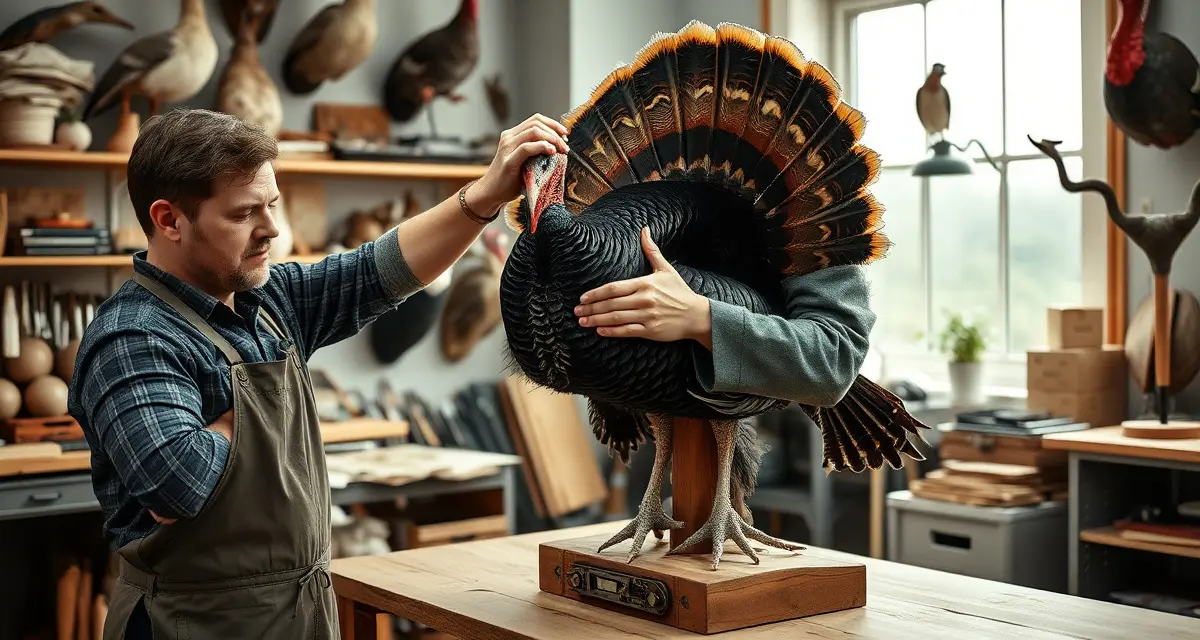
Turkey Taxidermy Job Tracking: Manage Spring Season Fan and Full-Body Mounts
Turkey season generates a concentrated 6-week spring intake window for most shops. That's a narrow runway. You're taking in dozens of birds in a short period, and every decision about pose, mounting style, and handling happens fast at the counter.
Spring turkey intake requires completely different specimen handling than fall deer season. Birds need to go back in the freezer within an hour of arrival. Feather condition at intake determines what mounting options are realistic. And if you don't capture the customer's pose preference at intake, you're calling them three months later trying to remember what they wanted.
Turkey taxidermy tracking needs to work the way turkey season actually works, fast intake, specific condition notes, and clear customer preferences locked in from the start.
TL;DR
- During this window, you may take in 20-40 birds in a 6-week period, more than during any comparable window of the year for bird work.
- Turkey fan and beard displays typically take 4-8 weeks.
- If you can realistically complete 30 full-body turkey mounts in a season alongside your other work, set that limit and communicate it early.
- Hunters who you tell in January that you take 30 turkeys per spring are understanding.
- Turkey season generates a concentrated 6-week spring intake window for most shops.
- Birds need to go back in the freezer within an hour of arrival.
Why Turkey Intake Is Different from Deer Intake
Most taxidermy tracking systems were built around shoulder mounts. The intake form asks for species, mount type, and customer name. That works for a deer cape. It doesn't work for a spring turkey.
The Feather Condition Problem
Turkey feathers are delicate and their condition at intake directly affects what mounting options are available. A bird with damaged body feathers might be a good fan-and-beard display but not a full-body strutter. A bird with a broken fan has limited display options.
If you don't document feather condition at intake, you have no baseline when a customer challenges the finished mount. And if you don't discuss mounting options in light of feather condition, you might end up promising a full-body mount on a bird that can't support it.
The Pose Decision Complexity
Turkey mounts have more pose options than most species. Capturing the customer's specific choice at intake isn't just helpful. It's the only way to avoid a call six months later when you're ready to start the mount and can't remember what they wanted.
Bird taxidermy tracking that handles turkey-specific pose selection at intake solves this before it becomes a problem.
How to Track Turkey Mount Jobs: Step by Step
Step 1: Photograph the Bird at Intake
Before you do anything else, photograph the bird. Three photos minimum:
- Full bird, top-down view showing overall condition
- Fan spread, showing feather condition and completeness
- Head and beard, showing beard length and any damage
These photos attach to the intake record and serve as your baseline documentation for the bird's condition when it arrived at your shop.
Step 2: Document Feather Condition
Rate the feather condition at intake. MountChief's turkey intake uses specific condition fields:
- Overall feather condition: Excellent / Good / Fair / Damaged
- Fan condition specifically: All feathers present / Minor damage / Missing feathers (note count)
- Body feather condition: Clean and intact / Shot damage / Field handling damage
- Head condition: Intact / Some damage
Be honest in your documentation. A turkey with "Fair" fan condition needs to have that conversation with the customer before they assume they're getting a full-strutter display.
Step 3: Capture Subspecies and Measurements
Turkey subspecies matter for documentation accuracy:
- Eastern wild turkey (most common in eastern US)
- Rio Grande turkey (South-Central states)
- Merriam's turkey (Rocky Mountain West)
- Osceola turkey (Florida only)
- Gould's turkey (extreme Southwest, rare)
Beard and spur measurements should be captured at intake. Customers want to remember these details, and you need them for any official measurement documentation.
Step 4: Get the Mounting Style Decision
This is the most important intake step. Lock in the customer's choice before they leave the counter:
Fan-only displays:
- Fan and beard (most common)
- Fan, beard, and spurs (full trophy display)
- Fan panel (just the fan feathers mounted on a panel)
Full-body mounts:
- Strutting (fan displayed, body in strut posture)
- Standing/walking (natural walking pose, fan folded)
- Alert standing (head up, looking toward camera)
- Flying (wings extended, requires more storage space)
Combination displays:
- Fan mount plus habitat base
- Fan plus life-size head replica
Step 5: Document Handling and Storage Instructions
After intake paperwork is complete, the bird goes back in the freezer within an hour. Document:
- Time of intake
- Time bird re-entered freezer
- Freezer location (which freezer, which shelf or bin)
- Any handling notes (was the bird thawed on arrival? Are tail feathers folded against each other?)
MountChief's turkey taxidermy tracking maintains freezer location as a field in the job record, so you can find any bird in a full freezer without digging.
Federal Compliance for Turkey Mounts
Wild turkeys are classified as migratory game birds under the Migratory Bird Treaty Act. This means your Federal Taxidermist Permit from USFWS is required before you can legally accept any wild turkey for mounting.
At intake, record:
- Customer's hunting license number and state
- Customer's turkey permit or tag number
- Your federal permit number on the intake record
- Date received
Federal records for migratory birds must be retained for 5 years. Your state's wildlife agency may have additional documentation requirements.
Managing Spring Turkey Season Volume
Spring turkey season creates a concentrated intake window that peaks in late April and early May for most states. During this window, you may take in 20-40 birds in a 6-week period, more than during any comparable window of the year for bird work.
Setting Intake Capacity Limits
Know your processing capacity before season opens. If you can realistically complete 30 full-body turkey mounts in a season alongside your other work, set that limit and communicate it early. Hunters who find out you're full two weeks into season are frustrated. Hunters who you tell in January that you take 30 turkeys per spring are understanding.
Pre-Season Customer Communication
Send your spring turkey season information to existing customers before the season opens. Include your intake capacity, your typical timelines (6-12 weeks for fans, 12-20 weeks for full bodies), and your deposit requirements. Customers who know what to expect are easier to manage.
Common Turkey Intake Mistakes
Not discussing feather condition at intake. If a bird isn't mountable as a full-body strutter due to feather damage, say so at intake. Not at delivery.
Skipping the federal compliance documentation. Federal taxidermist permit record-keeping is required. Don't skip it during the spring rush.
Refreezing without documenting. If a turkey arrives thawed (it happens), document the thaw status and refreeze carefully. Thaw-refreeze cycles damage feathers.
Taking pose preferences verbally without writing them down. "I think he wanted the strutting pose" is a recipe for a dispute. Write it down and have the customer initial the intake form.
Related Articles
- Reptile Taxidermy Job Tracking: Snake, Alligator, and Lizard Mounts
- Small Mammal Taxidermy Job Tracking: Squirrel Fox and Mink Mounts
- Spring Turkey Season Management Guide for Taxidermy Shops
FAQ
How do I track turkey mount jobs?
Create a job record at intake with turkey-specific fields: subspecies, beard and spur measurements, feather condition, fan condition, pose selection, and mounting style. Attach intake photos to the record. Tag the physical bird with a waterproof label linked to the job number. Document the freezer storage location. MountChief's turkey taxidermy tracking includes all of these fields in a turkey-specific intake workflow that loads when you select turkey as the species.
How long does a turkey fan or full-body mount take?
Turkey fan and beard displays typically take 4-8 weeks. Full-body strutting or standing mounts take 12-20 weeks depending on shop backlog and whether you use a bird tannery for the skin (bird-tanned turkeys typically have better long-term feather retention). Communicate realistic timelines at intake and set customer expectations before the spring season ends.
What is the best way to preserve a turkey for mounting?
Cool the bird immediately after harvest. Do not wash it. Fold the wings and tail feathers carefully, do not bend feathers unnaturally. Wrap loosely in plastic and freeze as soon as possible. Do not field-dress a turkey intended for a full-body mount. If you're not getting to a taxidermist within 24-48 hours, freeze first. For fan mounts, the tail fan can be carefully spread and preserved with borax in the field while you await freezing arrangements for the body.
How does this apply to solo taxidermy shops?
The principles in this guide apply to solo shops just as they do to larger operations, though the scale differs. A single-person shop may have lower absolute volume but faces the same documentation, compliance, and customer communication requirements. The practical advice here scales down to any shop size.
What is the most common mistake taxidermists make with turkey taxidermy tracking?
The most common mistake is treating turkey taxidermy tracking as an afterthought rather than building it into the standard workflow from the start. Shops that encounter problems in this area typically did not establish clear processes before season, which means every situation becomes a one-off decision rather than a standard response.
Try These Free Tools
Put these insights into practice with our free calculators and planners:
Sources
- National Taxidermists Association (NTA)
- US Fish & Wildlife Service
- Ducks Unlimited
- Small Business Administration (SBA)
Structured Spring Turkey Season Starts with Structured Intake
The shops that manage spring turkey season well aren't necessarily faster or more skilled than the ones that struggle. They just have better systems at the intake counter.
Species-specific fields. Feather condition documentation. Pose selection locked in at intake. Federal compliance captured automatically. These aren't extras, they're the difference between a smooth season and a chaotic one.
MountChief's turkey taxidermy tracking handles all of it in one intake workflow, purpose-built for spring season bird intake.
Start your free MountChief trial and have your turkey intake workflow ready before April.
Get Started with MountChief
Turkey season brings its own intake window and documentation requirements, including federal migratory bird records for every job. MountChief handles turkey intake with the same speed and compliance documentation as deer and waterfowl. Try MountChief before turkey season opens.