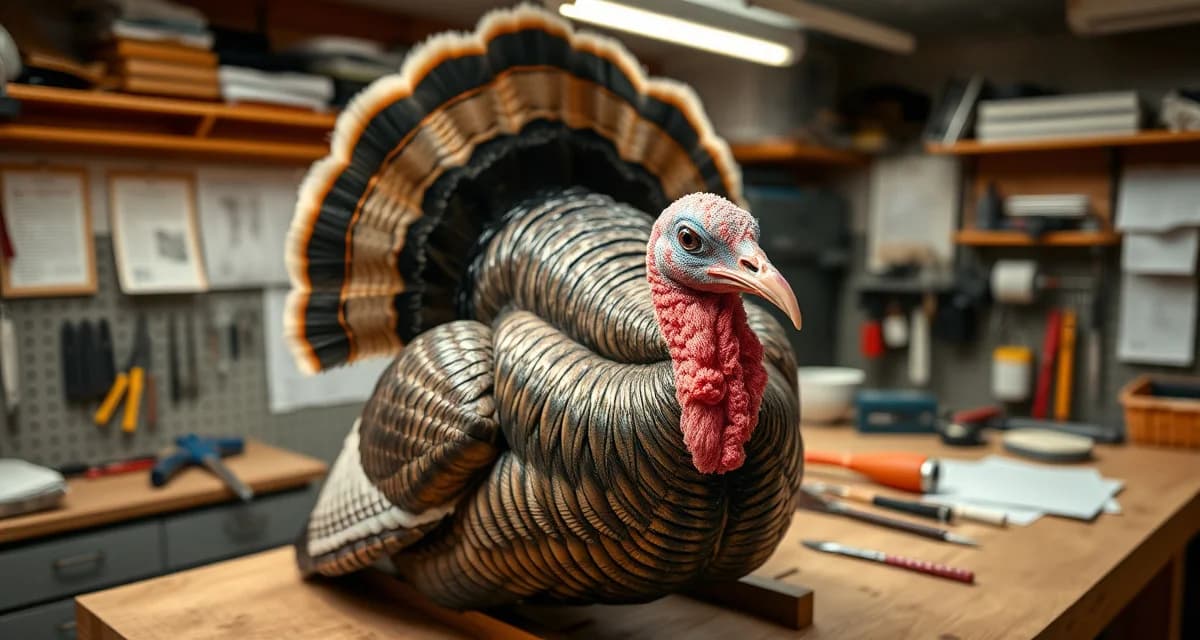
The Complete Spring Turkey Taxidermy Season Guide
Turkey season is a 6-week sprint with 80% of intake arriving in the first two weeks. That compression creates a specific operational challenge: you need to process a significant portion of your season's turkey volume in the first 10-14 days, while managing your existing deer backlog, handling customer calls, and verifying federal compliance documentation on every single bird.
Federal migratory bird compliance is required for every turkey accepted at intake. Miss it once and you've accepted a federally regulated species without documentation. This guide covers the complete spring turkey season operation, from pre-season preparation to intake workflow to customer communication to production scheduling.
TL;DR
- Turkey season is a 6-week sprint with 80% of intake arriving in the first two weeks.
- At intake: "Turkey mounts typically take 9-12 months.
- "Turkey mounts typically take 9-12 months" is an honest range that accounts for tannery variability.
- Every shortcut taken at intake creates problems 6-9 months later when you're mounting.
- Start at least 30 days before your first expected intake.
- At least 30 days before your first expected intake:
Spring Turkey Season Timeline by Region
Spring turkey seasons vary by state. Here's the general framework:
Southeast (Alabama, Georgia, Mississippi, Florida): March openers, among the earliest in the country. Some states open in mid-March.
Midwest (Iowa, Missouri, Kansas, Illinois): April openers, running through mid-May.
Northeast (Pennsylvania, New York, New England): Late April through May.
Mountain West and West: Varies significantly by state and unit, generally April through May.
The implication for your shop: if you're in a multi-state region or your customers cross state lines to hunt, your intake window may span March through May depending on where your customers are hunting.
Federal Compliance: What You Must Document at Every Turkey Intake
This is not optional. Under the Migratory Bird Treaty Act, turkey is a federally protected species. Every turkey you accept must be documented with:
Customer's federal migratory bird hunting license number: This is separate from the state hunting license. Confirm the customer has a valid federal duck stamp, spring turkey hunters may not carry this by habit. Some states require the federal stamp for turkey; others don't. You need to know your state's requirements.
State turkey tag or harvest permit number: Varies by state. Some states require physical tags attached to the bird.
Species verification: Eastern, Osceola, Merriam, Rio Grande, or hybrid. Record species on intake.
Harvest state and county: Required for your records.
Customer hunting license number: State-level license.
If a customer can't produce their license information at intake, your options are to hold the specimen while they retrieve it, or decline to accept it. Do not accept any migratory bird specimen without documentation. The liability is yours.
Pre-Season Preparation: March 1 Checklist
At least 30 days before your first expected intake:
Compliance setup:
- Verify your federal USFWS taxidermist permit is current
- Update your intake form to include all turkey-specific documentation fields
- If using MountChief, activate the turkey tracking workflow with compliance fields
- Research any state-specific documentation changes from the prior season
Supply setup:
- Verify form inventory for the turkey subspecies you expect
- Order artificial beards and spurs you're likely to need
- Stock fan preservation materials
- Confirm your degreasing supplies (turkey skin requires it)
Customer communication:
- Send a pre-season email to your past turkey customers confirming you're accepting birds this spring
- Post your acceptance capacity on your Facebook page and website, turkey specialists often fill up before season opens
- Update your Google Business Profile with spring turkey season hours
Intake station:
- Set up dedicated turkey intake checklist
- Prepare leg band check procedure (banded birds require additional documentation)
- Prep reference photos for the five turkey subspecies for customer consultation
Week-by-Week: The First Two Weeks of Turkey Season
Days 1-7 (The Rush)
For most shops in peak turkey states, 40-50% of season intake arrives in the first week. The opening weekend of firearms season generates significant volume.
Focus entirely on fast, complete intake during this window. Every shortcut taken at intake creates problems 6-9 months later when you're mounting.
For each bird at intake:
- Verify all federal and state documentation before touching the specimen
- Document physical condition (feather condition, any damage from harvest)
- Photograph the bird from multiple angles, including tag/band photos
- Record subspecies, fan quality, beard length(s), spur measurements
- Discuss pose options and document selection
- Confirm mount type (full strut, standing, fan only, fan-breast-beard combo)
- Collect deposit and provide portal link
This takes 15-20 minutes per bird done correctly. With AI photo intake through MountChief, the documentation time drops to under 5 minutes while capturing all the same fields.
Days 8-14
Volume slows but continues. Use this window to catch up on any intake backlogs from the rush and begin production processing on birds that are ready.
Birds that are freezer-ready from week one should be moving into your workflow. Document every status change in your tracking system.
Weeks 3-6
Turkey intake drops significantly as season winds down. Use this period to:
- Complete production on earliest-received birds
- Send tannery shipments
- Update customer portal status for all active turkey jobs
- Respond to any status inquiries from week 1-2 customers
Turkey-Specific Production Considerations
Fan preservation: Most customers want the fan preserved and mounted with the bird. Document whether the fan was field-dried by the hunter or arrives fresh. Fresh fans need to be posed and dried or freeze-dried immediately.
Degreasing: Turkey skin is high in fat, particularly around the base of the tail. Inadequate degreasing results in grease breakdown that ruins the mount over time. Document your degreasing process for each bird.
Beard preservation: Multiple beards are possible (jakes or older toms). Document the count and condition of all beards at intake.
Body form options: Full strut is the traditional choice, but standing forms have increased in popularity. Know your supplier's current inventory for each pose before offering options you can't fulfill.
Subspecies considerations: Merriams have different coloring than Eastern birds. Osceolas are unique to Florida. Know the subspecies you're likely to receive and have reference photos for each.
Customer Communication Throughout Turkey Season
Turkey hunters are often passionate and engaged with their harvest. They'll want updates. Use your spring turkey season guide timelines to set expectations at intake:
At intake: "Turkey mounts typically take 9-12 months. Your bird is currently in our queue and we'll send a portal update when it moves to each stage."
At tannery: "Your turkey skin is heading to the tannery this week. We expect it back in 6-8 weeks. You can track this in your portal."
At production: "Your turkey is now in production. You'll get a completion notice when it's ready for pickup."
Proactive communication eliminates the calls. Reactive communication creates them.
Frequently Asked Questions
How do I prepare for spring turkey season?
Start at least 30 days before your first expected intake. Verify your federal USFWS permit is current. Update your intake form to capture all turkey-specific fields including federal license numbers and harvest documentation. Stock forms, artificial components, and degreasing supplies. Send a pre-season email to past turkey customers. Post your capacity on social media, turkey specialists fill up fast. Set up your tracking workflow in your management software so every bird gets a portal link at intake. The preparation window shrinks every year you delay it.
What compliance records are required for spring turkey mounts?
Every turkey you accept must be documented with the customer's federal migratory bird hunting license number, their state turkey tag or permit number, harvest state and county, and species. Banded birds require additional documentation of the band number. Some states require the physical tag to remain attached to the bird until it reaches the taxidermist. Verify your state's specific requirements annually, as they change. Store all turkey compliance records for a minimum of five years, federal audits can review records years after the intake season.
How do I communicate turkey season timelines to customers?
Give ranges, not exact dates. "Turkey mounts typically take 9-12 months" is an honest range that accounts for tannery variability. Explain the process briefly at intake: the bird goes through initial prep, then tannery, then production. Each stage creates a status update in their portal. Customers who understand the process don't experience the wait as neglect, they experience it as a known timeline they can track. The portal link you give at intake eliminates most timeline-related calls. Update the portal status at every stage change so the customer sees real progress.
How does this apply to solo taxidermy shops?
The principles in this guide apply to solo shops just as they do to larger operations, though the scale differs. A single-person shop may have lower absolute volume but faces the same documentation, compliance, and customer communication requirements. The practical advice here scales down to any shop size.
What is the most common mistake taxidermists make with taxidermy shop turkey hunting season complete?
The most common mistake is treating taxidermy shop turkey hunting season complete as an afterthought rather than building it into the standard workflow from the start. Shops that encounter problems in this area typically did not establish clear processes before season, which means every situation becomes a one-off decision rather than a standard response.
Related Articles
- Elk Season Taxidermy Management Guide: Western Shop Operations
- How to Manage Your Taxidermy Shop During Peak Hunting Season
Try These Free Tools
Put these insights into practice with our free calculators and planners:
Sources
- National Taxidermists Association (NTA)
- US Fish & Wildlife Service
- Ducks Unlimited
- Small Business Administration (SBA)
Get Started with MountChief
Turkey season brings its own intake window and documentation requirements, including federal migratory bird records for every job. MountChief handles turkey intake with the same speed and compliance documentation as deer and waterfowl. Try MountChief before turkey season opens.