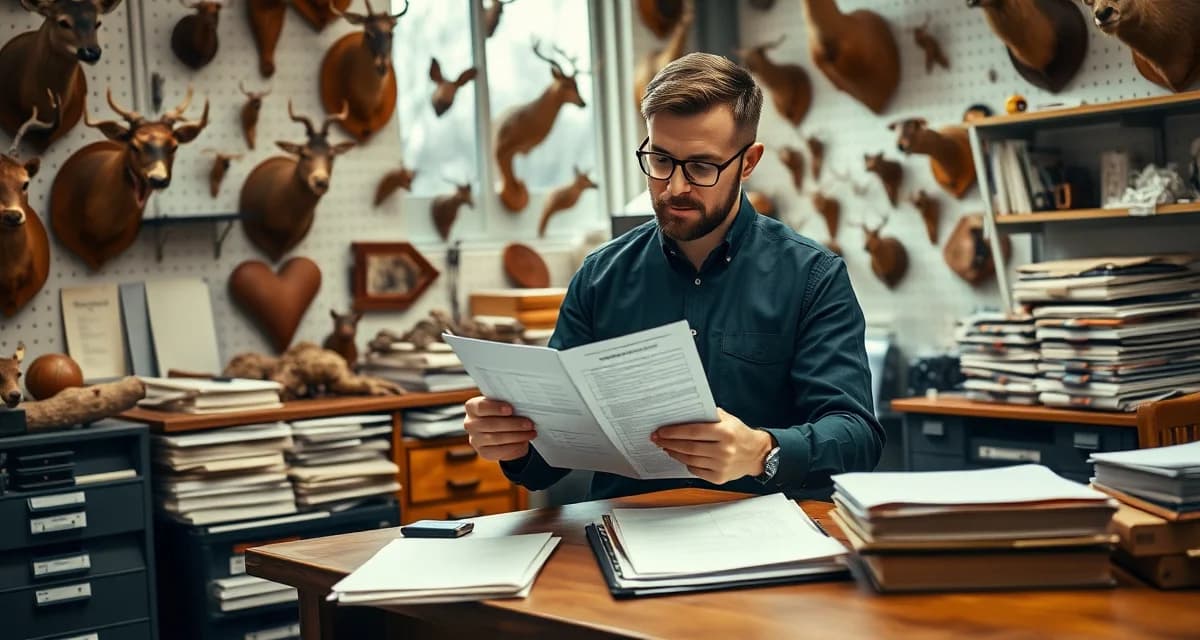
Buying an Existing Taxidermy Shop: What to Look for and Avoid
Buying an existing taxidermy shop can get you years ahead of a ground-up startup. You inherit a customer base, equipment, local reputation, and often a trained workflow. But existing shops also come with hidden liabilities that can make the purchase a financial trap.
Unknown specimen liability from poor record-keeping is the most common hidden risk in taxidermy acquisitions, and it's the one that surprises buyers most often. This guide covers what to look for, what to avoid, and how to structure due diligence before you sign anything.
TL;DR
- Customers who were promised 12 months and are now at 18+ months are potential disputes waiting to land on your desk after you take ownership.
- Equipment: The capital cost of setting up a full shop from zero can run $10,000 to $30,000 depending on species and volume.
- Even a well-run shop can fail if the market won't support the price you need to charge.
- A shop with 200 customers who each bring in 1-2 mounts per year is worth more than a shop with 50 customers who brought in high volumes during one banner season.
- What due diligence should I do before buying a taxidermy shop?
- Abandoned mount write-offs: A high rate of abandoned mounts (specimens the customer never picked up) is a sign of customer service problems or poor deposit collection practices.
Why Buying Beats Starting from Scratch
A functioning taxidermy shop has three things that take years to build independently:
An existing customer list: A shop with 300 past customers and their contact records is a recurring revenue asset. These customers have already chosen this shop once. They're likely to return and to refer others.
Equipment: The capital cost of setting up a full shop from zero can run $10,000 to $30,000 depending on species and volume. Buying an equipped shop amortizes that cost into the purchase price.
Local search presence: A Google Business Profile with reviews, years of local history, and a domain with age beats a new business in local SEO immediately.
Digital customer records dramatically increase the value and transferability of a taxidermy shop. If the existing owner has been using management software, their records are portable, searchable, and immediately useful to you. If they've been using paper, you may inherit boxes of handwritten intake forms that tell you very little.
Step 1: Evaluate the Customer Database
Before anything else, ask to see the customer list. You're looking for:
- Number of unique customers in the past 3-5 years
- Average annual visit frequency per customer
- Geographic distribution (are customers within a reasonable driving radius?)
- Species mix (are the customers deer hunters, or a mix you can serve?)
A shop with 200 customers who each bring in 1-2 mounts per year is worth more than a shop with 50 customers who brought in high volumes during one banner season.
Ask whether customer records include contact information (phone, email), species and mount history, and deposit/payment history. If the records don't include contact info, the "customer list" is just a count, not an asset.
Step 2: Audit the Compliance Records
This step is non-negotiable. Unknown specimen liability from poor record-keeping is the most dangerous hidden risk in a taxidermy acquisition.
Ask to see:
- All intake records for the past three years, organized by season
- Federal USFWS permit and its current status
- State taxidermy license (current or most recent)
- Any migratory bird permit records for waterfowl or turkey accepted
- Documentation for any exotic or CITES-regulated species ever accepted
Red flags in compliance review:
- Gaps in intake records (specimens with no documentation)
- Migratory bird species accepted without documented federal license numbers
- Exotic species with no CITES verification on file
- Expired or lapsed federal permits
If you buy a shop and a wildlife officer later discovers undocumented specimens, you may inherit liability for violations that occurred before your ownership. Structure the purchase agreement to make the seller responsible for pre-acquisition violations, and get that in writing.
Step 3: Inspect the Current Backlog
An existing backlog of uncompleted mounts transfers with the business. You're buying the obligation to finish those mounts.
Request a full backlog list including:
- Every uncompleted specimen currently held
- Customer name and contact information for each
- Deposit collected vs amount outstanding
- Estimated completion stage for each mount
Calculate the revenue tied up in the backlog (deposits collected plus expected final payments) against the labor required to complete it. This becomes part of your valuation.
Watch for mounts that have been in progress for longer than the stated timeline. Customers who were promised 12 months and are now at 18+ months are potential disputes waiting to land on your desk after you take ownership.
Step 4: Assess the Equipment
Walk through the shop and document every piece of equipment. For each major item:
- Age and condition
- Replacement cost new
- Whether it's included in the sale price
Key equipment categories to evaluate:
Freezer capacity: Are there enough freezers for peak season inventory? What's the condition of the compressors?
Fleshing and prep equipment: Does it work? When was it last serviced?
Reference library: Species-specific reference materials are a real asset, especially for specialty species.
Supplies inventory: What's the current value of supplies on hand (forms, eyes, hide paste, finishing materials)? These should either transfer or be deducted from the purchase price.
Step 5: Review the Financial Records
Request the past three years of tax returns and, if available, QuickBooks or accounting records. Look for:
Revenue trend: Is the business growing, flat, or declining? A declining trend needs an explanation.
Tannery costs: Are they being tracked accurately? Shops that undercharge for tannery costs often have misleadingly attractive revenue numbers.
Seasonal cash flow: Taxidermy revenue is intensely seasonal. Make sure the historical pattern makes sense for the local deer season timing.
Abandoned mount write-offs: A high rate of abandoned mounts (specimens the customer never picked up) is a sign of customer service problems or poor deposit collection practices.
Step 6: Evaluate the Local Market
Even a well-run shop can fail if the market won't support the price you need to charge. Research:
- How many competing taxidermists are within 30 miles?
- What is the local pricing for deer shoulder mounts?
- Is the seller leaving the market (retiring, moving) or staying and competing?
The last point is critical. If the existing owner plans to continue doing taxidermy locally under a different name, their loyal customers may follow them. The customer list is less valuable if the person those customers trust is still in the market.
Valuation Framework
Taxidermy shops typically sell for 1-2x annual revenue for established businesses with documented records. Adjust up or down based on:
- Quality of customer database (higher multiplier for verified digital records)
- Backlog revenue value (add the net value of pending deposits)
- Equipment value (add at replacement cost, adjusted for condition)
- Lease terms if the shop has dedicated space
- Seller's transition commitment (will they help you for 30-90 days?)
The Purchase Agreement Must Address
Work with an attorney familiar with small business acquisitions to structure the agreement. Key provisions:
- Pre-acquisition liability indemnification (seller is responsible for violations before closing)
- Non-compete clause (how long and in what geographic radius can the seller not compete?)
- Transition period (what training/support does the seller provide after close?)
- Equipment list as an exhibit (specific items included in the purchase)
- Customer data transfer (full list with consent to use for marketing purposes)
Frequently Asked Questions
How do I evaluate a taxidermy shop for purchase?
Start with the customer database, compliance records, current backlog, equipment condition, and three years of financial records. The customer list is the most valuable asset if it includes contact information and mount history. The compliance records are the highest-risk area if they're incomplete. The backlog transfers to you as both an obligation and a revenue stream. Equipment values are tangible and easier to verify. Financial records tell you whether the business's revenue is real and sustainable. Don't skip any of these five areas.
What is the right price for an existing taxidermy business?
A fair range is 1-2x annual revenue for established shops with documented customer records and good equipment. Adjust higher for digital customer records, low backlog risk, good equipment condition, and a seller willing to provide transition support. Adjust lower for paper-only records, high compliance risk, aging equipment, or a seller who plans to stay in the local market. Always get an independent equipment appraisal before agreeing to a purchase price, and factor the cost to complete the current backlog into your offer.
What due diligence should I do before buying a taxidermy shop?
Review all compliance records for the past three years and verify the federal USFWS permit is current and in good standing. Inspect the full backlog and document every uncompleted specimen and associated obligation. Walk through and inventory all equipment. Request three years of tax returns and accounting records. Interview the seller about their reason for selling and their post-sale plans. Talk to suppliers and, if possible, a few existing customers about their experience with the shop. Visit during a busy period if timing allows, so you can see the operation as it actually runs, not as it's presented.
How does this apply to solo taxidermy shops?
The principles in this guide apply to solo shops just as they do to larger operations, though the scale differs. A single-person shop may have lower absolute volume but faces the same documentation, compliance, and customer communication requirements. The practical advice here scales down to any shop size.
What is the most common mistake taxidermists make with taxidermy shop acquisition guide?
The most common mistake is treating taxidermy shop acquisition guide as an afterthought rather than building it into the standard workflow from the start. Shops that encounter problems in this area typically did not establish clear processes before season, which means every situation becomes a one-off decision rather than a standard response.
Related Articles
- The Complete Bear Season Taxidermy Guide: Skull Sealing to Finished Mount
- Taxidermy Shop Bookkeeping: Simple Systems for Non-Accountants
- Taxidermy Shop Cold Storage: Chest Freezers Walk-Ins and Temperature
- Preparing Taxidermy Competition Entries: Records and Timeline Management
Try These Free Tools
Put these insights into practice with our free calculators and planners:
Sources
- National Taxidermists Association (NTA)
- US Fish & Wildlife Service
- Small Business Administration (SBA)
Get Started with MountChief
Professional taxidermists need more than talent at the bench. They need organized intake, clear compliance records, and reliable customer communication. MountChief delivers all three.