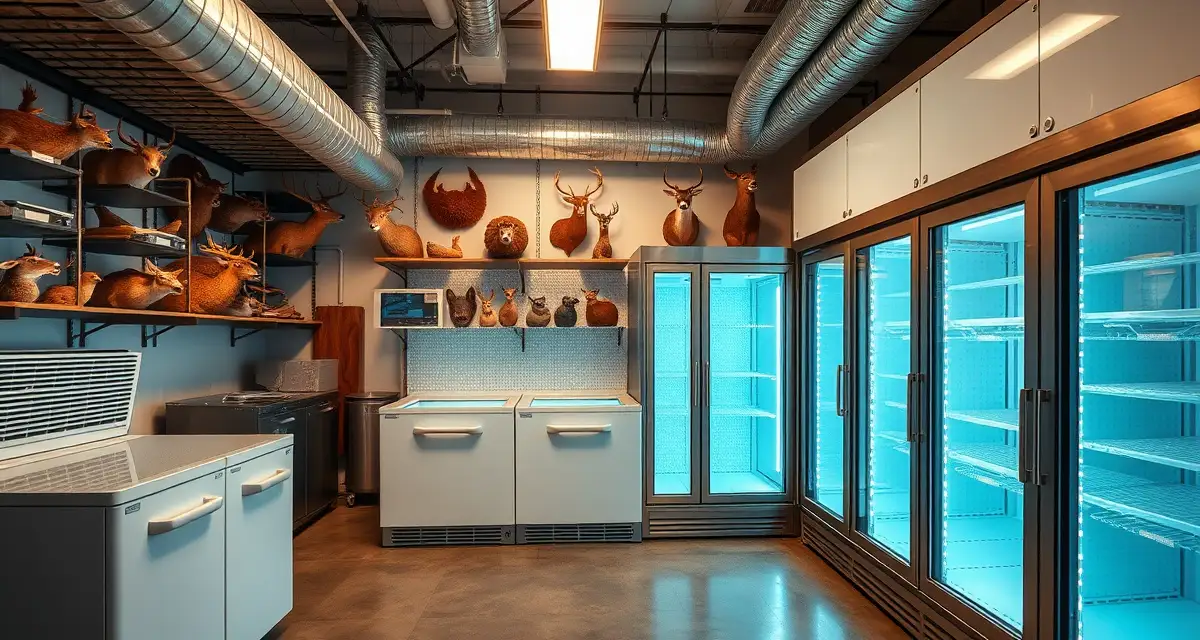
Taxidermy Shop Cold Storage: Chest Freezers Walk-Ins and Temperature
Most shops underestimate cold storage needs and face intake capacity limits during peak season. This is one of the more expensive mistakes a taxidermist can make, because there's no easy short-term fix when your freezers are full and more deer keep arriving.
Walk-in coolers pay for themselves within 3 deer seasons for shops over 150 mounts per year. That's a benchmark worth noting as your volume grows. The upfront cost of a walk-in feels large until you calculate the cost of turning away work or rushing storage in undersized chest freezers.
TL;DR
- For a shop taking 100 deer in a season with a 4-6 week peak intake window, you need enough capacity to hold 40-60 specimens in active storage at any one time during peak.
- Others will sit for 4-8 weeks waiting for their place in the production queue.
- cape thawed to 40°F and refrozen can develop problems that show up months later during mounting.
- Walk-in coolers pay for themselves within 3 deer seasons for shops over 150 mounts per year.
- typical deer shoulder mount cape, folded and bagged, takes roughly 0.75-1.0 cubic foot of freezer space.
- For 100 mounts per year: 60-70 cubic feet of freezer space is a reasonable working minimum.
How Much Storage Do You Need?
The calculation starts with your expected intake volume. A typical deer shoulder mount cape, folded and bagged, takes roughly 0.75-1.0 cubic foot of freezer space. A full deer head (skull cap attached) takes more, around 1.5-2 cubic feet depending on antler configuration.
For a shop expecting 100 deer in a season, and assuming most specimens arrive within a 4-6 week window, you need enough capacity to hold 40-60 specimens in frozen storage at any one time during peak intake. Some will come in Monday and go directly to fleshing Tuesday. Others will sit for 4-8 weeks waiting for their place in the production queue.
At 1 cubic foot per specimen average, 50 specimens in storage requires 50 cubic feet of freezer space as a working minimum. Add 30-40% margin for larger specimens, irregular shapes, and storage organization overhead.
For 100 mounts per year: 60-70 cubic feet of freezer space is a reasonable working minimum.
For 150 mounts per year: 90-100 cubic feet.
For 200+ mounts per year: seriously evaluate a walk-in.
Chest Freezers vs. Upright Freezers
Chest freezers are the workhorses of taxidermy cold storage. They're more energy-efficient than upright models because cold air falls and doesn't escape when you open a top-mounted lid. They hold temperature better during power fluctuations. And they can store specimens in configurations that don't fit well in the shelved compartments of upright freezers.
The downside is access. Pulling specimens from the bottom of a full chest freezer is physically demanding and time-consuming. For frequently accessed storage, chest freezers create inefficiency.
Upright freezers are more convenient for high-turnover storage - specimens going in and out frequently during active production. But they cost more to operate and hold temperature less reliably.
Most shops use a combination: chest freezers for long-term seasonal storage, an upright for active production-phase specimens being accessed frequently.
When to Consider a Walk-In
If you're processing over 150 mounts per year, or if you're regularly finding yourself with more specimens than freezer space, a walk-in cooler is worth serious consideration.
Walk-in advantages over a chest freezer bank:
- Standing access means dramatically faster retrieval and organization
- Larger capacity in a smaller floor footprint than equivalent chest freezers
- More consistent temperature across the entire storage area
- Better for large specimens like elk and bear that don't fit well in chest freezers
A commercial walk-in freezer unit suitable for a mid-volume taxidermy shop - roughly 6x8 feet or 8x8 feet - typically costs $8,000-$15,000 installed. At 150 mounts per year with an average mount price of $400, your annual revenue is $60,000. A walk-in that eliminates intake capacity limits and specimen handling inefficiency pays for itself in two to three seasons in improved capacity and efficiency.
Temperature Management
Your specimens must be stored at 0°F (-18°C) or below. Temperatures above 0°F slow bacterial activity but don't stop it, and specimens held at 15°F will degrade over a full off-season even if they appear frozen.
Install a thermometer in every freezer unit and check temperatures regularly. During deer season when freezers are frequently opened and loaded, temperature spikes are more likely. A basic wireless temperature monitor that alerts you if temperature rises above a threshold is worth the $30-60 investment.
If you experience a power outage, check specimen temperatures before production resumes. A cape thawed to 40°F and refrozen can develop problems that show up months later during mounting.
For overall season preparation guidance, the deer season prep guide includes cold storage review as part of the complete pre-season checklist. Your taxidermy shop management software can track each specimen's current storage location to support efficient freezer organization.
Frequently Asked Questions
How much freezer space does a taxidermy shop need for deer season?
Plan on roughly 1 cubic foot of freezer space per deer shoulder mount cape, or 1.5-2 cubic feet for full heads. For a shop taking 100 deer in a season with a 4-6 week peak intake window, you need enough capacity to hold 40-60 specimens in active storage at any one time during peak. At 1 cubic foot average, that's 50-70 cubic feet of usable space as a working minimum. Add a 30-40% margin for larger specimens, irregular shapes, and storage efficiency overhead. Running out of freezer space during gun week is operationally disruptive and can force you to turn away work - calculate your storage needs before season opens.
What is the correct freezer temperature for storing taxidermy specimens?
0°F (-18°C) or below is the required storage temperature. Temperatures above 0°F - including the 10-15°F that some household freezers run at when set to "cold" rather than their coldest setting - are adequate for short-term storage of a few weeks but not for specimens held through the off-season. Verify your freezer's actual temperature with a thermometer rather than trusting the dial setting. Chest freezers are generally better at maintaining temperature than upright models. Install a wireless temperature monitor to alert you to any temperature rises during deer season when frequent opening and loading creates more thermal stress on the unit.
When should a taxidermy shop upgrade to a walk-in freezer?
The upgrade makes financial sense when your annual mount volume consistently exceeds 150 mounts per year, when you regularly experience chest freezer capacity limits during peak intake, or when you're losing potential business by turning away work due to storage limitations. Walk-in freezer units sized for mid-volume taxidermy shops cost $8,000-$15,000 installed. For a shop generating $60,000-$90,000 in annual revenue at 150-225 mounts, the efficiency and capacity benefits typically recover the investment over 2-3 seasons. The improved access to specimens also reduces the time spent hunting through chest freezers during active production.
How does this apply to solo taxidermy shops?
The principles in this guide apply to solo shops just as they do to larger operations, though the scale differs. A single-person shop may have lower absolute volume but faces the same documentation, compliance, and customer communication requirements. The practical advice here scales down to any shop size.
What is the most common mistake taxidermists make with taxidermy shop cold storage guide?
The most common mistake is treating taxidermy shop cold storage guide as an afterthought rather than building it into the standard workflow from the start. Shops that encounter problems in this area typically did not establish clear processes before season, which means every situation becomes a one-off decision rather than a standard response.
Related Articles
- All Species Taxidermy Shop Guide: Managing Every Animal Type
- The Complete Bear Season Taxidermy Guide: Skull Sealing to Finished Mount
- Taxidermy Shop Bookkeeping: Simple Systems for Non-Accountants
- Taxidermy Shop Chemical Storage: Safety and EPA Compliance
Try These Free Tools
Put these insights into practice with our free calculators and planners:
Sources
- National Taxidermists Association (NTA)
- US Fish & Wildlife Service
- Small Business Administration (SBA)
Get Started with MountChief
Tracking dozens of active mounts across different stages is hard enough without juggling separate tools for each task. MountChief brings intake, status tracking, and customer messaging into one place.