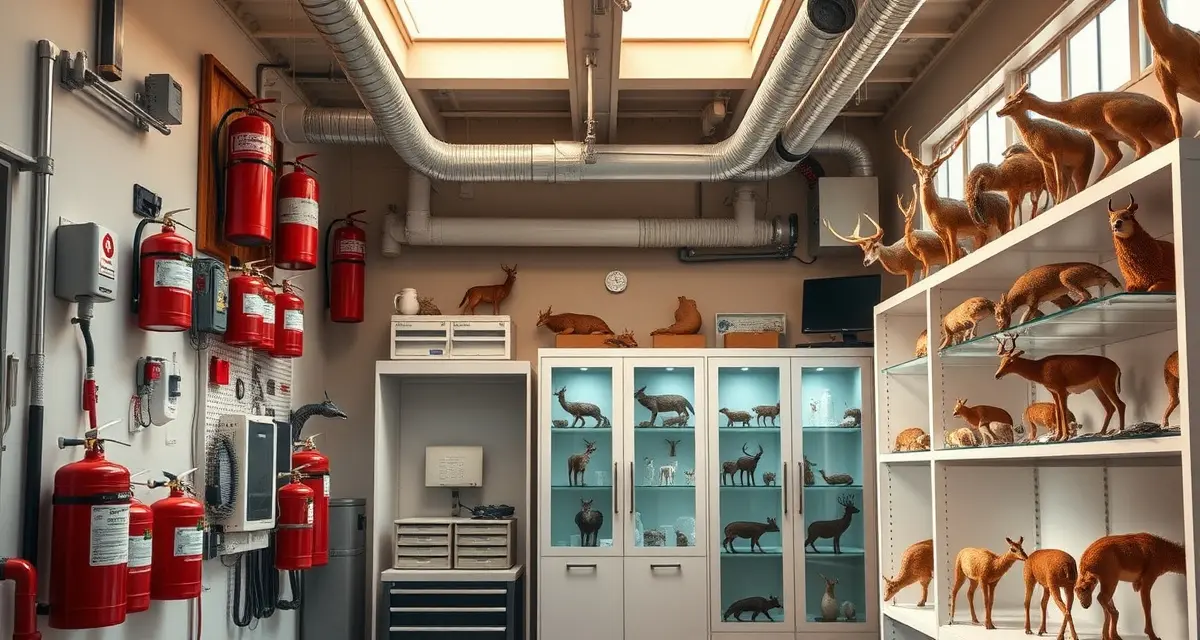
Taxidermy Shop Fire Safety: Protect Your Specimens and Equipment
Chemical solvent fires are the leading fire risk in taxidermy shops - prevention is critical. Degreasing solvents, acetone, and similar flammable chemicals used in fish processing and form preparation have low flash points and can ignite from a spark, a pilot light, or a piece of equipment running nearby. A shop that stores flammable solvents improperly is carrying an unmanaged risk every day.
Shops with digital records can recover customer information even after a total loss. This is the data backup argument - if a fire destroys your shop, your customer database, intake records, and job history can be restored from your cloud-hosted management software. The specimens are gone, but you know what they were, who they belonged to, and what you owed each customer. That information is the foundation for your insurance claim and your customer communication after a loss event.
TL;DR
- For shops with significant flammable liquid storage, a Class B-rated CO2 or dry chemical extinguisher near that storage is appropriate.
- Chemical solvent fires are the leading fire risk in taxidermy shops - prevention is critical.
- What fire safety equipment does a taxidermy shop need?
- Emergency exit plan: Every employee and regular visitor should know the two quickest exits from any part of your shop.
- Shops using flammable liquid solvents should have those chemicals stored in FM Approved flammable storage cabinets (red steel cabinets rated for flammable storage) separated from ignition sources.
- Fire extinguishers should be inspected monthly by the shop owner and annually by a professional service.
Fire Risk Assessment for Taxidermy Shops
Walk through your shop and identify every fire risk category:
Flammable chemicals: Degreasing solvents (acetone, mineral spirits, lacquer thinner), fleshing chemicals, some finishing sprays. These need to be stored in approved flammable storage cabinets (FM Approved, red steel cabinets) away from any ignition source. The number of gallons you can store in a non-rated cabinet is limited by fire code - check your local regulations.
Electrical hazards: Freezer compressors, air compressors, and heat elements are common electrical fire sources. Have your shop's wiring inspected if it's older. Extension cords used continuously as permanent wiring are a fire hazard - install enough outlets to eliminate the need for permanent extension cords.
Heat sources: Heat guns, curing ovens, and drying chambers near flammable materials are a risk. Keep a clear separation zone between any heat-generating equipment and flammable storage.
Drying specimens: Drying forms in progress can be a fire risk if heated improperly. Drying chambers with thermostats set and verified prevent overheating.
Required Fire Safety Equipment
Fire extinguishers: Every taxidermy shop needs ABC fire extinguishers. "ABC" covers the three most common fire types: Class A (ordinary combustibles), Class B (flammable liquids), and Class C (electrical equipment). You need at least one extinguisher in the production area and one near the chemical storage area. For shops with significant flammable liquid storage, a Class B-rated CO2 or dry chemical extinguisher near that storage is appropriate.
Inspect extinguishers monthly to confirm pressure gauge is in the green zone. Have them professionally inspected annually.
Smoke detectors: Commercial-grade smoke detectors in every room of the shop. Test monthly. Replace batteries annually or use hardwired units with battery backup.
Heat detectors: In areas where smoke detectors may false-alarm from normal shop activity (dusty areas, finishing areas), heat detectors are an alternative. Heat detectors activate at a specified temperature threshold.
Emergency exit plan: Every employee and regular visitor should know the two quickest exits from any part of your shop. Post the exit plan visibly.
Protecting Your Data in a Fire
If your shop burns down, your physical specimens are gone. But your customer records, intake documentation, and job history don't have to be gone.
Cloud-hosted management software - such as MountChief - stores all of your records on remote servers that survive a physical shop fire. After a loss, you can log in from any device and access your complete customer database, every intake record, every invoice, and every photo you attached to job records.
This matters enormously for your insurance claim (you know exactly what specimens were in your care and their documented value) and for customer communication (you can contact every affected customer with accurate information about their mount's status and the loss).
Paper intake books stored in a locked filing cabinet at the shop do not survive a fire. A cloud-hosted system does.
See taxidermy shop management software for digital record management. For insurance coverage guidance, see the taxidermy shop insurance guide.
Building a Fire Emergency Plan
Your fire emergency plan should cover four things:
- Detection: How fires are detected and alarms triggered
- Evacuation: How everyone in the shop gets out safely, including routes and assembly point
- Containment: Where extinguishers are located, who is trained to use them, and the go/no-go threshold for attempting to fight a small fire vs. evacuating immediately
- Recovery: Who calls the fire department, who contacts insurance, who contacts affected customers, how you access your digital records from outside the shop
Review the plan annually and after any change in shop layout or personnel.
Frequently Asked Questions
What fire safety equipment does a taxidermy shop need?
Every taxidermy shop needs ABC fire extinguishers in the production area and near any chemical storage, smoke detectors in every room, and a clearly posted emergency exit plan. Shops using flammable liquid solvents should have those chemicals stored in FM Approved flammable storage cabinets (red steel cabinets rated for flammable storage) separated from ignition sources. Heat detectors are appropriate for dusty or finishing areas where smoke detectors may false alarm. Fire extinguishers should be inspected monthly by the shop owner and annually by a professional service. Smoke detectors should be tested monthly and battery-replaced annually for battery-powered units.
How do I protect my customer database if my shop burns down?
Use cloud-hosted shop management software that stores all records on remote servers. Cloud-hosted data survives a physical fire - you can access your complete customer database, intake records, job photos, and invoices from any device after a loss. This is essential for filing an accurate insurance claim (you know exactly what specimens were in your care and their documented value) and for contacting affected customers. Paper intake books stored at the shop do not survive a fire, and reconstructing customer records from memory after a total loss is nearly impossible. Cloud-based record backup is not optional risk management - it's basic business continuity planning.
What insurance covers fire damage at a taxidermy shop?
Business property insurance covers damage to your shop building (if you own it), your equipment, fixtures, and owned inventory. Bailee insurance covers the customer property (specimens) in your care that are lost or damaged in a fire - this is separate from property insurance and is specifically designed for businesses holding customer property. Business interruption insurance covers lost revenue during the period when you can't operate after a fire. You need all three types to be fully protected. Review your current coverage limits annually to ensure they reflect the value of your current equipment, the maximum value of specimens you hold during peak season, and your annual revenue for business interruption purposes.
How does this apply to solo taxidermy shops?
The principles in this guide apply to solo shops just as they do to larger operations, though the scale differs. A single-person shop may have lower absolute volume but faces the same documentation, compliance, and customer communication requirements. The practical advice here scales down to any shop size.
What is the most common mistake taxidermists make with taxidermy shop fire safety plan?
The most common mistake is treating taxidermy shop fire safety plan as an afterthought rather than building it into the standard workflow from the start. Shops that encounter problems in this area typically did not establish clear processes before season, which means every situation becomes a one-off decision rather than a standard response.
Related Articles
- How to Write Taxidermy Shop Policies That Protect Your Business
- Deer Season Intake Volume Calculator: Plan Your Capacity
- Taxidermy Shop Production Scheduling: Plan Work Without Bottlenecks
- Tips for the First Day of Deer Season at Your Taxidermy Shop
Try These Free Tools
Put these insights into practice with our free calculators and planners:
Sources
- National Taxidermists Association (NTA)
- US Fish & Wildlife Service
- Small Business Administration (SBA)
Get Started with MountChief
Whether you handle 20 mounts a year or 200, the administrative side of taxidermy scales fast. MountChief keeps intake, tracking, and communication manageable at any volume.