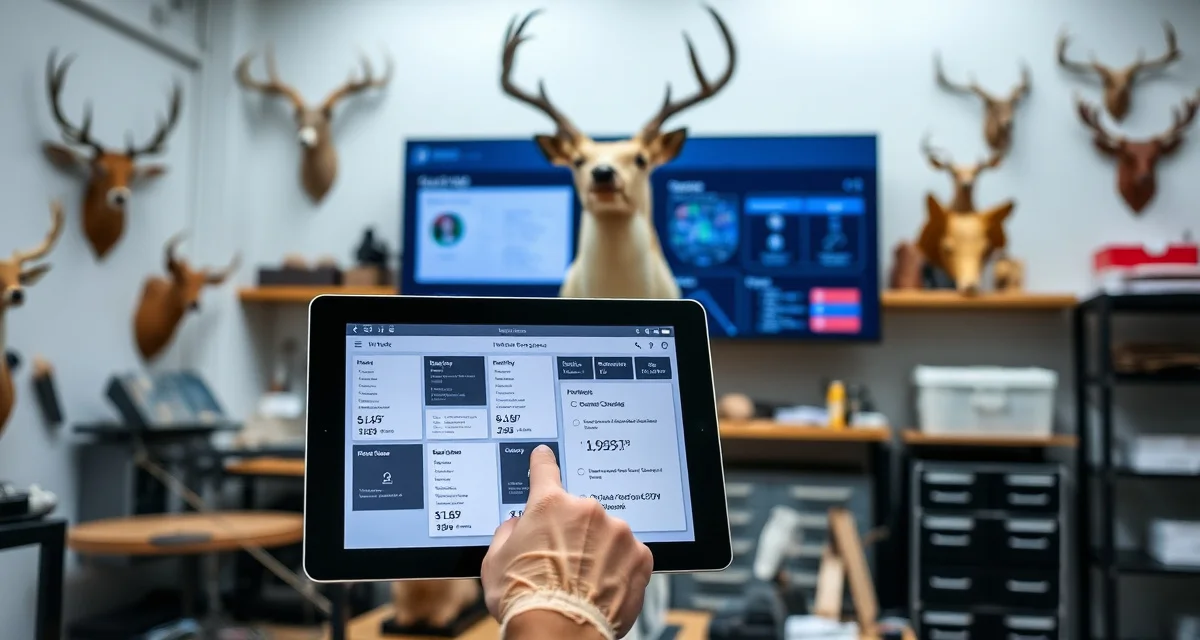
Taxidermy Shop Management Trends in 2026: What's Changing
AI adoption in taxidermy has grown 300 percent since 2023. Customer-facing portals are now expected by hunters under 45 who grew up with Amazon tracking. Digital compliance documentation is increasingly the standard that wildlife officers expect to find during inspections.
These aren't distant future trends, they're happening now, and the shops adopting them are seeing real operational advantages over shops that haven't. Here's a clear-eyed look at what's changing in taxidermy shop management in 2026.
TL;DR
- AI adoption in taxidermy has grown 300 percent since 2023.
- Customer-facing portals are now expected by hunters under 45 who grew up with Amazon tracking.
- Some things about taxidermy management in 2026 remain exactly as they always have been:
- extra 5 to 10 minutes per job across a 200-deer season is 16 to 33 hours of administrative time.
- In 2026, shops still doing fully manual paper intake are operating with a measurable efficiency disadvantage compared to AI-intake shops.
- By 2027 or 2028, paper-only intake at a professional shop will be as unusual as it is at a veterinary practice today.
Trend 1: AI-Powered Intake Is Going from Novelty to Standard
A few years ago, AI intake at a taxidermy shop was a novelty. Now it's becoming the baseline expectation for professional operations.
The technology does three things that manual intake can't do reliably:
Speed. AI-guided intake cuts per-specimen time by 40 to 60 percent. At peak season, that's hours of production time recovered per week.
Completeness. Required fields enforced by software prevent the documentation gaps that paper creates. The intake is complete because it can't be finalized until it is.
Photo integration. Condition photos captured at intake and linked to the job record replace written condition notes that are subjective and disputable.
In 2026, shops still doing fully manual paper intake are operating with a measurable efficiency disadvantage compared to AI-intake shops. The gap is most visible during peak season, where intake speed directly affects how many customers a shop can serve.
The adoption curve for AI intake in taxidermy mirrors what happened with digital scheduling in veterinary offices about a decade ago, slow initial uptake, followed by rapid normalization. By 2027 or 2028, paper-only intake at a professional shop will be as unusual as it is at a veterinary practice today.
Trend 2: Customer Portals Are Now Expected by Younger Hunters
The demographic shift in hunting is real. Hunters under 45 grew up with package tracking, DoorDash status updates, and real-time Uber arrival windows. They're accustomed to knowing exactly where their order is at every stage of fulfillment.
When this customer drops off a deer and gets a paper receipt with "estimated completion: spring," that experience doesn't match their expectations. They call to ask for updates. They leave mixed reviews about communication. They're not difficult customers: they just have a different baseline expectation about how service communication works.
Customer portals meet those expectations. When a hunter under 40 gets a text at intake with a link to their job's tracking page, showing real-time status from intake through pickup notification, that experience is immediately familiar and satisfying. It's how they expect to be treated as a customer.
For older hunting demographics, portals are appreciated but less expected. Most hunter 55+ customers are pleasantly surprised by portal access and use it. But they're not disappointed when it's absent.
The business case in 2026: The fastest-growing segment of the hunting population expects portal access. Shops serving this demographic without one are leaving a satisfaction and retention gap that compounds over time.
Trend 3: Digital Compliance Documentation Is What Inspectors Expect
Wildlife officer inspection expectations have shifted. Officers who inspect taxidermy shops increasingly expect digital records that can be searched and filtered, not paper binders they have to flip through manually.
The practical impact of this shift:
- Digital records allow officers to search by species, date, or permit number in seconds
- Digital records produce a complete audit trail that paper records can't match
- Shops with digital records complete inspections faster and with less disruption to daily operations
- Shops found with disorganized or incomplete paper records during inspections are more likely to face closer scrutiny on subsequent visits
The compliance expectation shift is especially notable for:
CWD documentation. As CWD-positive zones expand across the Midwest, Southeast, and West, the documentation requirements for deer from affected zones are increasing. Wildlife officers doing CWD-related inspections want to see zone documentation that's searchable and complete.
Migratory bird permits. USFWS inspections have become more systematic. Officers checking federal taxidermist permit compliance increasingly expect digital records rather than paper binders.
Exotic species and CITES. State and federal agents inspecting shops with exotic species on file want documentation that can be verified against CITES requirements without manual cross-referencing.
[Wildlife compliance software](/taxidermy-shop-management-software) that organizes and surfaces compliance documentation on demand is increasingly the difference between a smooth inspection and a stressful one.
Trend 4: Integrated Platforms Replace Tool Stacks
Early technology adopters in taxidermy often built a stack of separate tools: QuickBooks for invoicing, Google Sheets for job tracking, a separate email tool for customer communication. These stacks work, but they require manual data entry across multiple systems and create integration gaps.
The 2026 trend is consolidation onto integrated platforms that handle intake, tracking, customer communication, invoicing, and compliance in a single system.
The advantages of integration:
- Data entered at intake flows through every downstream function automatically
- Job status updates trigger customer portal notifications without additional data entry
- Invoicing pulls from intake data rather than requiring manual entry
- Compliance records are part of the intake record, not a separate filing system
Shops still using disconnected tools spend meaningful time on data management overhead that integrated platform users don't. That overhead is invisible until you add it up. An extra 5 to 10 minutes per job across a 200-deer season is 16 to 33 hours of administrative time.
Trend 5: Payment Technology Expectations Are Changing
Cash and check were the traditional taxidermy payment methods. Paper-invoice-at-pickup was the standard workflow.
In 2026, digital-first payment is rapidly becoming standard:
- Deposits collected digitally at intake (not by check or cash)
- Online invoice access through the customer portal
- Remote payment capability for out-of-state hunters before shipping
- Card-on-file options for final payment collection
The shift is driven partly by customer expectations (younger hunters expect digital payment) and partly by practical business improvement (less bad check exposure, cleaner deposit tracking, faster final payment collection).
Shops still requiring cash or check for deposits are creating friction that digital-native customers find frustrating. And shops without remote payment capability are unable to efficiently serve the growing out-of-state hunter customer base.
What's Not Changing
Some things about taxidermy management in 2026 remain exactly as they always have been:
The craft. The skills and techniques of taxidermy are unchanged. Technology manages the business around the work. It doesn't replace the work itself.
The importance of compliance fundamentals. Federal and state wildlife regulations still require the same core documentation they always have. Technology makes that documentation easier to capture and manage, but the requirements themselves haven't changed in nature.
The value of customer relationships. The reason hunters return to the same taxidermist year after year is trust. Trust in the quality of the work and the experience of working with that person. Technology supports that relationship but doesn't create it.
Frequently Asked Questions
What technology trends are affecting taxidermy shops in 2026?
The three largest trends are AI-powered intake becoming standard for professional operations, customer portals becoming expected by younger hunters, and digital compliance documentation being the standard wildlife officers encounter during inspections. An underlying trend is platform integration. Shops moving from disconnected tools to single integrated platforms for intake, tracking, invoicing, and compliance.
How is AI changing the taxidermy intake process?
AI intake systems guide taxidermists through a structured intake workflow, require completion of all necessary documentation fields, integrate photo capture directly into the job record, and flag compliance requirements for regulated species in real time. The result is faster intake (40 to 60 percent faster than manual paper), more complete records, and compliance flags that make regulatory documentation automatic rather than dependent on memory.
What do customers expect from taxidermy shops in 2026?
Hunters under 45 expect real-time tracking access to their mount's production status, the same kind of transparency they get from Amazon orders or service providers. Customer portals that provide this without requiring a phone call meet these expectations directly. Older hunting demographics appreciate portal access but don't uniformly expect it. Both demographics expect professional communication, accurate timeline estimates, and clear invoice documentation.
How does this apply to solo taxidermy shops?
The principles in this guide apply to solo shops just as they do to larger operations, though the scale differs. A single-person shop may have lower absolute volume but faces the same documentation, compliance, and customer communication requirements. The practical advice here scales down to any shop size.
What is the most common mistake taxidermists make with taxidermy shop management 2026 trends?
The most common mistake is treating taxidermy shop management 2026 trends as an afterthought rather than building it into the standard workflow from the start. Shops that encounter problems in this area typically did not establish clear processes before season, which means every situation becomes a one-off decision rather than a standard response.
Related Articles
- What Is a Taxidermy Shop Management Hub?
- What is a QR Tag in Taxidermy Shop Management?
- Elk Season Taxidermy Management Guide: Western Shop Operations
Try These Free Tools
Put these insights into practice with our free calculators and planners:
Sources
- National Taxidermists Association (NTA)
- US Fish & Wildlife Service
- Small Business Administration (SBA)
Get Started with MountChief
Running a taxidermy shop means juggling intake, tracking, compliance, and customer updates every day. MountChief puts all of it in one place so nothing slips through the cracks.