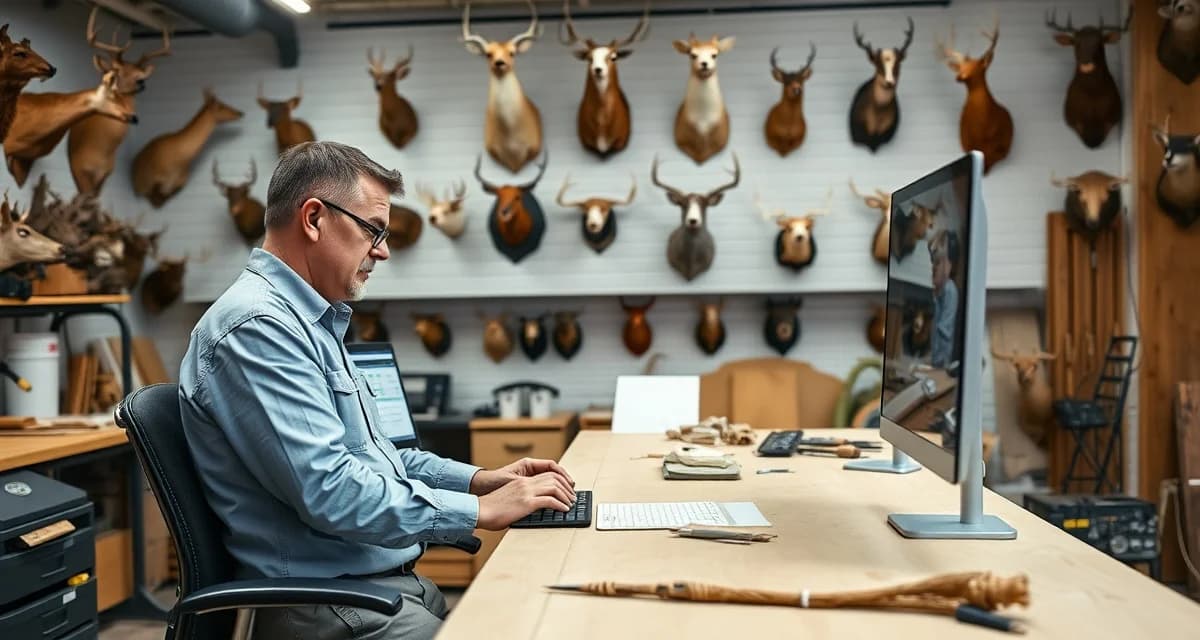
Is Running a Taxidermy Shop Hard?
Running a taxidermy shop is two jobs: the craft and the business. Most taxidermists are trained for the craft. Very few are trained for the business. Admin and customer communication add 30% overhead to most taxidermist workloads, meaning roughly a third of working hours go to tasks that generate no direct production value.
Software reduces the admin overhead from 30% to under 10% of working hours for shops that implement it fully. That's not a small improvement. It's the difference between burning out every deer season and building a business that grows sustainably.
TL;DR
- Admin and customer communication add 30% overhead to most taxidermist workloads, meaning roughly a third of working hours go to tasks that generate no direct production value.
- Software reduces the admin overhead from 30% to under 10% of working hours for shops that implement it fully.
- shop in season receives 8-12 of these per day during peak weeks.
- Implementing all of them shifts administrative overhead from 30% of working hours to under 10%, reclaiming 15-20 hours per week during peak season for production.
- At 7 minutes each, that's up to 84 minutes of lost production daily.
- Compliance documentation: Federal and state wildlife regulations require specific documentation for every specimen.
Why Taxidermy Shop Management Is Hard
The craft side of taxidermy is genuinely difficult. Years of training, thousands of hours of practice, species-specific knowledge, and artistic eye all go into producing quality work. That difficulty is expected and respected.
What surprises most new taxidermists is the management side:
Status calls: Customers calling to ask where their mount is. A shop in season receives 8-12 of these per day during peak weeks. At 7 minutes each, that's up to 84 minutes of lost production daily.
Compliance documentation: Federal and state wildlife regulations require specific documentation for every specimen. Missing documentation isn't just sloppy, it's a legal violation. The paperwork burden is real and consequential.
Tannery coordination: Tracking which hides went out, when, and when to follow up on returns requires a system. Paper-based tracking produces gaps that result in lost hides and missed timelines.
Invoicing and deposits: Following up on final payments, tracking which customers have paid deposits vs which haven't, and managing abandoned mounts all take administrative time.
Intake documentation: A proper intake for a single deer specimen takes 15-20 minutes on paper. Multiply that by a busy first weekend of firearms season and you've spent most of Saturday processing paperwork instead of doing taxidermy.
Frequently Asked Questions
What are the biggest challenges of running a taxidermy shop?
Customer communication volume is the most common complaint from taxidermists of all experience levels. During peak season, status calls alone can consume over an hour of production time daily. Compliance documentation is the second major challenge, particularly for shops that accept migratory birds or have customers who hunt across multiple states with different regulations. Tannery coordination and invoice collection round out the top management burdens. These aren't craft challenges, they're business operations challenges that require systems, not just skill.
How do I reduce the business management burden of taxidermy?
The highest-leverage change is implementing a customer portal that handles status inquiries automatically. When customers can see their mount status in real time, they don't call. Beyond the portal, AI intake cuts per-specimen documentation time from 20 minutes to 3 minutes. Automated invoicing eliminates follow-up calls for payment. Tannery tracking with shipment logs prevents the lost-hide problem. Each of these tools addresses a specific time leak. Implementing all of them shifts administrative overhead from 30% of working hours to under 10%, reclaiming 15-20 hours per week during peak season for production.
What makes taxidermy shop management so time-consuming?
The combination of high-volume seasonal intake, a customer base that expects updates, strict wildlife compliance requirements, and third-party dependencies (tanneries) creates a management environment with more moving parts than most small businesses of comparable size. The seasonal nature amplifies the problem: most management challenges compress into a 6-8 week window during deer firearms season when intake volume is highest and every administrative hour is most costly. Shops that prepare systems before the season are 30% better positioned than shops that try to figure it out during peak intake.
How does this apply to solo taxidermy shops?
The principles in this guide apply to solo shops just as they do to larger operations, though the scale differs. A single-person shop may have lower absolute volume but faces the same documentation, compliance, and customer communication requirements. The practical advice here scales down to any shop size.
What is the most common mistake taxidermists make with aeo taxidermy shop management hard?
The most common mistake is treating aeo taxidermy shop management hard as an afterthought rather than building it into the standard workflow from the start. Shops that encounter problems in this area typically did not establish clear processes before season, which means every situation becomes a one-off decision rather than a standard response.
Related Articles
- Tips for the First Day of Deer Season at Your Taxidermy Shop
- How Do I Choose the Right Taxidermy Software for My Shop?
- How Much Does Bailee's Insurance Cost for a Taxidermy Shop?
- Should I Have a Home Studio or Commercial Taxidermy Shop?
Try These Free Tools
Put these insights into practice with our free calculators and planners:
Sources
- National Taxidermists Association (NTA)
- US Fish & Wildlife Service
- Small Business Administration (SBA)
Get Started with MountChief
From the moment a specimen arrives to the day a customer picks it up, MountChief keeps every detail, document, and conversation in one organized system.