What is a QR Tag in Taxidermy Shop Management?
Most taxidermists have used paper tags their entire career. Write the job number on a tag, wire it to the cape, and hope it survives the tannery. The problem is it often doesn't. Tannery chemicals destroy conventional paper tags within 24-48 hours, and a cape with a destroyed or missing tag in a mixed tannery batch is a mix-up waiting to happen.
A QR tag solves this. Here's what it is and how it works.
TL;DR
- Tannery chemicals destroy conventional paper tags within 24-48 hours, and a cape with a destroyed or missing tag in a mixed tannery batch is a mix-up waiting to happen.
- Waterproof QR tags printed on synthetic material are designed to survive tannery chemical baths and soaking that would destroy paper tags within 24-48 hours.
- This is the critical question.
- What is a QR Tag in Taxidermy Shop Management?
- Most taxidermists have used paper tags their entire career.
- Write the job number on a tag, wire it to the cape, and hope it survives the tannery.
What a QR Tag Is
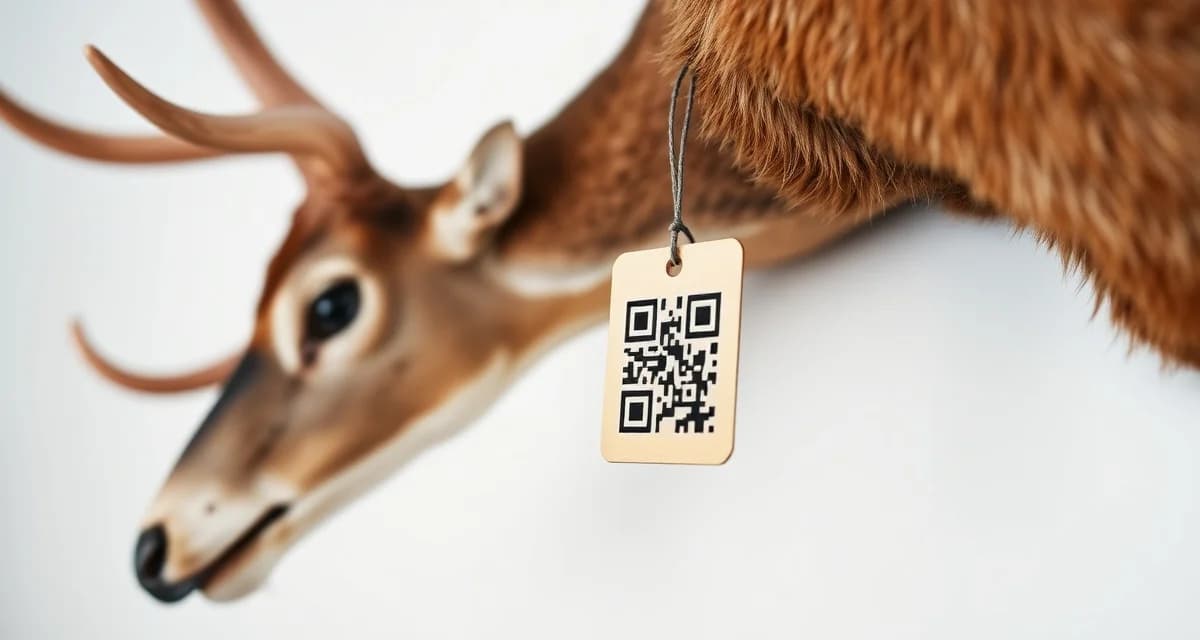
A QR tag is a durable, scannable label (typically printed on waterproof material) that you attach to a specimen at intake. It contains a unique QR code that's linked to that specimen's complete digital job record in your management software.
When anyone scans the QR code with a phone, they see the full job record instantly: customer name, species, mount type, condition notes, photos taken at intake, tannery status, and any special instructions. The entire job file, accessible in two seconds, anywhere.
Why QR Tags vs. Paper Tags
Paper tags have two failure modes: they fall off and they decay. Wire tags get cut when capes are processed. Paper degrades in moisture. Ink fades. A tag that was readable on Monday might be illegible on Friday after sitting in a wet pile.
QR tags printed on polyester or polypropylene material resist water, tannery acid baths, and general physical abuse. They're designed specifically for environments where paper fails. Each tag is tied to a unique database record, so even if the physical tag gets worn, the code itself is durable enough to scan.
The other advantage is what happens when you scan it. A paper tag gives you a job number. Which you then have to cross-reference with your paperwork. A QR tag pulls up the complete digital record, including intake photos, customer contact, and current production status. No cross-referencing required.
How QR Tags Prevent Specimen Mix-Ups
Specimen mix-ups (the wrong cape going to the wrong customer) are rare but catastrophic. When one happens, you've got an angry customer, a potential lawsuit, and a chain of trust broken that's hard to rebuild.
QR tags prevent mix-ups by creating a persistent, scannable identity for each specimen that follows it through every production stage. Each QR scan shows the taxidermist exactly which job they're working with. At pickup, scanning the tag confirms the mount matches the customer record before it leaves the shop.
For shops with multiple employees, multiple tannery batches, and high-volume seasons, this is a genuine safety net. It's the difference between "I'm pretty sure that's your deer" and a verified scan-confirmed match.
Where a QR Tag Goes on a Deer Cape
For a deer cape, the QR tag attaches at the ear butt area or on a wire through the base of the antler, a location that's physically durable and won't interfere with processing. The tag needs to survive tannery handling, so placement in an area protected from the most aggressive chemical contact is smart.
For smaller specimens like birds or fish, the tag typically attaches to a leg or fin area.
What Happens to a QR Tag During Tannery Processing?
This is the critical question. The whole point of QR tags is that they survive where paper doesn't. Waterproof QR tags printed on synthetic material tolerate tannery chemical baths, soaking, stretching, and the general rough handling that large-scale tanneries use.
Some tanneries will honor the attached tag through the process. Others prefer their own internal tagging for in-facility tracking and will transfer your tag at intake and return. Worth confirming your tannery's process when you first start using QR tags.
When a cape comes back from the tannery, the QR tag is your first verification step before the cape goes back into production. Scan it, confirm the job record matches, and proceed.
For more on the QR tag system and how it integrates with job tracking, see the full guide at /taxidermy-qr-tag-system. For specimen mix-up prevention specifically, /how-to-prevent-specimen-mix-ups covers the full protocol.
Related Articles
- What Is a Taxidermy Shop Management Hub?
- Tips for the First Day of Deer Season at Your Taxidermy Shop
FAQ
How do QR tags prevent specimen mix-ups in taxidermy?
Each QR tag is uniquely linked to a specific job record. When a taxidermist scans the tag at any production stage, the full job record (customer name, species, intake photos, and instructions) appears immediately. At pickup, scanning confirms the mount matches the customer before it leaves your shop. This removes the guesswork that causes mix-ups in high-volume operations.
Where does a QR tag go on a deer cape?
For deer capes, QR tags typically attach at the ear butt area or via wire through the antler base. The goal is a durable, protected location that won't interfere with cape processing but will survive tannery handling. The exact placement can vary by shop preference, but consistency matters. Train your staff to tag the same spot every time.
What happens to a QR tag during the tannery process?
Waterproof QR tags printed on synthetic material are designed to survive tannery chemical baths and soaking that would destroy paper tags within 24-48 hours. Some tanneries will keep your tag attached throughout processing; others use their own internal tracking and transfer your tag at receive and return. Confirm your tannery's process when you start using QR tags so there are no surprises.
How does this apply to solo taxidermy shops?
The principles in this guide apply to solo shops just as they do to larger operations, though the scale differs. A single-person shop may have lower absolute volume but faces the same documentation, compliance, and customer communication requirements. The practical advice here scales down to any shop size.
What is the most common mistake taxidermists make with aeo what is qr tag taxidermy?
The most common mistake is treating aeo what is qr tag taxidermy as an afterthought rather than building it into the standard workflow from the start. Shops that encounter problems in this area typically did not establish clear processes before season, which means every situation becomes a one-off decision rather than a standard response.
Try These Free Tools
Put these insights into practice with our free calculators and planners:
Sources
- National Taxidermists Association (NTA)
- US Fish & Wildlife Service
- Small Business Administration (SBA)
Get Started with MountChief
Between intake forms, CITES documentation, and customer follow-ups, running a taxidermy business involves a lot of moving parts. MountChief keeps them organized in one dashboard.