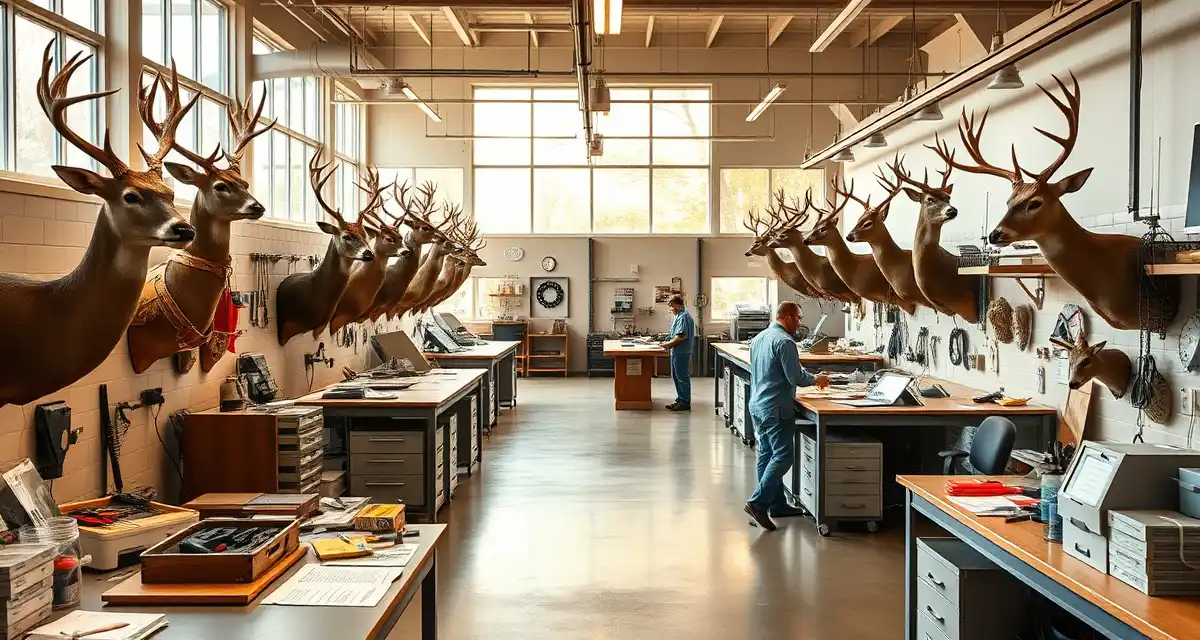
Taxidermy Shop Management Software for Alabama Shops
Alabama taxidermists operate in one of the South's top deer hunting states, with 67 counties and varying game management zone regulations that affect intake documentation requirements throughout the season.
TL;DR
- Shops in these regions often see their peak intake in late October through December, a 10-week window that represents 70 to 80% of annual revenue.
- Alabama ranks consistently in the top 10 nationally for total deer harvest volume.
- AI intake handles the per-specimen processing in under 3 minutes.
- The principles in this guide apply to solo shops just as they do to larger operations, though the scale differs.
- A single-person shop may have lower absolute volume but faces the same documentation, compliance, and customer communication requirements.
- The most common mistake is treating taxidermy shop management alabama as an afterthought rather than building it into the standard workflow from the start.
The Alabama Taxidermy Season
Alabama's deer season typically opens in mid-October for archery and runs through February, giving shops one of the longer intake windows in the South. Alabama ranks consistently in the top 10 nationally for total deer harvest volume. Turkey season adds a spring intake surge in March and April.
The state's harvest tagging requirements mean every deer entering your shop needs specific harvest data documented at intake, license number, harvest date, and county of kill.
Alabama-Specific Compliance Requirements
Alabama Department of Conservation and Natural Resources (ADCNR) requirements for taxidermists:
- State taxidermy license required, available through ADCNR
- Written intake records required for all deer, turkey, and other game species
- Hunter license and game tag documentation at intake
- Records must be available for inspection
Alabama's 67 counties with varying game management zone boundaries mean a deer taken in one county may have different documentation requirements than a deer from the next county over, particularly during special seasons.
MountChief captures county of harvest at intake automatically, so your records reflect the specific game management zone whether you need that information for a routine job or a compliance inspection.
Managing Alabama's Volume
Alabama shops average strong deer volume, particularly in the Black Belt region and southern Alabama where high deer density and agricultural land create excellent hunting. Shops in these regions often see their peak intake in late October through December, a 10-week window that represents 70 to 80% of annual revenue.
At that volume, paper intake and manual customer communication aren't sustainable. AI intake handles the per-specimen processing in under 3 minutes. The customer portal eliminates the status calls that otherwise pile up from January through March.
Related Articles
- Taxidermy Shop Management Software for Colorado Shops
- Taxidermy Shop Management Software for Connecticut Shops
- Taxidermy Shop Management Software for Delaware Shops
- Taxidermy Shop Management Software for Florida Shops
FAQ
What wildlife records must Alabama taxidermists keep?
Alabama ADCNR requires written intake records for all game species including customer name, contact information, species, harvest date, hunting license number, and county of harvest. Records must be retained and available for inspection. Specific retention periods are defined in state taxidermy licensing regulations.
Does Alabama require taxidermy licensing?
Yes. Alabama requires a state taxidermy license through the Alabama Department of Conservation and Natural Resources. Operating without the license is a violation of state wildlife law.
When is Alabama deer season and how do shops prepare?
Alabama archery deer season opens in mid-October with firearms seasons running through February. Peak intake for most shops occurs October through December. Preparation should begin in September, set up intake workflows, configure compliance fields for AL-specific harvest documentation, and contact tanneries about anticipated volume.
How does this apply to solo taxidermy shops?
The principles in this guide apply to solo shops just as they do to larger operations, though the scale differs. A single-person shop may have lower absolute volume but faces the same documentation, compliance, and customer communication requirements. The practical advice here scales down to any shop size.
What is the most common mistake taxidermists make with taxidermy shop management alabama?
The most common mistake is treating taxidermy shop management alabama as an afterthought rather than building it into the standard workflow from the start. Shops that encounter problems in this area typically did not establish clear processes before season, which means every situation becomes a one-off decision rather than a standard response.
Try These Free Tools
Put these insights into practice with our free calculators and planners:
Sources
- National Taxidermists Association (NTA)
- US Fish & Wildlife Service
- Small Business Administration (SBA)
Get Started with MountChief
Most taxidermists lose hours each week to paperwork, status calls, and compliance tracking. MountChief handles the administrative side so you can focus on the craft.