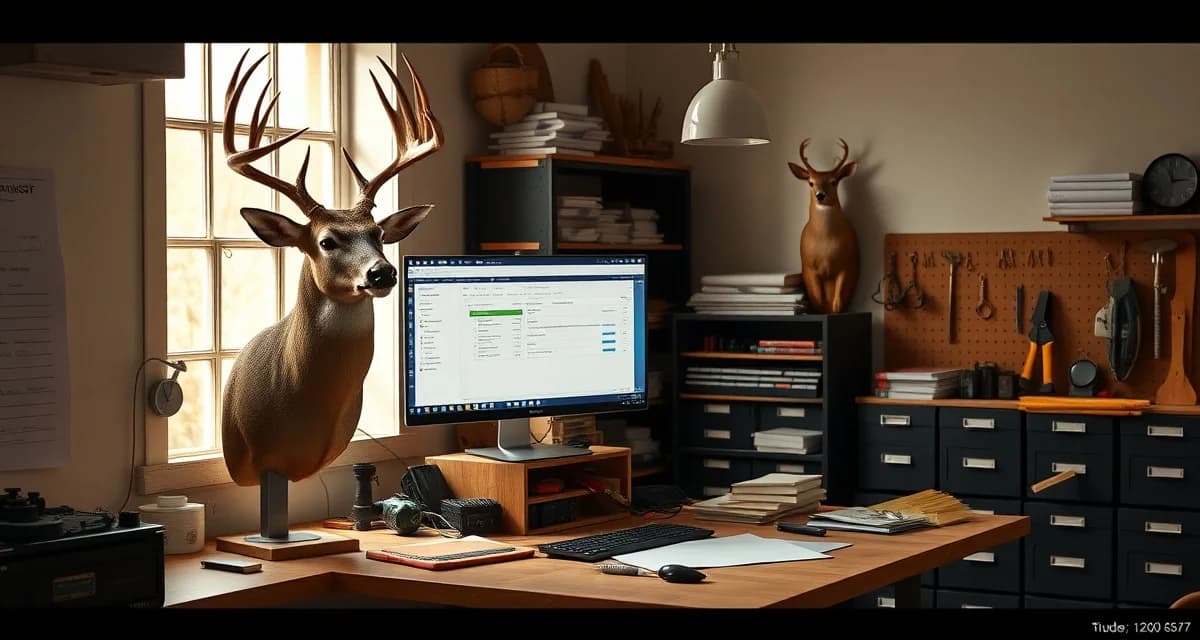
Taxidermy Shop Management Software for North Carolina Shops
North Carolina's deer season runs from September through January, 18 weeks of legal deer hunting in most parts of the state. That's the longest single-state deer season window in the South, and for taxidermists it creates a prolonged intake period that paper systems simply can't sustain.
TL;DR
- North Carolina's deer season runs from September through January, 18 weeks of legal deer hunting in most parts of the state.
- An 18-week season isn't a sprint, it's a sustained operation.
- 18-week intake window means jobs from September intake are in production while January intake is coming in the door.
- How do NC shops manage an 18-week deer season without losing specimens?
- Paper tags that survive 18 weeks of cold storage, tannery shipments, and production floor handling don't exist.
- During this entire period, you're also actively producing mounts from the early season. An 18-week intake window means jobs from September intake are in production while January intake is coming in the door.
18 Weeks of Intake Management
An 18-week season isn't a sprint, it's a sustained operation. The September archery opener brings early intake. The October firearms season adds volume. The late November and December push builds to the season's peak. January archery wraps it up.
During this entire period, you're also actively producing mounts from the early season. An 18-week intake window means jobs from September intake are in production while January intake is coming in the door.
Managing 200-plus active jobs in simultaneous production stages, while continuing to take in new work, requires visibility that paper systems can't provide. MountChief's job dashboard shows every active job, its current stage, and its tannery status in a single view.
East vs. West North Carolina
North Carolina taxidermists understand that the state is practically two different deer hunting regions:
Eastern NC: Higher deer density, agricultural land, longer seasons with more does. Shops in the east see high volume of antlerless deer and average bucks.
Western NC (Mountains/Piedmont): Lower density, quality management focus, larger average buck size. Mountain deer attract hunters from across the Southeast.
Both regions use the same intake and tracking system, but the species mix and customer demographics differ enough to affect how you price and communicate.
Wildlife Resources Commission Requirements
North Carolina Wildlife Resources Commission requires:
- State taxidermy license
- Hunter license and deer harvest tag documentation at intake
- Written intake records for all game species
- Records available for WRC inspection
Related Articles
- Taxidermy Shop Management Software for Arizona Shops
- Taxidermy Shop Management Software for Arkansas Shops
- Taxidermy Shop Management Software for California Shops
- Taxidermy Shop Management Software for Colorado Shops
FAQ
What WRC records must North Carolina taxidermists maintain?
North Carolina WRC requires written intake records for all game species including customer information, hunting license number, deer harvest tag, harvest date, and harvest county. Records must be available for WRC inspection and retained per state requirements.
Does North Carolina require a taxidermy license?
Yes. North Carolina requires a state taxidermy license through WRC. The license must be current and records maintained.
How do NC shops manage an 18-week deer season without losing specimens?
QR tracking is the answer. Paper tags that survive 18 weeks of cold storage, tannery shipments, and production floor handling don't exist. QR tags that are engineered for these conditions do. Every specimen tagged at intake has a verifiable digital record regardless of how long the production process takes.
How does this apply to solo taxidermy shops?
The principles in this guide apply to solo shops just as they do to larger operations, though the scale differs. A single-person shop may have lower absolute volume but faces the same documentation, compliance, and customer communication requirements. The practical advice here scales down to any shop size.
What is the most common mistake taxidermists make with taxidermy shop management north carolina?
The most common mistake is treating taxidermy shop management north carolina as an afterthought rather than building it into the standard workflow from the start. Shops that encounter problems in this area typically did not establish clear processes before season, which means every situation becomes a one-off decision rather than a standard response.
Try These Free Tools
Put these insights into practice with our free calculators and planners:
Sources
- National Taxidermists Association (NTA)
- US Fish & Wildlife Service
- Small Business Administration (SBA)
Get Started with MountChief
Keeping compliance records accurate, customers informed, and specimens on schedule takes more than a whiteboard. MountChief gives taxidermists the tools to manage it all digitally.